Three new rooms, wall paintings found at Smyrna in Izmir as archaeologists trace a 2,000-year-old Roman water channel
Rest of World News: The ancient city of Smyrna in Izmir has revealed new clues about how the city changed during Late Antiquity. Excavations at the Smyrna Agora have unco.
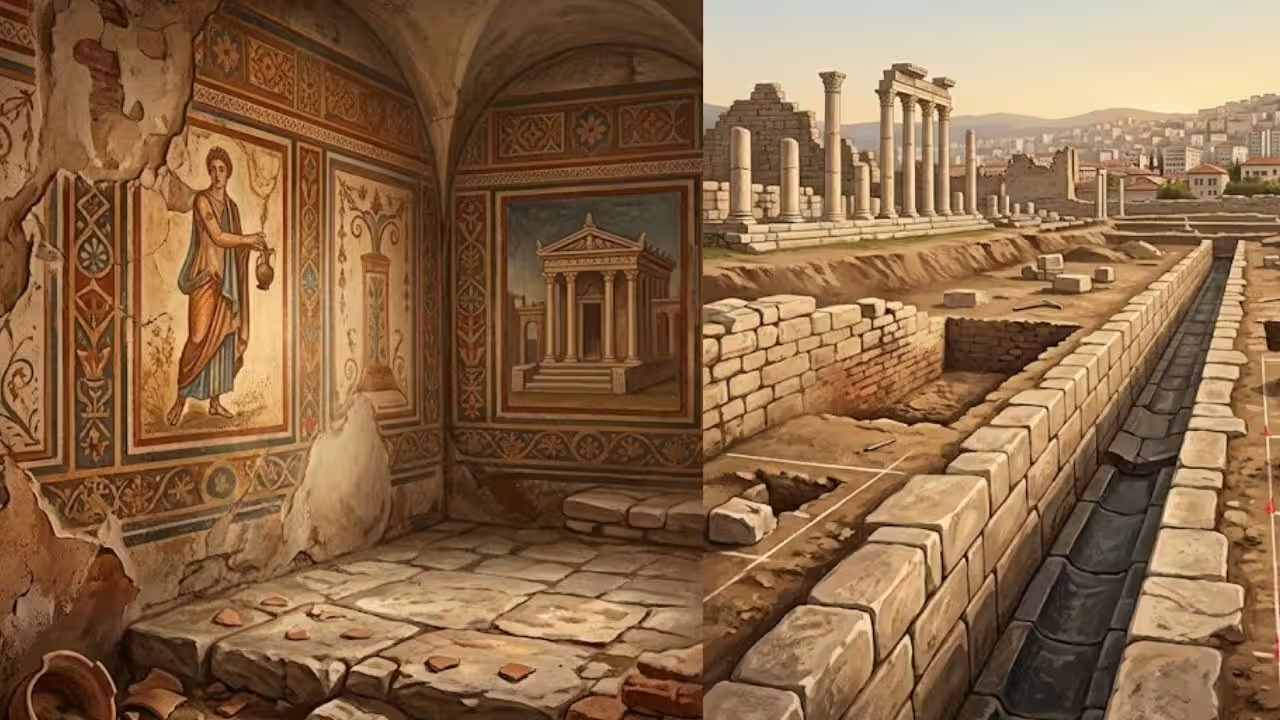
The ancient city of Smyrna in Izmir has revealed new clues about how the city changed during Late Antiquity. Excavations at the Smyrna Agora have uncovered three previously unidentified rooms dating to the 5th and 6th centuries AD. Two of the rooms contained mosaic floors while the third had a marble floor. Archaeologists also found wall paintings around the Agora and the Theatre of Smyrna that had not been recorded before.According to Anadolu Ajansı (Turkish news agency), the three newly identified rooms and previously unseen wall paintings have helped archaeologists trace around 150 metres of an ancient Roman water channel. The channel is believed to have carried water continuously for nearly 2,000 years, although its source has not been identified yet. Researchers are now investigating where the water came from and how the system supplied the ancient city.What did archaeologists discover inside the three new rooms in Smyrna Agora, TurkeyExcavations at the Smyrna Agora have uncovered three previously unidentified rooms that extend from a mosaic floor discovered last year. Two of the rooms feature mosaic floors, while the third has a marble floor. Archaeologists have dated the structures to the 5th and 6th centuries AD, which places them in the Late Antiquity period. Prof. Dr. Akın Ersoy, head of the excavation, said the newly discovered structures share similarities with the Hillside Houses at the ancient city of Ephesus.The excavation has also revealed previously unseen wall paintings around the Smyrna Agora and the Theatre of Smyrna. Ersoy said, "This is the first time we've encountered murals in these locations. We had never come across them before in the Smyrna Agora or around the theater." The paintings offer new clues about the appearance and use of these parts of the ancient city during Late Antiquity.Why are these discoveries important to Smyrna's historyThe discoveries come from a period when cities across the Roman world were undergoing significant changes. Smyrna was changing during the same period, and the newly uncovered structures offer archaeological evidence of that transformation. Ersoy said the three rooms share characteristics with the Hillside Houses at Ephesus, raising the possibility that they may have served a public function. The previously undocumented wall paintings from the Agora and theatre areas add further clues about the city's changing appearance.What does the 150-metre Roman water channel revealThe excavation has also shed light on Smyrna's ancient water system, with archaeologists tracing around 150 metres of a Roman-era water channel. Its source has yet to be identified, and the team is now working to determine where the channel began. Ersoy explained that Smyrna's water needs during the Roman period were met through canals linked to springs. One possible source may have been a spring near the Namazgah Bath and Kurşunlu Mosque, south of the Agora. The water may have travelled towards the Smyrna Agora along the traced route. Researchers believe the channel could have carried water continuously for nearly 2,000 years.Catch the latest World News and Live updates. Download the TOI app.
Topics in this story
Gathered from external sources. Rights to this text belong to whoever originally published it.