‘Haunted’ Drake’s Island: Tiny UK island with Grade-II listed house, 6.4-acre site, mysterious underground tunnels and 43-bed hotel plan goes on sale for offers above £2 million
UK News: A tiny historic island off the coast of Plymouth, England, featuring a Grade-II listed house, a vast underground tunnel network and former military bu.
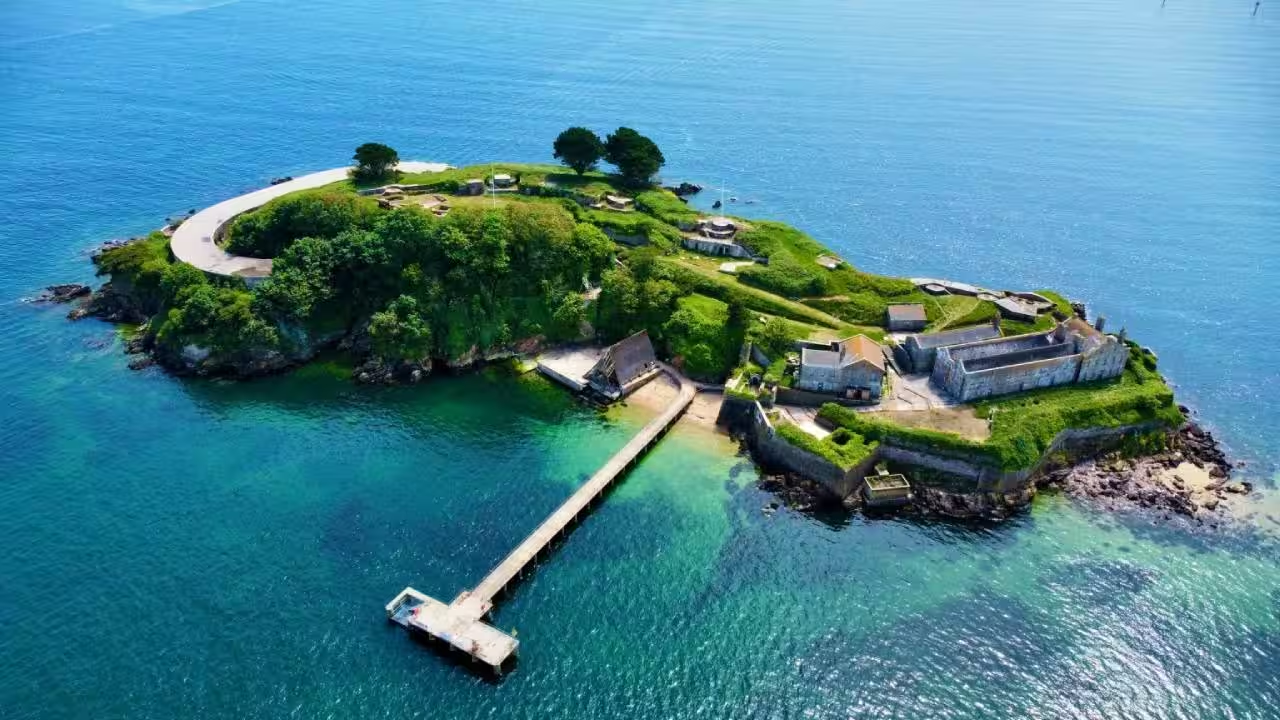
A tiny historic island off the coast of Plymouth, England, featuring a Grade-II listed house, a vast underground tunnel network and former military buildings, has gone on the market for offers above £2 million, according to The Sun. Drake’s Island, a 6.4-acre landmark in Plymouth Sound, also comes with planning consent for a 43-bed hotel and the potential to generate income through tourism and other commercial ventures.Drake’s Island, located around 500 metres from the mainland in Plymouth Sound, Devon, is being advertised as an “extremely rare opportunity” to acquire a development site with a remarkable military and maritime history.According to estate agent Carter Jonas, which is marketing the property on behalf of a fixed-charge receiver, offers are being sought in excess of £2 million for the freehold interest in the island.The historic landmark initially returned to the market in May, with further details about its potential sale now emerging.Carter Jonas describes Drake’s Island as a rare opportunity to regenerate a nationally significant heritage site while developing new tourism and visitor facilities.A tiny island with centuries of historyDrake’s Island was originally known as St. Nicholas Island, a name linked to a medieval chapel that stood on the site. Historical accounts also refer to the island by the earlier name St. Michael’s Island.The island sits in Plymouth Sound between Plymouth in Devon and Mount Edgcumbe in Cornwall. Its strategic position made it an important defensive site for centuries.In the 16th century, the island was fortified as England sought to protect Plymouth from potential attacks. The original chapel was dismantled in 1550, with materials reportedly reused in the construction of the Tudor fortifications.The island later became closely associated with Sir Francis Drake, the English explorer and naval commander after whom it is now named.Drake departed Plymouth in 1577 on his famous voyage around the world, returning in 1580. He was later appointed Governor of the island in 1583 by Queen Elizabeth I.Drake’s Island continued to serve a military purpose for centuries and was used by the armed forces until the Second World War.What is on Drake’s Island?The 6.4-acre island contains around 30,000 square feet of disused buildings, including the Grade-II listed Governor’s House, a battery and former military buildings.An extensive network of underground tunnels also runs beneath the island, alongside remnants of its historic fortifications.Part of Drake’s Island has been designated a Scheduled Ancient Monument, reflecting its historical and archaeological importance.The island’s military heritage, unusual architecture and isolated position are among the features that could make it attractive to a future owner looking to develop it as a visitor destination.The mysterious Drake’s Island tunnelsThe underground tunnels are also central to one of the island’s enduring mysteries.Local folklore has long claimed that tunnels were built during the island’s military history to connect Drake’s Island with Plymouth Hoe on the mainland, potentially allowing supplies to reach the island’s defenses.However, those tunnels have never been found, and the story remains a long-running local legend rather than an established historical fact.The island itself remains partly unexplored, helping fuel speculation about what may still lie beneath or within the historic site.Island has planning consent for a 43-bed hotelOne of the biggest attractions for a potential buyer is the development potential.The island already has planning consent for a 43-bed hotel, although Carter Jonas notes that the permission remains subject to various planning conditions and a Section 106 obligation.The estate agent says the island has been allocated for heritage-led regeneration, including a new hotel, visitor facilities and research and development connected with the marine and natural environment.The plans are intended to preserve and make use of the island’s historic buildings while introducing new commercial opportunities.“The plans are centred around our committed desire to regenerate Drake’s Island and inject a new lease of life into the existing historic buildings,” the sales brochure states.It adds that the island’s beauty, heritage and location could lend themselves to a “best-in-class development” that takes advantage of its unique setting.Drake’s Island has changed hands beforeThe island was purchased by businessman Morgan Phillips in 2019.It was subsequently put up for sale in 2024, but the property failed to find a buyer.The latest marketing campaign represents another attempt to find an owner willing to take on the ambitious task of restoring and redeveloping the historic site.While the island is currently vacant, Carter Jonas says its past commercial performance demonstrates that it has the potential to attract visitors and generate revenue.Tourism generated nearly £600,000 in 2023Despite its current vacant status, Drake’s Island has previously hosted a variety of income-generating activities.These have included guided tours, private tours, location filming, adventure days and theatre performances, among other events.According to Carter Jonas, these activities generated approximately £590,000 in gross income during 2023.The estate agent says that figure demonstrates both the island’s appeal to visitors and its ability to attract commercial operators.“While the island is currently vacant, this historic performance highlights the significant opportunity for future owners to re-establish and expand a variety of revenue streams,” Carter Jonas said.Drake’s Island has attracted famous explorers and unusual visitorsThe island’s connection to exploration extends beyond Sir Francis Drake.Other notable figures associated with voyages of discovery, including Captain James Cook and Charles Darwin, are said to have departed from Plymouth during journeys that contributed to their place in British history.Drake’s Island has also been the setting for a series of unusual episodes over the centuries.In 1774, local shipwright and carpenter John Day designed a wooden diving chamber and reportedly made a bet over how long he could remain submerged. He died during the attempt, contributing to the island’s later reputation as a potentially haunted location.In 1957, a group of schoolboys staged their own mock invasion of the island, claiming it for Plymouth. They were arrested by the guard but were reportedly given breakfast before being taken back to the city for a double mathematics lesson.In 2005, anti-nuclear campaigners established a peace camp on Drake’s Island and declared it a nuclear-free state.Tours were suspended earlier this yearThe island’s tourism operations have not been without challenges.In May 2026, tours of the 6.4-acre site were suspended while safety inspections were carried out.The inspections came as the island was being prepared for another phase in its long-running history of public access, tourism and potential redevelopment.For a future buyer, addressing the condition and safety of the existing structures would likely be an important part of any regeneration plans.A rare redevelopment opportunity in Plymouth SoundFor a potential buyer, Drake’s Island represents an unusual combination of heritage, development potential and commercial opportunity.The property offers a rare chance to take ownership of an entire island while potentially transforming its existing buildings into a major visitor destination.However, its protected status and historic structures also mean that redevelopment would need to balance commercial ambitions with conservation requirements.The proposed hotel, visitor facilities and marine and natural environment-related uses provide a framework for that regeneration.What could Drake’s Island become?Carter Jonas believes the island could support several different revenue streams under a future owner.Its location in Plymouth Sound, historic military architecture and unusual underground tunnels could potentially make it a destination for heritage tourism, hospitality, events and filming.Its previous commercial activity provides some evidence of demand, with almost £590,000 in gross income recorded in 2023.The challenge will be turning the currently vacant historic site into a sustainable business while preserving the heritage that makes Drake’s Island so distinctive.For more than four centuries, the tiny island has played a role in the defense and history of Plymouth. Now, with offers sought above £2 million, its next chapter could be very different.Rather than serving as a military stronghold, Drake’s Island could eventually become a heritage-led hotel and visitor destination, giving one of Britain’s most unusual islands a new lease of life.Catch the latest World News and Live updates. Download the TOI app.
Topics in this story
Gathered from external sources. Rights to this text belong to whoever originally published it.