Neymar helped build an 8,400-square-metre education and sports centre in the Brazilian neighbourhood where he grew up; it now has capacity for 3,000 children, offering free education, sports and healthcare
Brazilian footballer Neymar Jr and his family helped establish a social project in Jardim Glória, the neighbourhood in Praia Grande where he spent much of
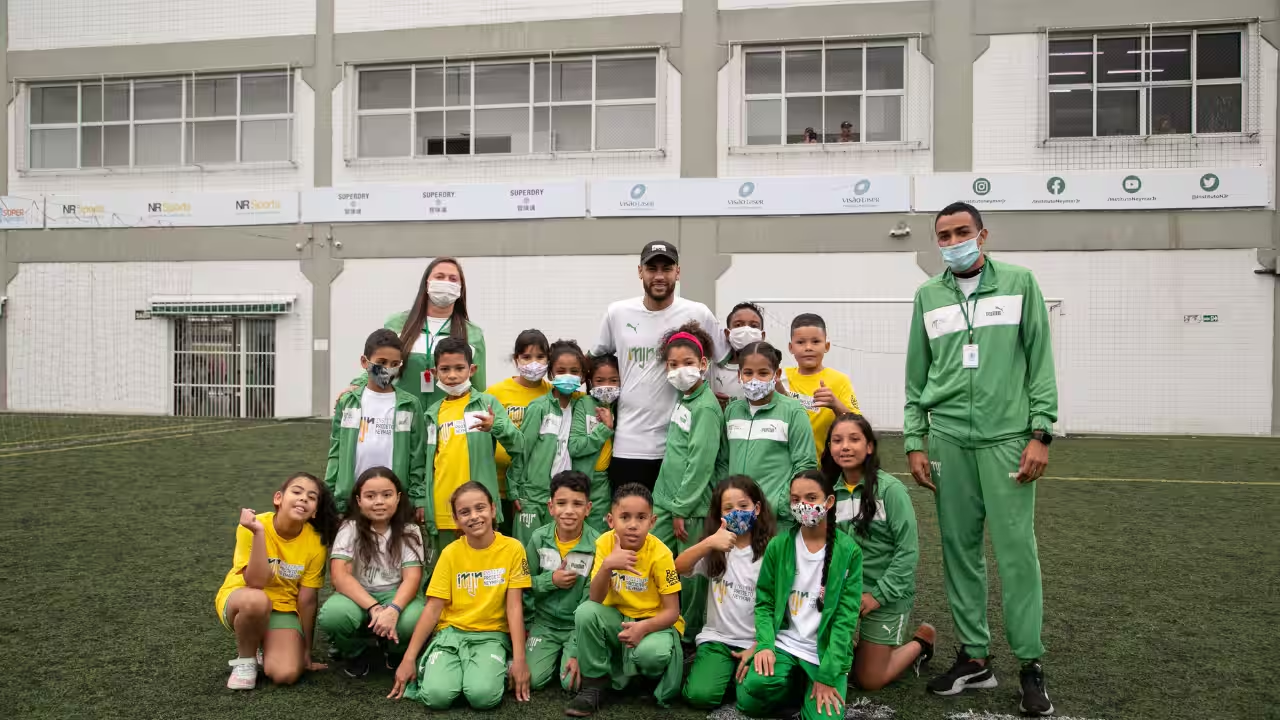
Brazilian footballer Neymar Jr and his family helped establish a social project in Jardim Glória, the neighbourhood in Praia Grande where he spent much of his childhood. The Instituto Projeto Neymar Jr operates from an 8,400-square-metre complex designed to expand opportunities for children, teenagers and families facing social and economic challenges. The centre has the capacity to serve 3,000 children and young people aged between 7 and 17, while its wider programmes reach their families as well. Opened in December 2014, the non-profit organisation provides activities spanning education, sport, culture and preventive healthcare. Its facilities include classrooms, sports grounds, a swimming pool and spaces for medical, dental and psychological services. The land was provided by the city government under a long-term arrangement.Neymar chose the neighbourhood for an 8,400-square-metre education and sports centreNeymar spent much of his childhood in Jardim Glória, in Praia Grande, a coastal city in the state of São Paulo. According to the institute, he and his family wanted to create opportunities for young people growing up in circumstances similar to those they had experienced. The project was conceived in 2010 and officially presented to the public on December 23, 2014. Its focus extends beyond football, with programmes intended to support children’s development and provide their families with access to education, activities and services.What the centre offers childrenThe institute’s educational facilities include classrooms for English, Spanish and French, robotics, reading and writing, computing, music, dance and arts. There are also spaces for professional courses, collaborative games and reading, along with a cinema. These activities are intended to complement children’s formal schooling and help them develop academic, creative and practical skills. The institute also offers cultural and recreational programmes, giving children access to activities beyond their regular school curriculum.Sports facilities go beyond footballThe 8,400-square-metre complex includes a football field, a multi-sports court, an outdoor volleyball court, a heated swimming pool, a gym and dedicated spaces for judo and dance. Its programme has included activities such as swimming, basketball, futsal and volleyball. Sport is one of the institute’s central activities, alongside education and culture. The facilities provide children with opportunities to participate in organised physical activities and develop skills such as teamwork and discipline.Healthcare and psychological supportThe institute also has a dedicated health area offering services that include clinical analysis, cardiology, ophthalmology, dentistry and psychology. Social assistance is available as part of its wider support structure. According to the institute, children receive medical and dental evaluations and can access specialist healthcare services through its programmes. The health facilities are part of an approach that combines educational and sporting activities with preventive care and support for children’s wellbeing.Families are part of the programmeThe project was designed to benefit families as well as children. Its activities have included vocational courses, lectures and physical activities for parents and other family members. The institute’s stated objective is to expand opportunities for people experiencing social vulnerability, including through education, culture, sport and health services. At its inauguration in 2014, local authorities said the project was expected to benefit about 2,300 children and reach around 10,000 people when their families were included. The institute now lists capacity for 3,000 children and young people aged 7 to 17.The city provided the landThe centre stands on land provided by the Praia Grande city government for 30 years, with a further 30-year renewal possible. Municipal records from 2014 describe a complex containing sports facilities, classrooms, a library, a cinema, a dining area and spaces for healthcare and vocational training. The project was developed by Neymar and his family as a non-profit social initiative, with the stated aim of improving access to opportunities for children and families in the surrounding community.You use AI every day. Now get your AI Quotient. Take the AIQ test.
Topics in this story
Gathered from external sources. Rights to this text belong to whoever originally published it.