UN’s top court finds Myanmar guilty of genocide against Rohingya
ICJ ruling is the first time a state has been found responsible for genocide at the court.
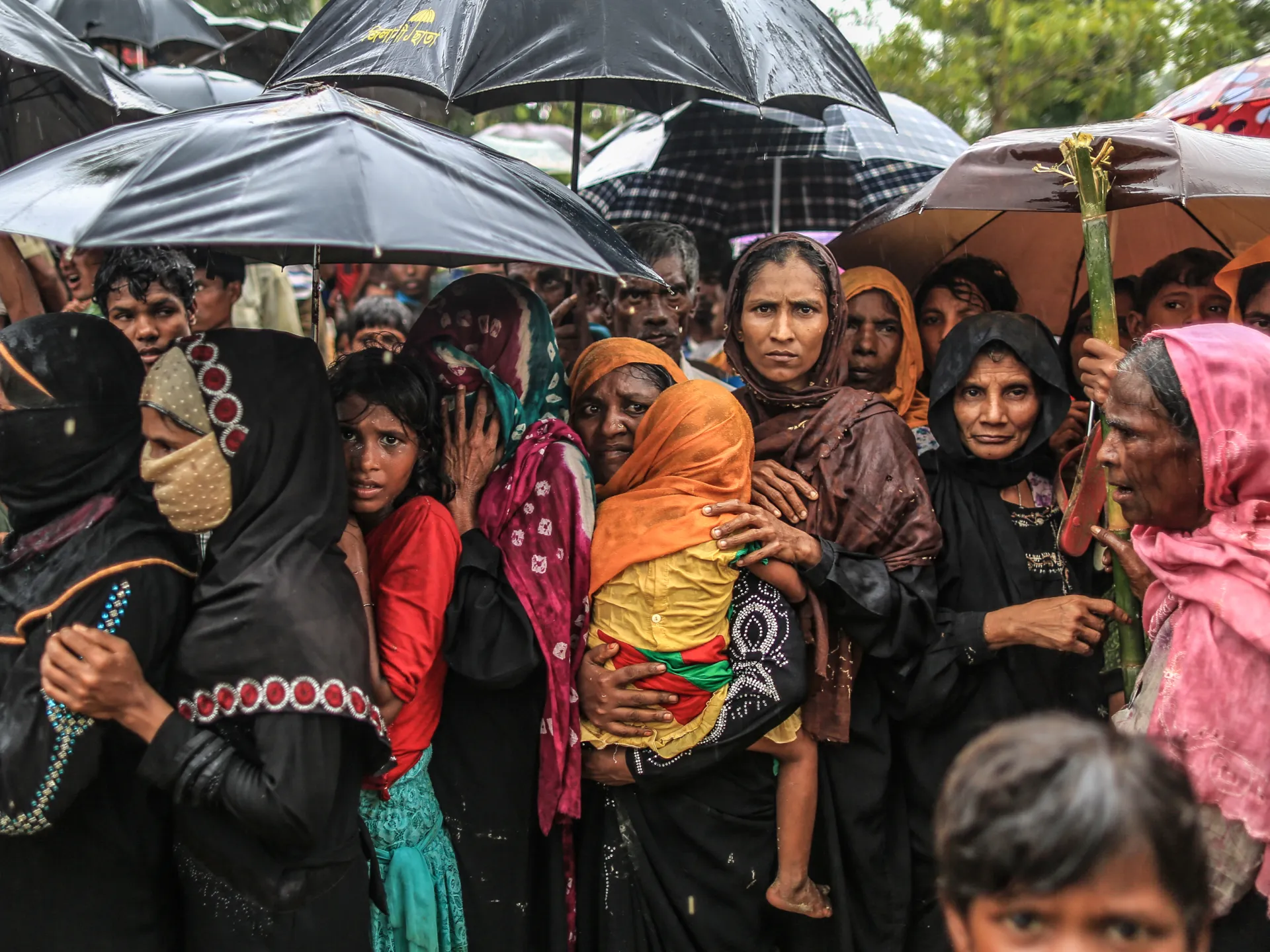
In a landmark verdict, the United Nations’ top court has ruled that Myanmar committed genocide against the Muslim minority Rohingya population in a brutal 2017 military crackdown that drove more than 730,000 Rohingya to flee to neighbouring Bangladesh.
The ruling at the International Court of Justice (ICJ) at The Hague on Thursday is the first time a state has been found responsible for genocide at the court, and only the fourth time since the Nazi Holocaust that an international court ruled that the crime had been committed.
ICJ President Yuji Iwasawa said the court, in a 9-6 decision, found that Myanmar “has committed genocide against the Rohingya group in northern Rakhine state, in violation of its obligations under the Genocide Convention”.
Evidence showed Myanmar forces killed at least 10,000 Rohingya people, Iwasawa said during a three-hour readout of the verdict.
“The Court finds that Myanmar’s security forces killed thousands of Rohingya civilians, perpetrated widespread acts of sexual violence, as well as acts of extreme violence against children, and attacked fleeing Rohingya as they sought to flee in large numbers to Bangladesh,” he said.
In the specific cases that he referred to, Iwasawa said Myanmar had acted with “genocidal intent”.
The Special Advisory Council for Myanmar welcomed the judgement but stressed that the decision must lead to concrete accountability measures and reparations for victims.
Founding member Yanghee Lee said in a statement that it was a “deeply emotional day for all Rohingya people”, adding that “justice has been decided, but not yet delivered”.
“For decades, the Burmese military tried to erase our identity, deny our existence, and dismiss our suffering,” said Wai Wai Nu, executive director of the Women’s Peace Network and a former political prisoner.
“By finding that Myanmar committed genocide, ordering a guarantee of non-repetition, and ordering restitution and compensation, the world’s highest court has permanently shattered that state-sponsored lie,” she said.
Gambia, which brought the case to the court, called the ruling “a historic day for international justice” and urged Myanmar to comply “fully and without delay”.
British Foreign Secretary Ed Miliband said the United Kingdom would expel Myanmar’s defence attache and called for an urgent UN Security Council session to discuss the judgement.
Myanmar claimed its crackdown was in response to attacks on police posts by fighters from the Arakan Rohingya Salvation Army (ARSA).
The ICJ said that the “only reasonable inference” from evidence of widespread atrocities by Myanmar security forces is that they had the intent to destroy a “substantial part” of the Rohingya minority.
It said Myanmar should have known that there was a risk of genocide when armed civilians participated in the military campaign. “Myanmar thus violated its obligation to prevent genocide,” it added.
Myanmar is now obliged to provide reparations and restitution “as a result of Myanmar’s wrongful acts”, Iwasawa said.
The court said appropriate restitution by Myanmar would include facilitating the safe and voluntary return of Rohingya; returning or replacing all collective property damaged; facilitating the search for the disappeared and ensuring proper burials; providing for the physical and psychological rehabilitation of those mentally injured; and ensuring the population’s protection from persecution.
Reporting from the Hague, Al Jazeera’s Step Vaessen said the verdict is “extremely important for the Rohingya”.
“They’ve been waiting for 10 years for any kind of justice, but it’s also important for the whole international community because genocide is such a difficult act to prove.”
The hardest part of any genocide case is proving specific intent to destroy a group in whole or in part – an extremely high bar – said Toby Cadman, an international human rights lawyer. He noted that the ICJ had never before ruled that a state has specific intent to commit genocide.
“The court is guided by the genocide convention and what the genocide convention states, and it is a high threshold,” Cadman told Al Jazeera.
Human rights organisations welcomed the judgement. “We hope this ruling marks the beginning of a long overdue process of accountability in Myanmar,” Amnesty International said in a statement. It added that all crimes under international law “must be effectively investigated and those suspected of responsibility brought to justice”.
Cadman said that the situation does not come to an end with the ICJ’s ruling and a lot will depend on what comes next. This includes whether the issue goes before the UN Security Council and whether there are sanctions, or other remedies that the court can order to ensure it is enforced.
More than 1.3 million Rohingya remain displaced across South and Southeast Asia, including 1.2 million in sprawling refugee camps in Cox’s Bazar in Bangladesh, according to the UN. Conflict, shrinking humanitarian aid and dangerous sea crossings continue to leave many members of the community displaced and vulnerable.
Topics in this story
Gathered from external sources. Rights to this text belong to whoever originally published it.