WHO warns measles progress has stalled as misinformation and low vaccination rates threaten elimination
The World Health Organization (WHO) has issued a stark warning about the stagnation of measles elimination efforts globally, citing misinformation and low vaccination rates as major hurdles. Discover the alarming trends and their implications for public health.
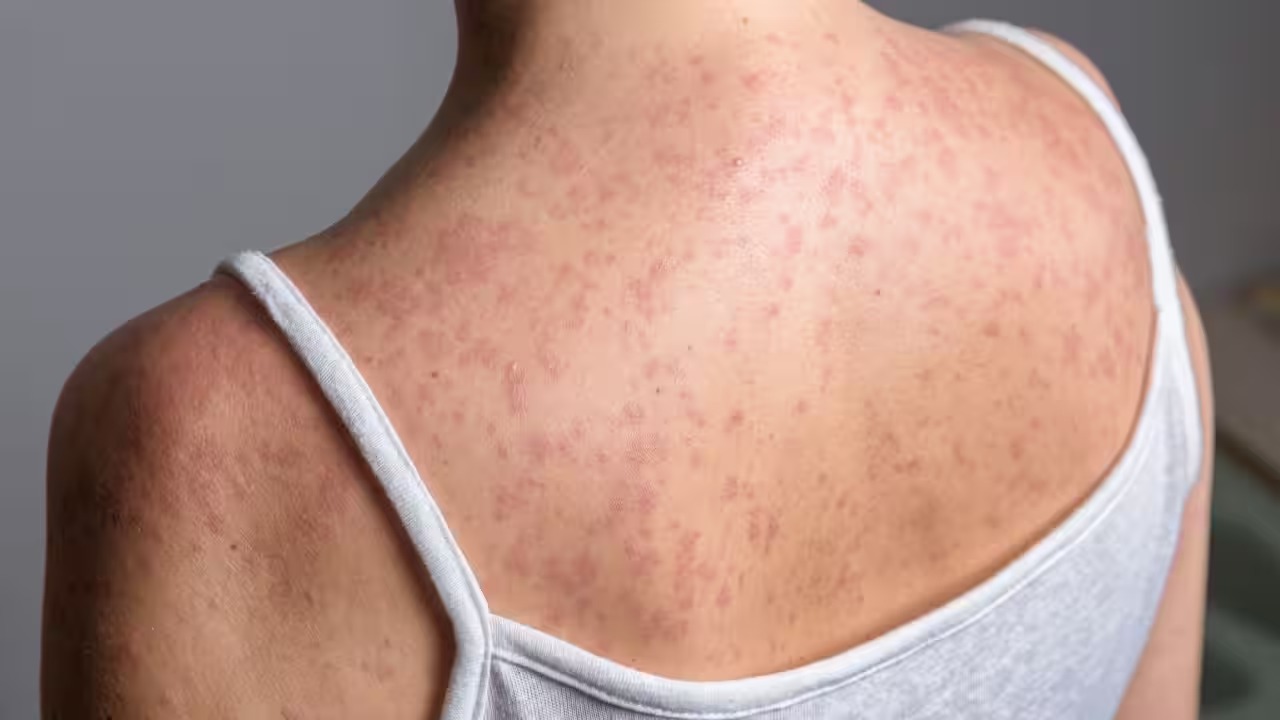
The World Health Organization (WHO) has warned that global efforts to eliminate measles have lost momentum, with vaccination coverage remaining below the levels needed to prevent transmission and misinformation contributing to vaccine hesitancy, AFP reported.The warning comes a week after the United States lost its measles elimination status, following a rise in cases linked to declining vaccination rates. The WHO said the Covid-19 pandemic had also disrupted immunisation programmes worldwide, leaving several countries struggling to restore coverage to pre-pandemic levels and reach children who missed vaccinations during the crisis.WHO vaccines chief Kate O'Brien described the situation in the US as a reminder of how quickly preventable diseases can return when immunisation rates fall."Are we ringing the alarm bell about the number of children who are unvaccinated or under vaccinated? Absolutely. Measles is the most infectious virus known to humans," O'Brien said at a press conference at the agency's headquarters in Geneva."It is back -- and the world is learning just how sick and just how dead measles can make you."Global vaccination coverage remains below targetIn its assessment, the WHO said progress against measles had stalled in recent years. The estimated share of children receiving their first vaccine dose remained at 84% in 2025, unchanged from the previous year and below the 86% recorded in 2019, before the pandemic.Coverage for the second dose stood at 77% in 2025, matching an all-time high. The agency attributed the figure partly to more countries including the second dose in their routine immunisation programmes.Gabon and the Central African Republic are the only two WHO member states that have yet to introduce a second measles vaccine dose into their routine schedules.However, the agency said at least 95% coverage with both doses is necessary to interrupt transmission and protect communities.An estimated 20.8 million children did not receive any measles vaccine in 2025, while another 8.3 million received only one dose. Although the proportion of unvaccinated children remained stable, their overall number increased as the global number of newborns rose.Measles typically affects children and can cause fever, respiratory symptoms and skin rashes. In severe cases, it can lead to pneumonia and inflammation of the brain, potentially resulting in permanent complications or death. Children are generally offered two doses of the vaccine by the time they are 18 months old.WHO flags misinformation and political polarisationThe WHO also identified misinformation and disinformation as major obstacles to improving vaccine uptake, saying they were contributing to confusion among parents about immunisation.O'Brien said vaccine discussions had become increasingly tied to political and ideological divisions in several countries."Misinformation and disinformation" were a significant contributor to parents being "confused about what they should be doing", she said.The US has reported more than 5,400 measles cases this year, marking its worst outbreak in more than three decades, according to AFP. Medical experts have criticised Health Secretary Robert F. Kennedy Jr, a prominent vaccine sceptic, over his repeated questioning of vaccine safety, arguing that such statements have fuelled public distrust.O'Brien also cautioned against the practice of deliberately exposing children to measles, sometimes described as attending 'measles parties', in an attempt to develop immunity."Exposing children to measles is a terrible idea," she said, rejecting the notion that contracting the infection was a normal part of growing up."I really want to dispel this idea that measles is some rite of passage of childhood. It's not. It's a serious illness for which we have a safe and effective vaccine."Measles vaccination has saved more than 60 million livesDespite the setbacks, the WHO highlighted the impact of vaccination programmes over the past two decades. Measles immunisation since 2000 is estimated to have prevented more than 60 million deaths, making it the most life-saving childhood vaccination effort over the past 50 years, according to O'Brien.WHO modelling estimates that there were around 9.8 million measles cases and 72,000 deaths worldwide in 2025. The death toll was the lowest on record, while annual cases had fallen from an estimated 37.8 million in 2000, as cited by AFP.However, outbreaks remained widespread. Fifty-nine countries experienced large or disruptive measles outbreaks last year, including 28 in the African region and 13 in Europe. Eleven of those countries had either previously received verification of measles elimination or were currently verified as having eliminated the disease.The WHO said 92 countries had been verified as having achieved or maintained measles elimination.You use AI every day. Now get your AI Quotient. Take the AIQ test.
Topics in this story
Gathered from external sources. Rights to this text belong to whoever originally published it.