Archaeologists discover evidence of an ancient “brand” 3,000 years before modern marketing
Rest of World News: More than 3,000 years ago, potters working in the desert oasis of Qurayyah in what is now northwestern Saudi Arabia were producing a distinctive paint.
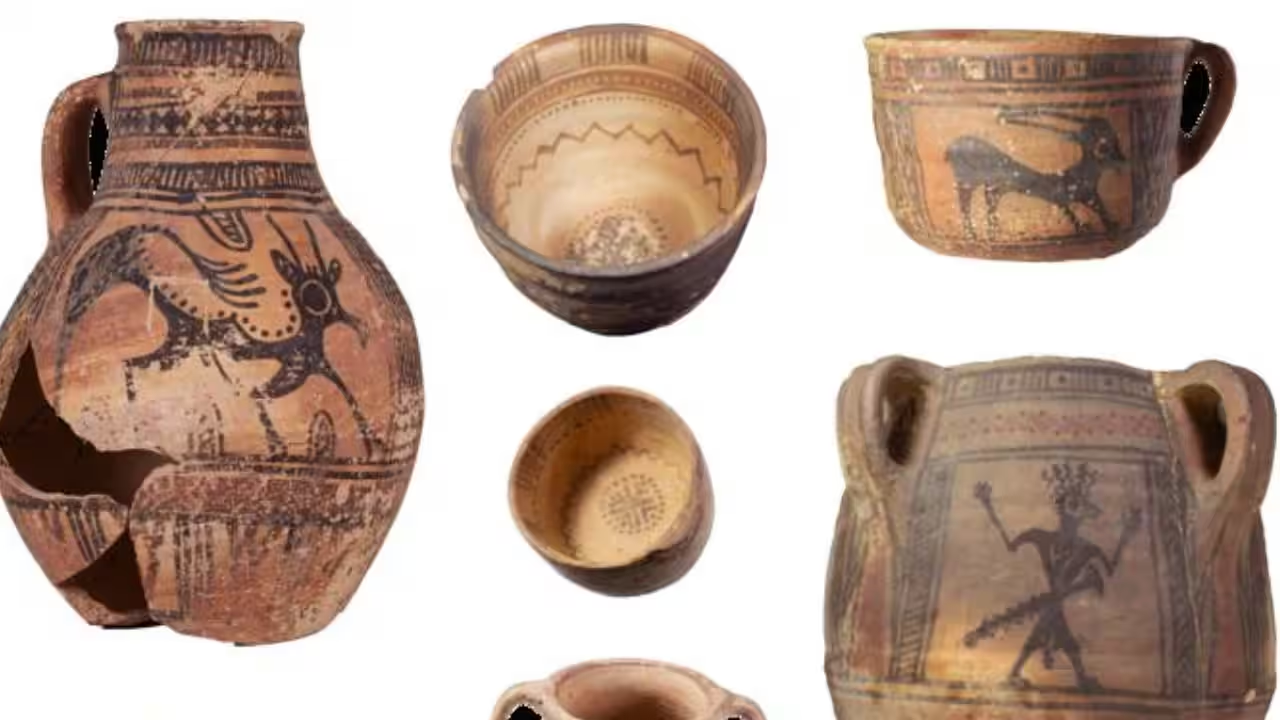
More than 3,000 years ago, potters working in the desert oasis of Qurayyah in what is now northwestern Saudi Arabia were producing a distinctive painted pottery that eventually travelled beyond the settlement where it was made. A new study titled Creating a brand. Genesis, transformation and diffusion of Qurayyah Painted Ware, published in PLOS ONE, has now combined archaeological, petrographic and chemical evidence to reconstruct how that pottery developed over several centuries, eventually becoming what researchers describe as an early example of brand-making. Known as Qurayyah Painted Ware, or QPW, the pottery was recognisable for its distinctive bichrome designs and consistent manufacturing traditions. By the time the fourth major production phase, known as QPW 4, emerged during the Late Bronze Age, the vessels were being produced in substantial quantities and had begun appearing outside Qurayyah, including at Tell el-Kheleifeh in southern Jordan and at the Hathor Shrine in Timna. Researchers argue that QPW 4 was more than simply a recognisable style of pottery: its consistent appearance, local production, export circulation and eventual imitation elsewhere suggest that people had begun associating the distinctive vessels with a particular place, quality and identity.How pottery made in the Saudi desert became recognisable across the regionThe story begins at Qurayyah, an oasis in northwestern Arabia that became the centre of a long-running pottery tradition. According to the new study, the earliest forms of Qurayyah Painted Ware, QPW 1 and QPW 2, emerged during the late Middle Bronze Age and early Late Bronze Age. The researchers found that these early productions were locally developed rather than simply copied from pottery traditions elsewhere. Over time, the production changed. Different generations of potters modified the shapes, decoration and manufacturing methods, but the basic connection to Qurayyah remained. The researchers identified seven different QPW assemblages extending from the Bronze Age into the Iron Age, showing that the painted pottery tradition continued for more than a millennium. The fourth phase, QPW 4, is where the researchers believe something different happened. By this point, the pottery had developed a particularly distinctive visual identity, while the use of local raw materials and established production techniques remained consistent. Kilns at Qurayyah also provide evidence of centralised production, including manufacturing waste and overfired vessels.For the researchers, that combination is important because a brand is not simply an attractive design. It also involves a recognisable identity tied to production, consistency and a relationship between producers and consumers. QPW 4 increasingly met those conditions.How scientists proved that some of the pottery travelled north from QurayyahThe strongest evidence for QPW 4 becoming an export product comes from pottery fragments found outside Qurayyah itself. Researchers examined samples from Tell el-Kheleifeh, a site in southern Jordan located about 130 kilometres northwest of Qurayyah. Several of the fragments had previously been identified as pottery resembling the Hejazi tradition, but the new chemical and petrographic analysis provided a more precise connection to Qurayyah. Three QPW 4-like sherds from Tell el-Kheleifeh matched Qurayyah's chemical group V032. Their mineral composition and manufacturing characteristics were also compatible with the production evidence from the Qurayyah kiln. Taken together, the researchers say the evidence strongly suggests that these vessels were actually produced at Qurayyah and then transported north to Tell el-Kheleifeh.The researchers found another important connection farther north at the Hathor Shrine in Timna, in what is now southern Israel. Two pottery sherds from the shrine also matched the same Qurayyah geochemical group. The study therefore identifies Timna, alongside Tell el-Kheleifeh, as another place where vessels produced at Qurayyah were used. The distances are significant, but the researchers are cautious about how widely they extend the conclusion. They do not claim that every piece of pottery resembling QPW 4 found throughout the Southern Levant must have been imported from Qurayyah. Chemical compatibility has so far been established only for a limited number of samples, and the authors acknowledge evidence for local production imitating the distinctive Qurayyah style elsewhere.Why researchers think QPW 4 qualifies as an ancient brandThe study's central argument is that QPW 4 meets several characteristics that researchers associate with branding. First was its appearance. The pottery developed a standardised and conspicuous visual identity, making it recognisable even outside the place where it was manufactured. Then came consistency. The researchers found evidence for continued use of local raw materials and manufacturing traditions, linking the later QPW 4 production to the earlier QPW tradition at Qurayyah. That technological continuity helped create a product that remained recognisable while still evolving over time.There is also evidence that the pottery was produced beyond what would have been required simply for local household use. Hundreds of decorated QPW 4 vessels are known, and the researchers argue that their scale of production points toward intentional commercial manufacture. Finally, there is evidence that the style was copied elsewhere. The researchers point to local imitations of QPW 4 in parts of the Southern Levant, suggesting that the pottery's visual identity had become desirable enough for other producers to reproduce it. In modern terms, that would be an important sign that the original product had developed a reputation that extended beyond its place of manufacture. The researchers therefore argue that by the final Late Bronze Age, Qurayyah's pottery tradition had developed into something resembling a recognisable regional brand, with its identity tied closely to its place of origin.What the pottery reveals about trade and identity in ancient ArabiaThe findings also challenge the idea that long-distance trade and recognisable commercial identities are primarily features of much later economies. The people producing QPW 4 were operating thousands of years before modern companies, trademarks or formal advertising existed, yet the pottery appears to have developed many of the characteristics associated with a recognisable commercial product. That does not mean ancient consumers understood the pottery as a "brand" in the modern corporate sense. The researchers use the term as an analytical framework for describing how a product can communicate information about its origin, quality, status and cultural meaning. In the case of QPW 4, its distinctive appearance and connection to Qurayyah may have helped consumers recognise and value it beyond the oasis where it was made. The researchers also point to the pottery's use in contexts that went beyond ordinary utility, including burial gifts and miniature vessels. Its visual motifs also appear to have influenced other forms of craft production, suggesting that the style had acquired a cultural identity extending beyond pottery itself.Catch the latest World News and Live updates. Download the TOI app.
Topics in this story
Gathered from external sources. Rights to this text belong to whoever originally published it.