Russia, China veto US push to extend UN panel mandate monitoring Iran sanctions for a year
Europe News: Russia and China on Thursday vetoed a US-backed resolution at the UN Security Council that sought to keep a panel of experts monitoring sanctions impo.
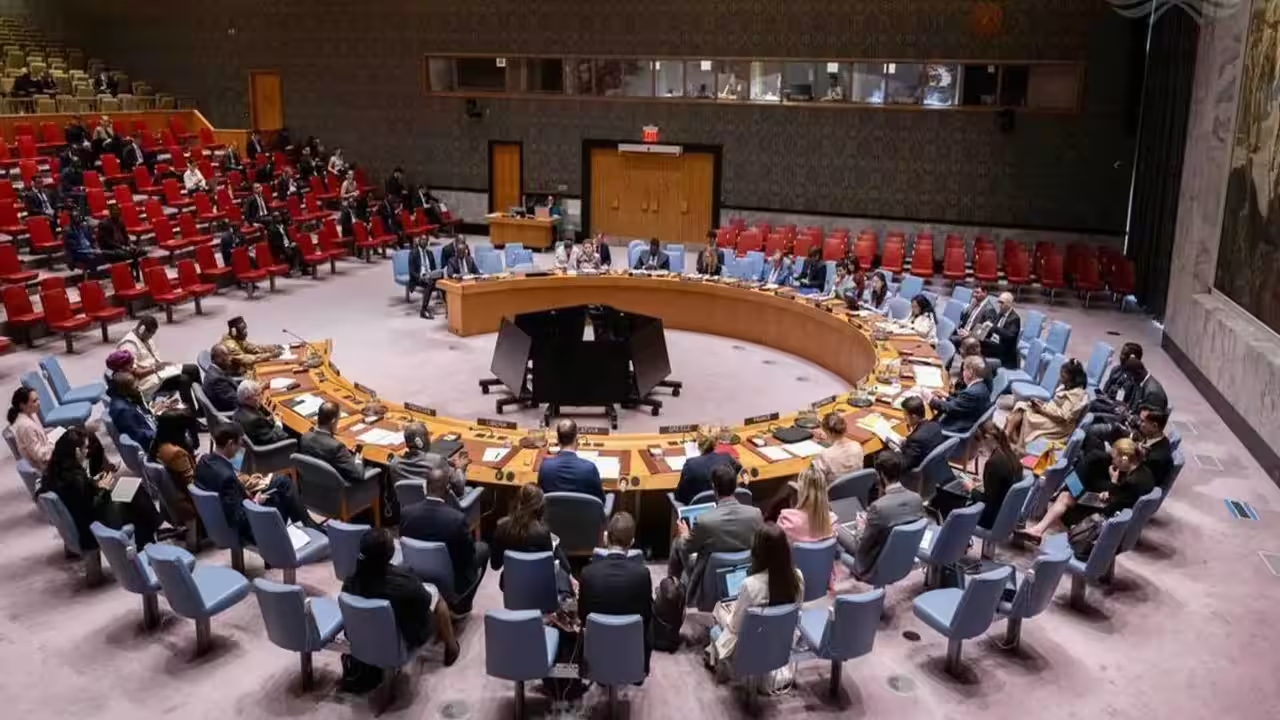
Russia and China on Thursday vetoed a US-backed resolution at the UN Security Council that sought to keep a panel of experts monitoring sanctions imposed on Iran over its nuclear programme.The resolution received 11 votes in favour, while Pakistan and Somalia abstained. The Russian and Chinese vetoes blocked its passage despite the majority backing.The sanctions themselves remain in force. They include restrictions on arms deals with Iran, a freeze on certain Iranian assets abroad and measures targeting the country's ballistic missile programme.How the Iran sanctions came backThe sanctions were restored in September 2025 after France, Germany and the UK invoked the "snapback" mechanism in the 2015 nuclear agreement with Iran.The mechanism allowed the previous UN sanctions to return after the European powers accused Iran of failing to meet its nuclear commitments. Iran has rejected accusations that it is seeking nuclear weapons.The US wanted the expert panel's mandate extended for another year so that it could continue documenting possible violations and sanctions evasion.However, the panel has not been fully operational because Security Council members failed to agree on its members. The latest vote effectively ends the effort to extend its mandate.Russia and US clash over legalityRussia has argued that the return of the sanctions was legally invalid. Russian UN ambassador Vassily Nebenzia said the US resolution "was deeply flawed and did not have any legal basis".He said Moscow and Beijing had warned Washington against putting the resolution to a vote, arguing that doing so would increase tensions at the Security Council.The US took the opposite position. Deputy US Ambassador to the UN Jennifer Locetta said the experts "would have shined the light" on prohibited cooperation between Iran and its partners."Without an independent panel of experts, this council loses its principal source of impartial, evidence-based reporting on sanctions violations, creating a monitoring gap that only benefits the Iranian regime and those who profit from evading those measures," Locetta said.Iran welcomed the Russian and Chinese vetoes, saying they "prevented yet another cynical attempt by the United States and its allies to abuse the Security Council for their political purposes."What happens to sanctions monitoring nowThe US is separately tightening pressure on Tehran. Washington announced sanctions against two companies and three associates of Iranian businessman Babak Zanjani, accusing them of helping sanctioned Iranian entities access the international financial system through digital currency networks.The dispute comes amid wider tensions over Iran's nuclear programme. The International Atomic Energy Agency (IAEA) has faced difficulties verifying Iran's enriched uranium stockpile since Israeli and US strikes on Iranian nuclear facilities in 2025.The IAEA has reported that Iran had 440.9 kilograms of uranium enriched to up to 60% purity, below the 90% level generally associated with weapons-grade enrichment.France has said sanctions remain an important tool for encouraging Iran to comply with its nuclear obligations. One option under discussion is to create a separate monitoring arrangement involving France, Germany, the UK and the US after the UN expert panel's mandate ends.Catch the latest World News and Live updates. Download the TOI app.
Topics in this story
Gathered from external sources. Rights to this text belong to whoever originally published it.