The Danube has fallen so low that a 1,600-year-old Roman bridge is emerging from the river, revealing a piece of history hidden underwater for centuries
Europe News: For centuries the waters of the Danube, Europe's second-longest river, have concealed the remains of a remarkable Roman engineering feat. The river is.
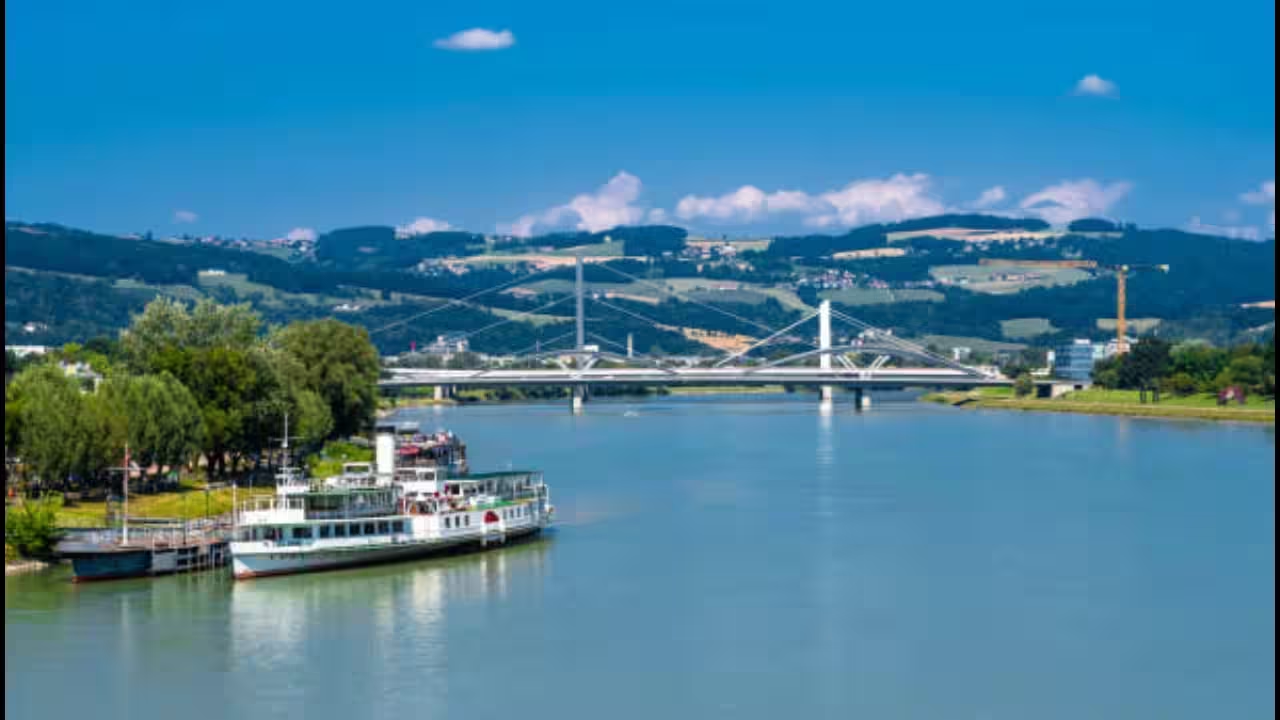
For centuries the waters of the Danube, Europe's second-longest river, have concealed the remains of a remarkable Roman engineering feat. The river is currently at extremely low levels, and parts of a 1,600-year-old bridge are emerging from the water, giving archaeologists a rare glimpse of a structure that has been largely concealed for centuries, states a Reuters report. According to the same report, the visible remains belong to the Constantine Bridge, one of the most ambitious bridges built in the Roman Empire. Archaeologists in Bulgaria are making use of the unusual conditions to record sections of the ancient building before the rising water levels hide them once again. Scroll down to read the details of the findings.An emperor's BridgeIf we go by the online reports, the bridge was built on the order of the Roman emperor Constantine I and opened in AD 328. Sucidava, on the other side of the Danube in present-day Romania, was linked to it, and to the ancient city of Ulpia Oescus in modern northern Bulgaria. The bridge was over 2 kilometers long and a remarkable feat of engineering in ancient times. It is considered one of the longest bridges of the ancient world, but it did not last very long. Historical evidence indicates that a large part of the bridge was destroyed around A.D. 367, and its remains lie beneath the Danube.Drought shows hidden foundationsA series of record-breaking heatwaves across Europe this summer has contributed to severe drought in parts of the continent, states Reuters. Major waterways like the Danube and Rhine are experiencing unusually dry conditions. The water level has fallen, exposing parts of the foundations of the Constantine Bridge near the village of Gigen in northern Bulgaria. The brief exposure offered archaeologists a rare chance to study the remains in their natural setting. âNature for some time exposes an object which is hidden under the Danube most of the time,â said Pavel Popov from the Regional Historical Museum in Pleven, describing the conditions as especially valuable for archaeological research to Reuters.Ancient ruins as seen by dronesRecently, a team from the Pleven museum visited the site to document the newly exposed remains. The exposed foundations were mapped by the researchers, who followed the line of the remaining structures, assessed their current state, and photographed them with drones. Aerial imagery enabled archaeologists to record details that would be difficult to capture from the riverside or water level. It is reported that the documentation would help researchers better understand the construction, layout, and surviving remains of the bridge.A rare glimpse of Roman engineeringThe Constantine Bridge is more than a spectacular find in archaeology. Its brief appearance is a rare opportunity for researchers to study an ancient structure normally buried beneath the Danube. Eventually the water levels will rise again and much of the bridge will be out of sight. But the photographs, maps and measurements made during this period could retain important facts about one of the Roman Empireâs most impressive engineering achievements.For now, the Danube has retreated, offering a brief glimpse of the past and revealing a bridge built almost 1,600 years ago that has emerged from the river that hid it, allowing modern researchers to reconnect with a remarkable chapter of Roman history.Image Courtesy: istockCatch the latest World News and Live updates. Download the TOI app.
Topics in this story
- 1600-year-old Roman bridge emerges from Danube
- ancient Roman bridge revealed by low water levels
- Roman bridge discovered in Bulgaria's Danube
- Danube drought reveals ancient Roman bridge
- Constantine Bridge archaeological discovery
- ancient Roman ruins exposed by drought
- Roman bridge near Gigen Bulgaria
- World news
- World news today
- World news live
- Top news in US
- Breaking news
Gathered from external sources. Rights to this text belong to whoever originally published it.