They call it the world’s most dangerous bird, and yet it does the gardening
Standing nearly six feet tall with a dagger-tipped foot and a reputation for ferocity, the southern cassowary seems built for destruction. But the rainforest...
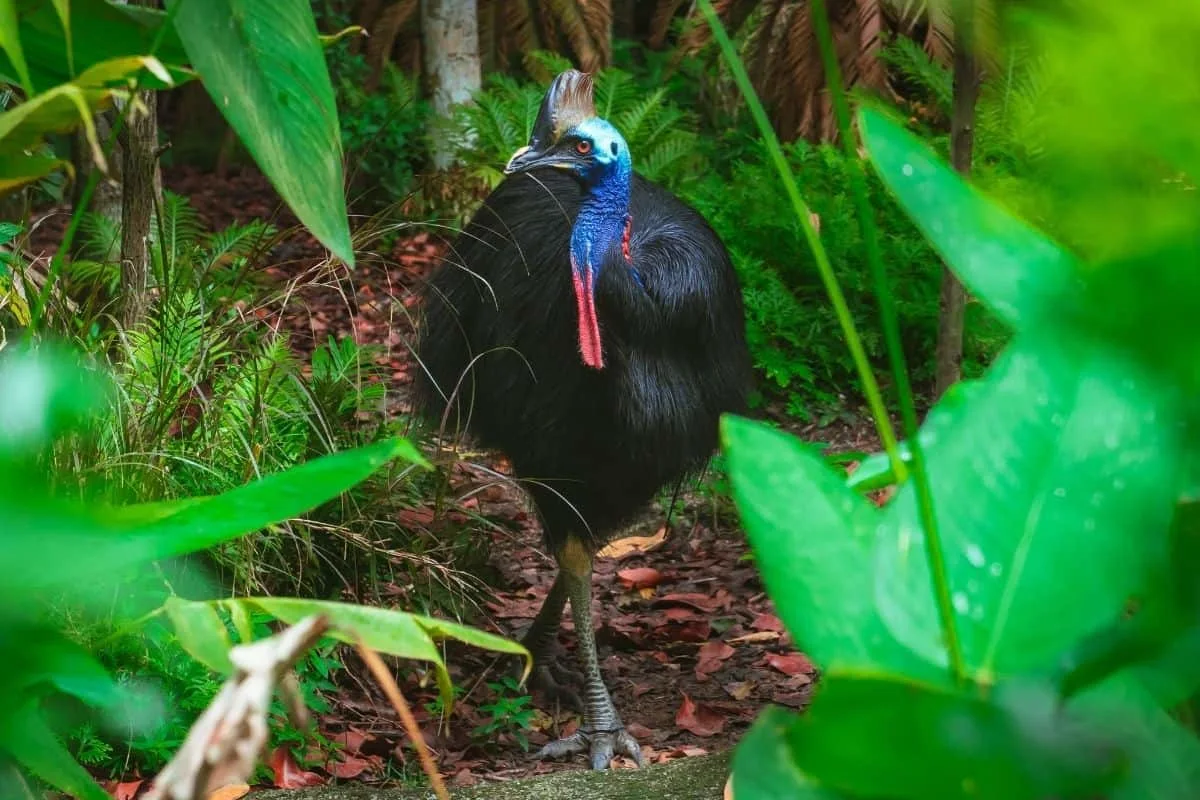
In the dense, humid forests of northern Australia and New Guinea, one bird stands out not just for its unusual looks, but for its formidable reputation. The southern cassowary, Casuarius casuarius, is a towering presence at nearly six feet tall and up to 165 pounds. But its story stretches beyond its size, this animal holds the title of the world's most dangerous bird for reasons both dramatic and crucial to its ecosystem.
Encounters with a cassowary , sometimes called a "living dinosaur," are rare. Spotting one in the wild reveals its prehistoric silhouette: pitch-black fluff contrasts sharply with a vivid blue neck and green nape, while two dangling red wattles frame its throat. But it's the helmet-like crest on its head, a keratinous casque, larger in females, that draws the most attention. Despite speculation, researchers can't agree whether this casque helps the bird navigate thick brush, display dominance, or simply serve as a kind of shock absorber.
Its feet, however, leave no questions unanswered. With three toes, one of which boasts a dagger-like claw longer than four inches, the cassowary is more than equipped to defend itself. A single kick is capable of inflicting devastating injuries.
Stories of the cassowary's ferocity aren't just legend. The bird can run at bursts exceeding 30 miles per hour, leap over three feet in the air, and react with blazing speed. Its temperament turns most aggressive during breeding season, when males take on the unusual job of incubating the eggs, a reversal of common bird parenting roles. Threats near a nest, especially from humans, can trigger sudden, territorial attacks.
Despite the fearsome reputation, the reality is more nuanced. Since 1900, there have been fewer than 200 documented incidents involving cassowaries and people, and only two recorded fatalities. Most wild cassowaries avoid humans, a tendency reinforced by their reclusive habits and the dense forest habitat in which they thrive.
Curiously, some scientists have proposed that these birds might have been among the first animals domesticated by humans. Hunter-gatherer groups in New Guinea, according to research, have gathered cassowary eggs for thousands of years, developing a complex and enduring relationship with the species.
Strip away the drama, and the cassowary's importance comes into sharper focus. As a specialist fruit-eater, this bird is unique: it's one of the very few animals capable of swallowing, and later dispersing, large seeds intact over wide distances. Biologists describe the cassowary as the "gardener of the forest" because it helps regenerate more than a hundred tree species, carrying seeds far from the parent plant and giving forests a chance to recover after disturbance.
Its digestive system works in nature's favor. As seeds pass through, tough outer shells are softened by powerful enzymes, boosting the likelihood of germination. Cassowary droppings go even further, enriching the forest floor with nutrients and spreading seeds in places less crowded by other young plants. Without this natural service, some tropical tree species could vanish, threatening the entire ecosystem's balance.
The dual image of the cassowary, as a creature to fear and as a keystone for rainforest health, offers a lesson in the tangled connections of nature. To protect the forests of Australia and New Guinea, conservationists now realize that safeguarding the cassowary is essential. What may appear at first glance to be a menacing animal is, in fact, a critical architect of its own habitat, shaping the jungle's fate in ways unseen by most eyes.
Topics in this story
Gathered from external sources. Rights to this text belong to whoever originally published it.