Volunteers help save one of London's rarest plants
Tower mustard has suffered steep decline in London but has been successfully grown and replanted.
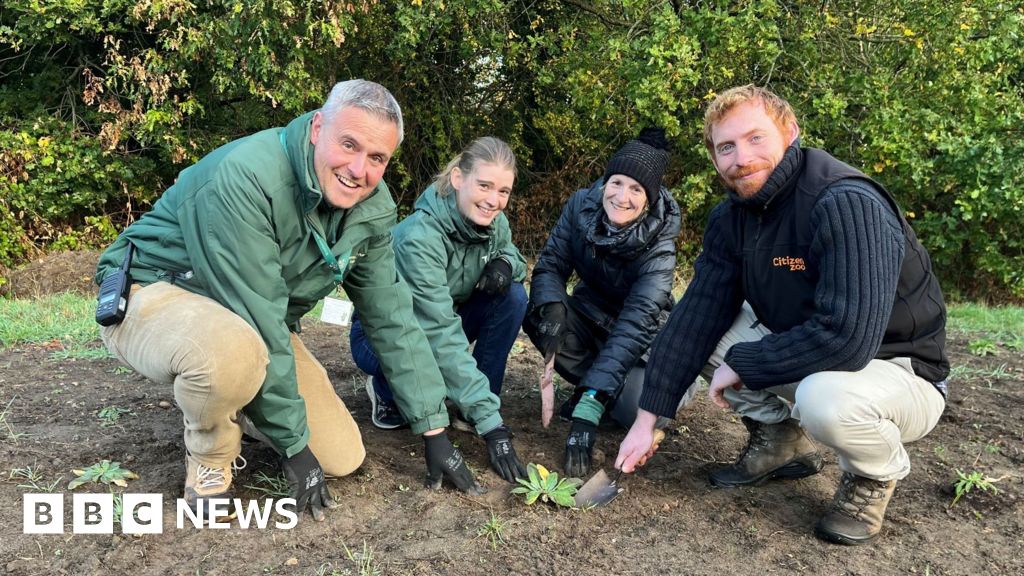
More than 1,000 tower mustard plants have been successfully grown and planted out by volunteers in London.
It marks a successful first year for a major community-led effort to restore one of the capital's rarest native wildflowers, vital for bees, butterflies and rare moths.
Led by Citizen Zoo and Habitats & Heritage, the tower mustard project brings together a network of land managers, community groups, conservation partners and volunteers.
The plants, grown by volunteers, are being reestablished at sites across London, in regions where tower mustard was previously known to occur.
At the core of the project are the Mighty Mustard volunteers.
In March, they attended a workshop, learned how to sow the tiny seeds, and were given their own growing equipment, including pots, seed trays and soil.
Seeds were sourced from London's last remaining tower mustard populations in Lesnes Abbey Woods in Bexley and Stain Hill Reservoir in Richmond-upon-Thames.
Charlotte Harris, nature conservation manager at Habitats & Heritage, said: "[We] are passionate about engaging people in conservation initiatives. Through this tower mustard project, we have enjoyed giving local residents the unique opportunity to get hands-on in conserving one of London's rarest plants.
"We've found the volunteers have become really attached to [them]."
Seeds have now been planted at Wimbledon Common, Hounslow Heath, Lesnes Abbey Woods and Barnes Common.
Harris added: "We are hoping that this model can be used as a blueprint for helping other rare plants with volunteer input in the same way."
The final planting day is at Hampton Court Palace's Home Park on Tuesday, where plants raised separately by the Historic Royal Palaces Gardens Team and volunteers will be used.
Botanist Dr Mark Spencer has also provided expert support throughout the project.
Tower mustard, or Turritis glabra, is a native UK herb that has suffered steep decline due to habitat destruction and changes in land management.
It is thought to survive at around 30 sites across England.
The species is assessed as near threatened on the Great Britain Red List and endangered in England.
Growing to around one metre tall and producing delicate white flowers, tower mustard is associated with open and disturbed habitats and supports pollinators.
This community-led model builds on Citizen Zoo's successful Hop of Hope project which saw volunteers rear large marsh grasshoppers from eggs at home, going on to release the species in wetlands across Norfolk.
Elliot Newton, director of rewilding at Citizen Zoo, said the company hopes to roll out more projects to preserve plants in the face of climate change.
"In London alone, we've lost 185 species of plant. They have gone extinct in recent history."
He said Citizen Zoo have many other plants on their radar, including copse bindweed, a native British climbing plant.
Tower mustard is the first plant species Citizen Zoo has worked with in London, joining a growing portfolio of rewilding projects that also includes beavers, water voles, German hairy snails and white storks.
The tower mustard project is funded by the Greater London Authority's Green Roots Fund and Thames Water.
The project brings together Habitats & Heritage, Barnes Common, Lesnes Abbey Woods, Wimbledon Common, London Borough of Hounslow, London Borough of Richmond upon Thames and Historic Royal Palaces.
Newton said: "These projects may sound small, but they're helping safeguard the future of the city."
Listen to the best of BBC Radio London on Sounds and follow BBC London on Facebook , X and Instagram . Send your story ideas to hello.bbclondon@bbc.co.uk
Children asked to name Ealing's new beavers
Drought devastation: How to protect London's trees
Can a nature corridor increase London's biodiversity?
Topics in this story
Gathered from external sources. Rights to this text belong to whoever originally published it.