Euro slides to 17-month low, boosting dollar’s standing
The value of the euro slid on Monday to a 17-month low amid mounting government debt across Europe. As of mid-afternoon on the East Coast, one euro is worth roughly $1.12, after sinking below that threshold earlier in the day. The European currency hit its lowest point since May 2025, when it was roughly equivalent…
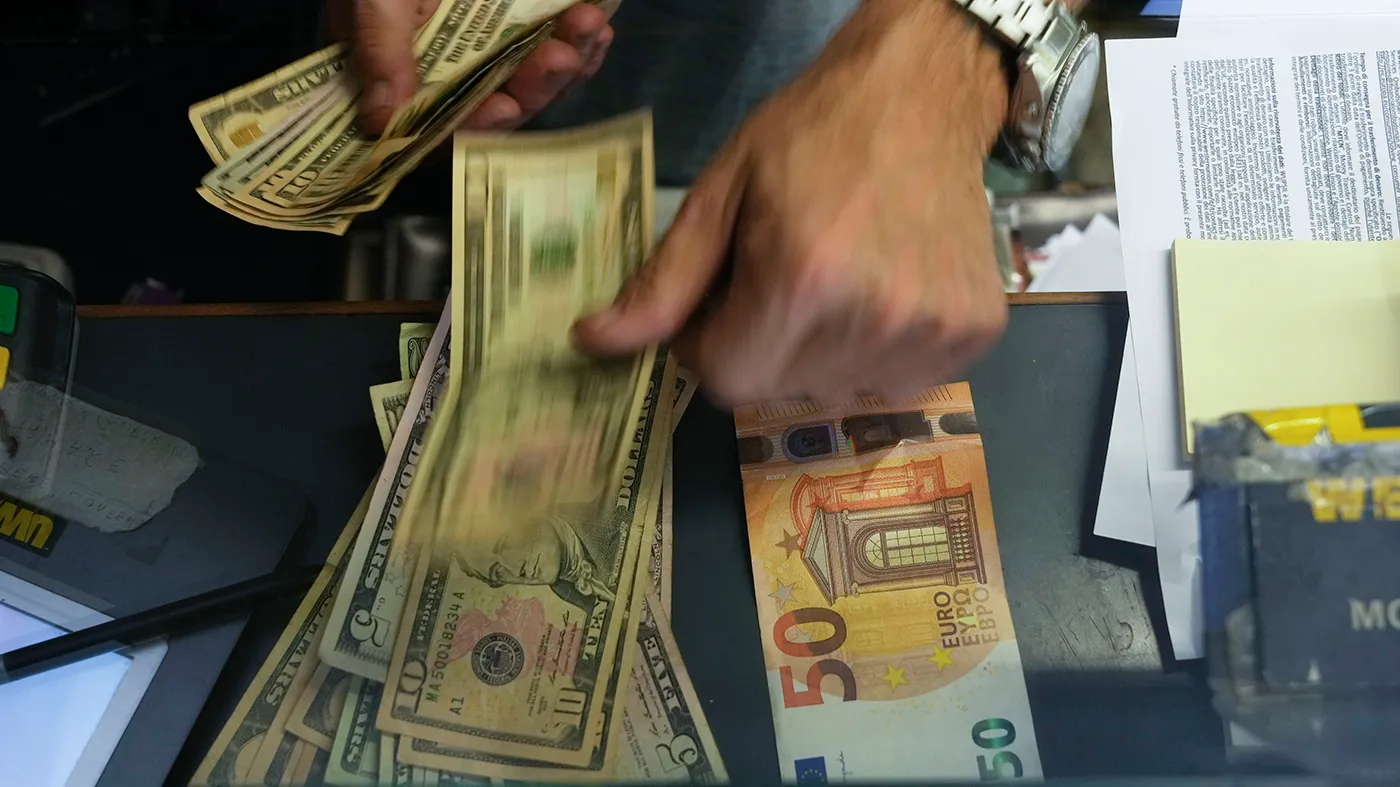
The value of the euro slid on Monday to a 17-month low amid mounting government debt across Europe.
As of mid-afternoon on the East Coast, one euro is worth roughly $1.12 , after sinking below that threshold earlier in the day. The European currency hit its lowest point since May 2025, when it was roughly equivalent to $1.11.
At the start of the year, the euro was worth roughly $1.17. As recently as mid-September, it was worth more than $1.16.
The value of the euro has not dipped below $1 since November 2022, when it was below that mark for roughly six weeks . That marked the first time it was worth less than $1 in about two decades.
A weakening euro strengthens the U.S. dollar in comparison, making European exports cheaper. A stronger dollar relative to the euro could make American-made products more expensive in overseas markets.
The U.S. had a $220.3 billion trade deficit with the European Union (EU) last year, bringing in $632.9 billion worth of goods from EU countries, according to the office of U.S. Trade Representative Jamieson Greer.
Richard Stevens, the executive director of research and product development at CME Group, wrote on Sept. 25 that the U.S. dollar “has shown relative stability” so far this year, noting persistent inflation led the Federal Reserve to raise interest rates by a quarter point last month.
Markets expecting future rate hikes and higher borrowing costs going forward “neutralizes the net impact on the dollar,” Stevens noted.
The global bond market sell-off has not exempted European nations, as rising public debt on the continent and elevated energy costs during the conflicts in Iran and Ukraine have led to investors fleeing.
France’s and Germany’s respective 10-year bond yields closed at roughly $4.86 and $3.50 on Monday, dozens of basis points above where they stood before the U.S. and Israel launched their war on Iran in late February.
The euro also fell after Spanish Prime Minister Pedro Sánchez called a snap election for Nov. 29 on Monday.
Sánchez, a left-wing critic of President Trump who has been in office since 2018, scheduled the election after protests swept across his country amid a housing crisis.
Topics in this story
Gathered from external sources. Rights to this text belong to whoever originally published it.