In 2013, an archivist traced BBC overseas shipment records to a Nigerian television relay station; he found 11 Doctor Who film recordings, including nine episodes still missing in Britain
Rest of World News: In a remarkable discovery, an archivist in Nigeria uncovered 11 film cans of Doctor Who episodes, including nine that had been missing from the UK archives for decades. This major find drops the total number of missing Doctor Who episodes to 97 and highlights the ongoing search for lost television treasures.
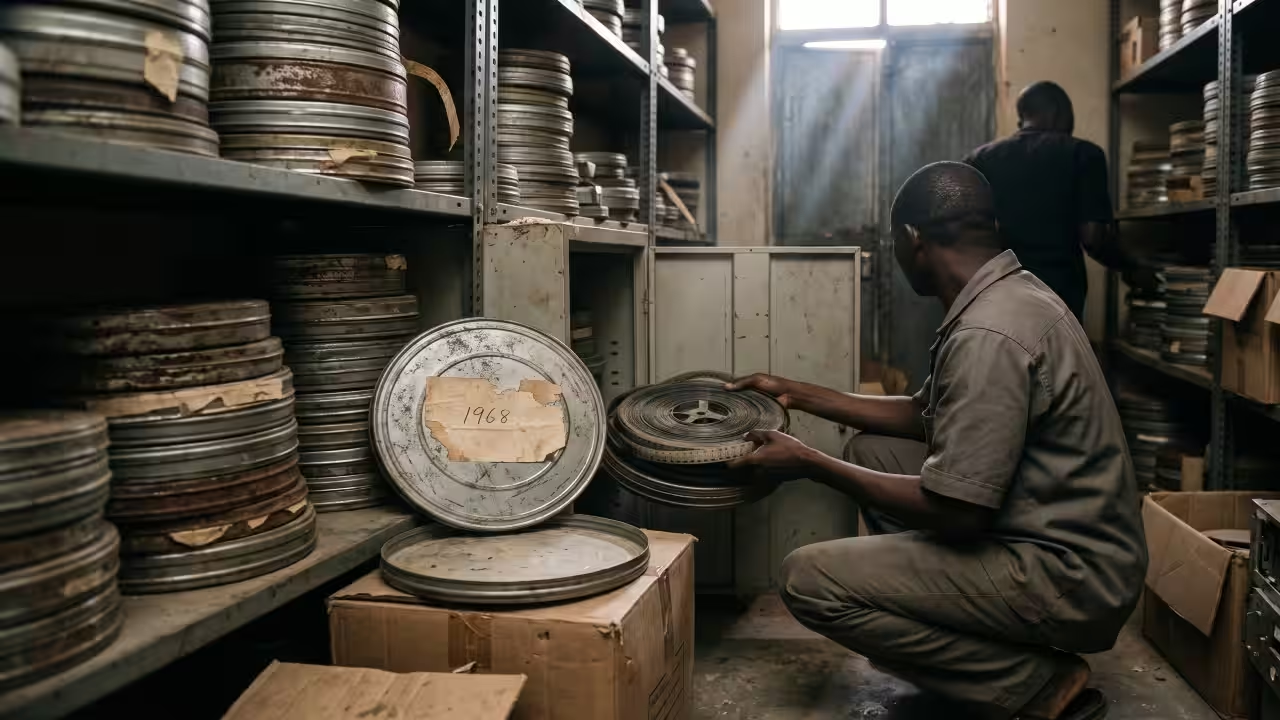
For most of its existence, people considered television disposable. Film reels were junked to free up storage space, broadcasters recorded over old cassettes to save money, and no one at the BBC in the 1960s could have predicted that the broadcasts they were casually erasing would eventually be regarded as cultural treasures. Because of this shortsighted tendency, a large portion of early British television has simply vanished, and its eventual resuscitation usually makes news decades later. This technique particularly affected Doctor Who. Of the 253 episodes of Doctor Who produced between 1963 and 1969, more than 100 were missing from the BBC archives by the time the worldwide search for surviving copies began.Following the paper trail to NigeriaThe specialist was Philip Morris, the proprietor of a company that specialises in tracking down missing television material of this sort. Morris’s company, Television International Enterprises Archive, says his method relies heavily on tracing historical shipment records because old programmes were often sent to overseas broadcasters and later left in storage after their original transmissions.The paper trail took Morris to a television relay station in Jos, a city in central Nigeria, where he was working with the Nigerian Television Authority on an unrelated archival assignment. He spotted several film cans sitting in a dusty storeroom, still marked with their original masking tape labels. When he saw the words ‘Doctor Who’ on the cans and checked the story codes, he realised he had found something importantNine episodes unseen in Britain for decadesIn total, 11 canisters were recovered from the Nigerian relay station, containing full adventures with Patrick Troughton as the Second Doctor, first broadcast from December 1967 to March 1968. Two of the reels turned out to be copies of episodes previously possessed by the BBC, but nine were actually missing, not seen anywhere in Britain since their first transmission nearly half a century ago. Five came from a story entitled The Enemy of the World, which concluded the six-part adventure that was paired with an episode already in the archive. Four came from The Web of Fear, the evocative tale in which the Doctor battled robotic Yeti beneath the streets of London.The find was exceptional by any metric. Morris said on the BBC's own Doctor Who website that the discovery was "possibly the largest haul of lost episodes recovered in twenty-five or thirty years." The haul instantly dropped the total number of missing episodes from 106 down to 97. The recovered material was presented at a London screening attended by Frazer Hines and Deborah Watling, who had played companions Jamie and Victoria, along with writer Mark Gatiss, who described the discovery as ‘thrilling’ and ‘almost impossible to believe.A single canister that got awayNot all of the recovered material made it safely back to Britain. Episode three of The Web of Fear, which contains the first appearance of the character later known as the Brigadier, disappeared before it could be returned to the BBC. Contemporary accounts said it was believed to have been taken and possibly sold to a private collector. The episode therefore remained the one missing piece of an otherwise complete six-part story.The British Film Institute, which holds an annual event for the screening of newly rediscovered British television material, has continued to showcase fresh finds from private collectors and overseas archives since then, proof that the Nigerian relay station was not necessarily the last hiding place of its kind. Since Doctor Who is built around time travel, it is fitting that some of its earliest adventures spent decades undiscovered before finally returning home.Catch the latest World News and Live updates. Download the TOI app.
Topics in this story
Gathered from external sources. Rights to this text belong to whoever originally published it.