Lula is an uncomfortable but necessary trading partner
The relationship with Brazil will require a twofold effort: to contain Chinese expansion and to negotiate with an awkward, unreliable — yet inevitably necessary — partner.
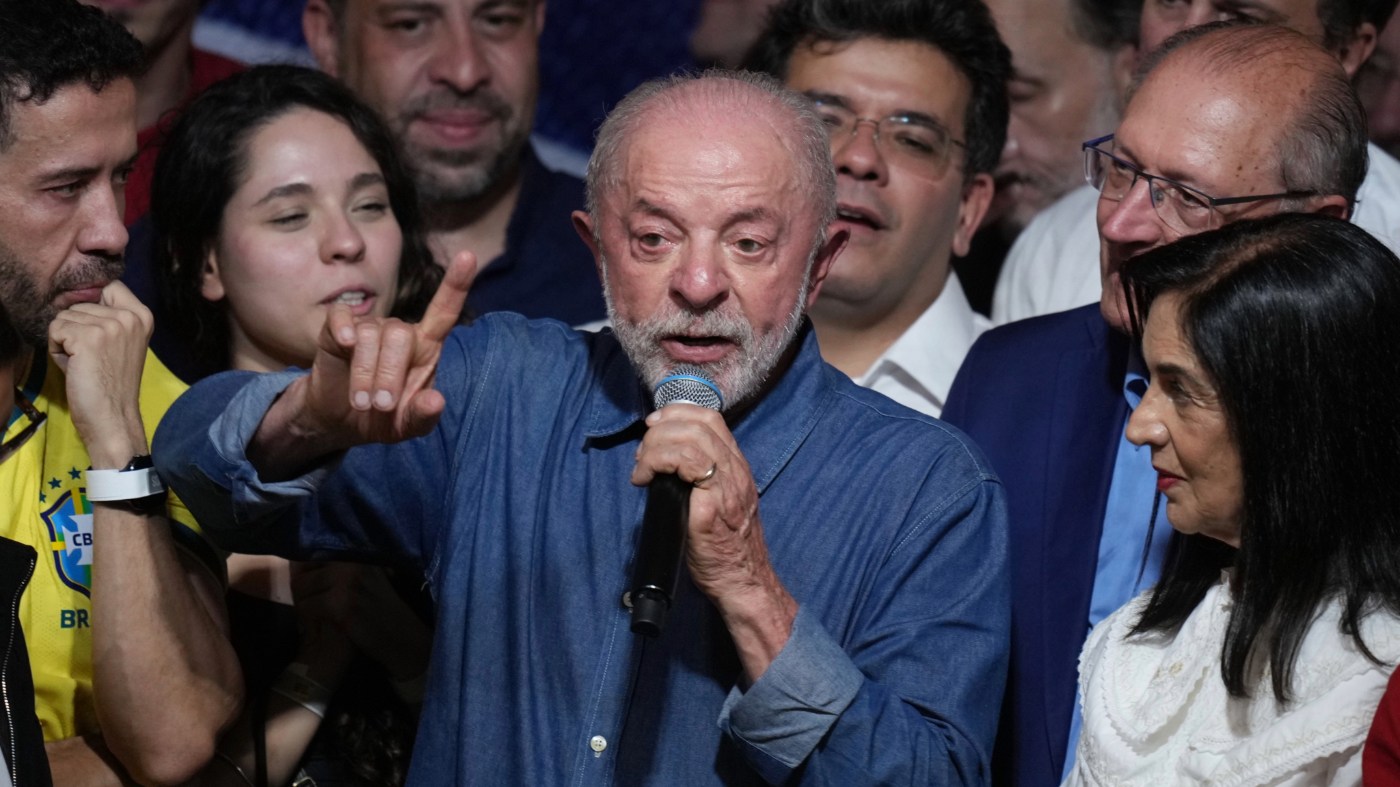
On Oct. 25, Luiz Inácio Lula da Silva became president of Brazil for the fourth time. After a first-round defeat, he made a radical comeback and won the election with 51.8 percent over his rival, President Trump’s ally Flávio Bolsonaro, who reached 48.2 percent. That’s a difference of more than 4 million votes.
Following his victory, Lula stated that Brazil “will not accept being anyone’s backyard.” The next day, President Trump said it “looked like another rigged election.” Despite this, the two presidents have met three times over the last 13 months — not out of ideological affinity, but rather for the sake of commercial pragmatism.
In 2025 , U.S. goods and services trade with Brazil totaled $135.7 billion, up 6.5 percent from 2024. The U.S. is Brazil’s second-largest trading partner . Both countries need each other, beyond the huge ideological differences.
President Trump said : “I’m not running Brazil, I’m running the USA. I like Lula, I get along with him pretty well. I just think it had a very bad look, the election, the way it was tabulated.”
Lula and Trump represent opposite poles. While the U.S. president comes from the private sector, Lula was a labor leader who, for more than 50 years, fought against the private sector. He is a classic 20th-century leftist leader, friend of dictators like Fidel Castro in Cuba and Daniel Ortega in Nicaragua. He knows the populist playbook and knows how to use it.
His electoral victory came with a huge price tag. The leader of the Worker’s Party pushed for at least $57 billion for a massive social program expansion, covering everything from debt relief packages for small business owners to family subsidies for food, gas prices, credit card forgiveness and more.
Yes, Lula won the election, but the next day Brazil currency plunged to a historic 11 percent over the dollar, the lowest record reported in decades, while stock markets panicked and closed down 14 percent.
Beyond Lula’s victory, Brazil continues to be the largest country in Latin America and one of largest democracies in the world. The country will continue to be part of the G20 and the so-called Global South within the BRICS group, which includes Brazil, Russia, India, China and South Africa. It’s a pivotal player with strategic relations with both Western democracies and authoritarian regimes.
Lula’s victory marks a challenge for the new Monroe Doctrine after seven electoral victories in Latin American countries. However, while confronting Brazil is not good for business, ignoring its dangerous alignment with U.S. extra regional adversaries could be a massive mistake.
Lula’s alliance with China goes beyond the traditional trade relations. Earlier this year, Brazil received the military hospital ship Silk Road Ark owned by the People’s Liberation Army Navy. The countries’ naval forces conducted a joint maritime exercise on search and rescue. China also made a demonstration of a combat and rescue operation.
The Brazilian president has opened the door to China’s biggest companies, including electric car company BYD and Huawei, a telecom giant accused of espionage by several European countries and the United States.
Lula has also maintained a critical distance from the “Shield of the Americas,” the U.S. flagship security alliance in the Western hemisphere. Brazil has also refused to designate criminal gangs like the Primeiro Comando da Capital and Comando Vermelho as terrorist organizations.
The recent electoral results in Brazil were not as expected, but they represent a stark reality. The South American nation will be governed for another four years by a strong anti-American socialist — a friend to China, Russia and Iran, as well as defender of the dictatorships of Cuba and Nicaragua. Yet it is also a trading giant that is vital to the United States.
The relationship with Brazil will require a twofold effort: to contain Chinese expansion and to negotiate with an awkward, unreliable — yet inevitably necessary — partner.
Arturo McFields is an exiled journalist, former Nicaraguan ambassador to the Organization of American States, and a former member of the Norwegian Peace Corps. He is an alumnus of the National Defense University’s Security and Defense Seminar and the Harvard Leadership course.
Topics in this story
Gathered from external sources. Rights to this text belong to whoever originally published it.