A radioactive material facility polluted an Illinois creek for decades; the 6.7-mile Superfund site has now been removed from the cleanup list
A 6.7-mile stretch of creek and river in DuPage County, Illinois, has reached a major milestone after decades of radioactive contamination linked to a
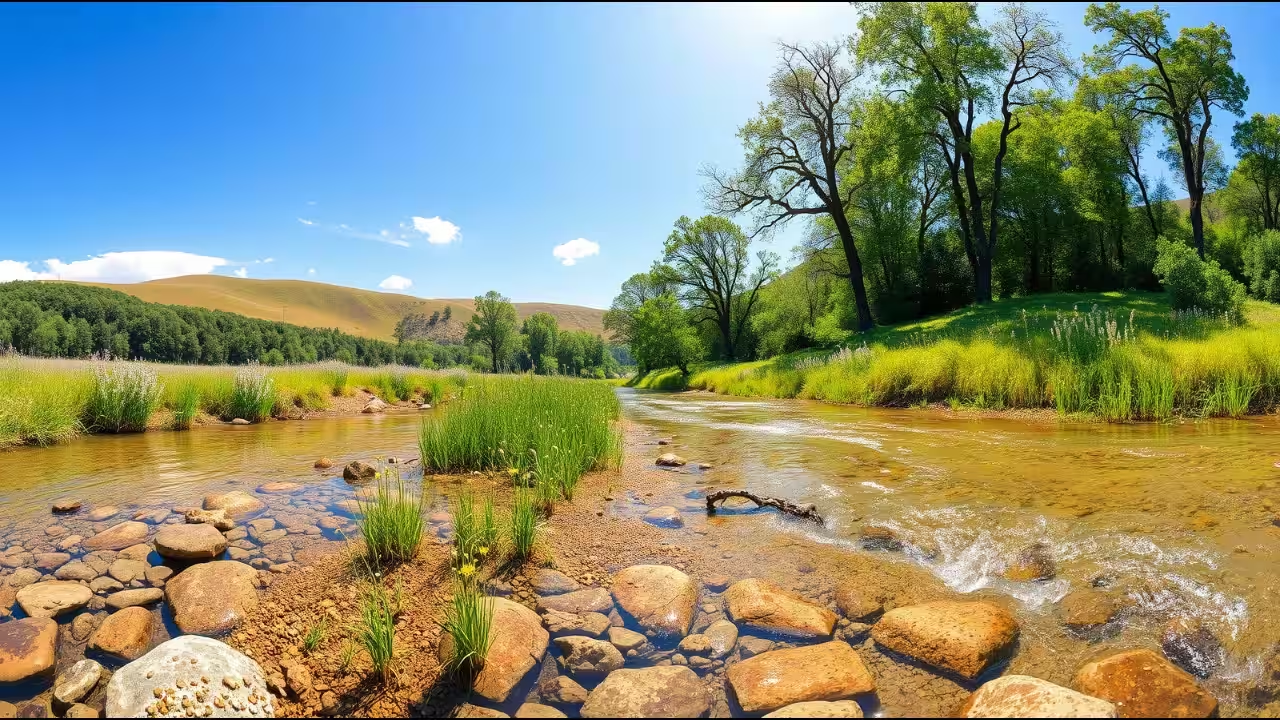
A 6.7-mile stretch of creek and river in DuPage County, Illinois, has reached a major milestone after decades of radioactive contamination linked to a former industrial facility. The US Environmental Protection Agency deleted the Kerr-McGee Kress Creek/West Branch DuPage River Superfund site from the National Priorities List in August 2026, meaning the site no longer requires further Superfund response action to protect human health and the environment. The contamination was linked to the former Rare Earths Facility in West Chicago, which operated from 1932 to 1973 and processed rare earth elements and radioactive materials, as well as producing gas lantern mantles. Radioactive surface runoff from the facility entered Kress Creek, while thorium-containing material spread through the sediment and banks of the creek and the West Branch of the DuPage River, as well as some surrounding floodplain areas. This remarkable environmental recovery demonstrates how sustained, decades-long remediation efforts can successfully restore contaminated waterways, offering communities renewed confidence in their local ecosystems' long-term health and safety.How the Rare Earths Facility contaminated Kress CreekThe former facility was operated by Lindsay Light and Chemical Company and later by other companies, including Kerr-McGee. Its operations involved processing rare earth ores and radioactive materials, including thorium. Waste generated during those activities became part of a much larger environmental cleanup in the West Chicago area.The Kress Creek site was placed on the National Priorities List in 1991. EPA describes the Superfund site as covering approximately 6.7 miles, including Kress Creek and the West Branch of the DuPage River. Radioactively contaminated material was found in creek sediments, along streambanks and in portions of the floodplain. The contamination was part of a wider legacy from the former Rare Earths Facility. Four separate West Chicago-area sites associated with radioactive waste from the facility were ultimately placed on the National Priorities List.Crews removed contaminated soil and sedimentMajor cleanup work at Kress Creek began in 2005. EPA records describe the removal of contaminated soil and sediment from sections of Kress Creek and the West Branch of the DuPage River, followed by restoration of the affected areas. EPA's site profile says more than 129,000 cubic yards of contaminated material were removed during the cleanup. EPA's site profile dates the end of cleanup to October 2012, while the agency's September 3, 2026 release says cleanup was completed in 2014, with restoration continuing until 2025. An Illinois EPA page concerning the proposed deletion also gives October 2012 as the completion date.The cleanup was carried out section by section. Crews removed contaminated material from each area and then restored the affected sections with clean backfill and vegetation. Restoration work continued as the project progressed and remained underway after the cleanup phase, ultimately continuing through 2025. EPA and local officials marked the site's recent delisting at an event at McDowell Grove on September 3, 2026.Kress Creek was one of four Superfund sitesThe Kress Creek site was one of four National Priorities List sites created to address radioactive contamination associated with the former Rare Earths Facility. EPA says the Reed-Keppler Park site was deleted from the National Priorities List in 2010, followed by the Sewage Treatment Plant site in 2013. Kress Creek became the third of the four sites to be deleted.The Residential Areas site has also undergone cleanup but remains on the National Priorities List until the former Rare Earths Facility is addressed under the oversight of the Illinois Emergency Management Agency. The broader cleanup has therefore taken place in stages rather than as a single project. The Kress Creek delisting represents the completion of the Superfund process for that particular waterway and its associated contaminated areas.What National Priorities List deletion meansRemoval from the National Priorities List does not necessarily mean that every trace of historical contamination has disappeared from an area. Rather, deletion indicates that EPA has determined that the site no longer requires further Superfund response action based on the cleanup completed there. EPA proposed removing Kress Creek from the National Priorities List in March 2026 and formally deleted the site in August. EPA and local officials subsequently held the September 3 event in DuPage County to mark the recent delisting.The Illinois Department of Natural Resources, which discusses Kress Creek as part of the state's natural resource trustee work, says the original source of the radioactive contamination has been addressed so that additional thorium is no longer entering the environment from the former facility. For communities around West Chicago and DuPage County, the delisting represents the latest stage in a cleanup that has stretched across decades. Contaminated material was removed from the creek and river system, affected areas were restored, and the federal government has now formally taken Kress Creek off the National Priorities List. The history of the site nevertheless illustrates how contamination from an industrial operation can persist long after the facility itself has stopped operating. The former Rare Earths Facility closed decades ago, but its radioactive legacy required years of investigation, excavation, disposal and restoration before the Kress Creek Superfund site could reach its 2026 delisting.You use AI every day. Now get your AI Quotient. Take the AIQ test.
Topics in this story
Gathered from external sources. Rights to this text belong to whoever originally published it.