5 crucial issues lawmakers want Trump to address with China
President Trump and Chinese President Xi Jinping will hold a series of high-stakes meetings in Washington, marking the first official state visit by China’s leader in more than a decade. The meetings come at a fragile moment in relations between the U.S. and Beijing, which have spent the better part of the last two years…
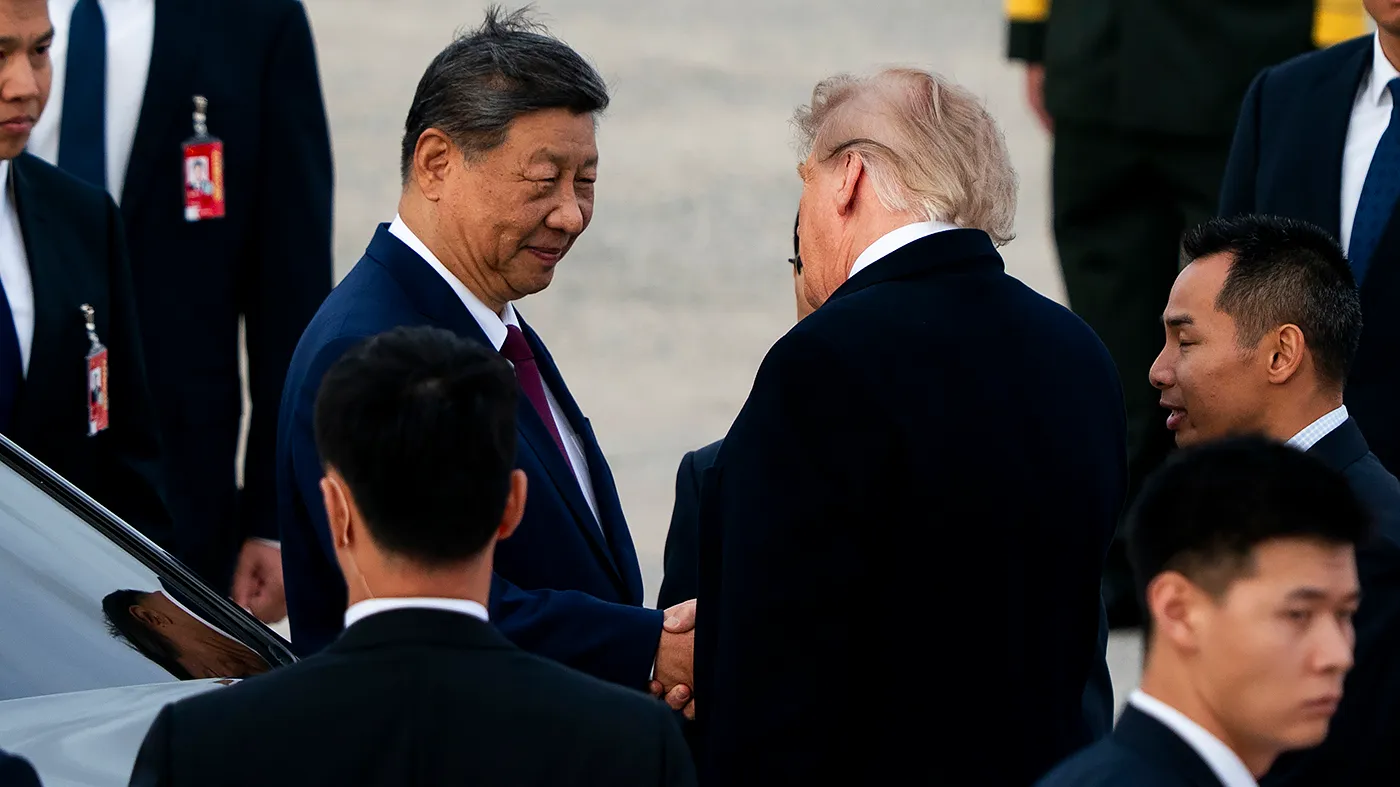
President Trump and Chinese President Xi Jinping will hold a series of high-stakes meetings in Washington, marking the first official state visit by China’s leader in more than a decade.
The meetings come at a fragile moment in relations between the U.S. and Beijing, which have spent the better part of the last two years embroiled in a drag-out trade war sparked by Trump’s global tariffs.
Trade will be front and center, as the two superpowers are expected to discuss ways to stabilize agreements and ease the economic volatility that’s accompanied the retaliatory feud. But it’s hardly the only hot-button issue on the menu this week.
Trump and Xi are also facing pressure to tackle safety concerns surrounding artificial intelligence amid growing concerns about catastrophic risk. Beijing’s role in propping up Tehran in the middle of the Iran war is also sure to be on the table. And some lawmakers want Trump to press Xi on China’s dismal human rights record and the importance of preserving Taiwanese autonomy.
Trump greeted Xi upon his arrival on Wednesday evening at Joint Base Andrews, just outside Washington, and more formal meetings are scheduled at the White House over the next two days, including an official state dinner on Thursday night and a private tea on Friday morning. Xi will also visit the National Archives to view America’s founding documents, marking a continuation of Trump’s rolling celebration of the country’s 250th birthday.
Here are five issues that lawmakers in the Capitol want Trump to press in his talks with Xi.
The AI debate has always been accompanied by warnings that the technology, if not harnessed carefully, could pose an existential threat to humankind . But the urgency surrounding that threat was heightened enormously by recent statements from several leaders of the AI industry who said the danger was not only real but might also be imminent.
It’s also global, since every superpower is involved in the artificial intelligence arms race. And with that in mind, lawmakers on Capitol Hill want Trump to work with Xi this week on some form of global commitment to adopt new limits on AI development.
“This visit from China presents a perfect opportunity to establish a formal, and probably permanent, dialogue between the U.S. and China around AI safety issues — to put that process in place now so that we can start working towards some agreements and understandings to protect the world from AI risks,” said Rep. James Walkinshaw (D-Va.).
Trump has been cold to the idea of adopting limits on the technology, saying such restrictions would only hobble U.S. companies in the race against countries like China. But that, some lawmakers said, is only more reason for an international pact that would level the field for everyone.
“For those who don’t want national standards you could still make the case that we need the international standards,” Sen. Chris Van Hollen (D-Md.) said.
Van Hollen — along with 16 other senators — spearheaded a letter this week, pressing Trump to broach the topic with Xi. And others have gotten even more specific in recommending reforms.
In the last Congress, Rep. Ted Lieu (D-Calif.) had championed a law designed to prohibit AI systems from launching nuclear weapons without a human hand directing the process. He wants China to adopt a similar safeguard.
“I urge Trump to ask the Chinese leader to also commit that they’re never going to let AI launch a nuclear weapon by itself,” Lieu said.
The trade war between the U.S. and China escalated to such a point last year that the tariffs on some goods, applied by both sides, soared well above 100 percent . The tensions have eased since those heights, mitigated by a series of agreements that scaled back those levies.
But tariffs remain one of Trump’s favorite tools in conducting foreign affairs. And the president frequently voices his frustrations with a trade deficit with China, which topped $1 trillion last year.
Those tensions will form the backdrop of this week’s summit, where both leaders will be facing pressure to extend the temporary agreements that have provided some relief to businesses and consumers in both countries.
Heading into the meeting, Democrats are pressing Trump on a very specific trade issue, urging him to end the sale of sophisticated chips to China.
“We can’t take what Donald Trump and the White House says seriously about China when they are taking actions that are literally helping the Chinese Communist Party build out their AI systems by allowing U.S. companies to sell high-performance AI chips to China,” said Lieu. “There is no reason for that to happen.”
The long-standing threat to Taiwan, a self-governing island democracy that Beijing claims as its own, has united congressional lawmakers of both parties for decades. The threat has gained some urgency in recent years, fueling the push on Capitol Hill for the U.S. to stand as a line of defense against any Chinese effort to “unify” the two governments.
Xi’s visit, some hope, will be another opportunity for U.S. officials to send that message.
“We should make sure that President Trump understands who our adversaries are across the world, and who our allies have been,” House Minority Leader Hakeem Jeffries (D-N.Y.) told reporters Wednesday in the Capitol.
“Taiwan is an ally, and hopefully Donald Trump is not going to give up Taiwanese autonomy or sovereignty or territorial integrity in ways that would be inconsistent with what past presidents — whether they are Democrats or Republicans — have done.”
In an effort not to confront Chinese leaders directly on the contentious topic, U.S. administrations of both parties have, for decades, adopted a fragile and hazy approach to Taiwan’s political standing, known as “strategic ambiguity.”
Still, the Pentagon provides billions of dollars in arms to Taiwan. And a recent delay in the delivery of some of those weapons sparked an outcry from Republicans on Wednesday, coinciding with Xi’s arrival in Washington.
Sen. Mitch McConnell (R-Ky.) — accompanied by three other Republican senators — wrote to top administration officials urging the release of those funds.
“It is difficult to imagine how the United States might credibly project influence in the Indo-Pacific if the price of keeping up diplomatic appearances is denying our partners key deterrent capabilities,” the four GOP senators wrote .
Some observers have warned that Trump’s approach to the Russia-Ukraine conflict — especially his sporadic push to have Kyiv cede certain seized territories to Moscow as a condition of ending the war — sends the dangerous signal to Beijing that the U.S. would be willing to accept a Chinese takeover of the sovereign island state.
“Everyone’s fearful that Xi Jinping is going to move on Taiwan. All you have to do is look at what happened in Hong Kong, what they do to kind of control their population,” said Rep. Kathy Castor (D-Fla.). “I know Trump is often enamored with that.”
Amid America’s opioid addiction epidemic, much of the focus has been on drug smugglers operating south of the border, including in Mexico as well as in Central and South America — a dynamic that fueled the Trump administration’s extraordinary attacks on alleged drug boats in the Caribbean Sea.
Yet by the administration’s own accounting, China-based manufacturing companies remain the primary source of the fentanyl building blocks and other precursor chemicals that have fueled the production of synthetic opioids.
In response, the Treasury Department has slapped sanctions on some Chinese chemical companies. But heading into this week’s summit, some lawmakers want Beijing to go much further to police those manufacturers on their own.
Senate Minority Leader Chuck Schumer (D-N.Y.) is one of them. He broached that topic with Xi during a visit with the Chinese leader in 2023, which yielded some results, Schumer said, “but not close to enough.”
Schumer said Wednesday on the Senate floor that Trump must push Xi “to do more to crack down synthetic opioid precursors.”
“Trump ought to take legal action against those opioid precursors that have already been scheduled to come in here and crack down on illicit finance schemes keeping this deadly trade going,” he continued.
“As I said … China’s made some steps in the right direction, but it needs to do much more,” the senator noted, referring to comments he made during his 2023 meeting with the Chinese leader.
Lawmakers in both parties have long challenged Chinese leaders on their bleak history of human rights abuses, whether directed at Tibetan separatists, ethnic Uyghurs, Beijing critics in Hong Kong or pro-democracy advocates anywhere.
That protest movement was energized ahead of Xi’s visit in Washington, where activists staged demonstrations against the Chinese president on the grounds of the Capitol, and lawmakers pushed Trump to broach the thorny issue when the pair of leaders meet.
Rep. Jim McGovern (D-Mass.), who stands among Congress’s most vocal critics of Beijing’s human rights record, is leading the charge. He and Sen. Jeff Merkley (D-Ore.) spearheaded two letters to Trump urging the president to make the issue of political prisoners and other human rights abuses a priority during the visit.
“Even a single mention of a detainee’s name by a senior U.S. official, let alone by yourself, can significantly increase that individual’s chances of clemency or improved treatment,” the pair of Democrats wrote.
On Wednesday, McGovern continued that push, staging a press conference just outside the Capitol, along with other human rights activists who called for the release of thousands of political detainees.
Topics in this story
Gathered from external sources. Rights to this text belong to whoever originally published it.