In November 2015, a cat called Meeko was discovered around half a mile (about 800 metres) from the damaged facility, after surviving alone for around four and a half years
Discover the extraordinary story of Meeko, a cat who survived alone for 4½ years in the Fukushima exclusion zone after the 2011 nuclear disaster. Her incredible resilience and the ongoing efforts of rescue groups highlight the challenges faced by abandoned animals.
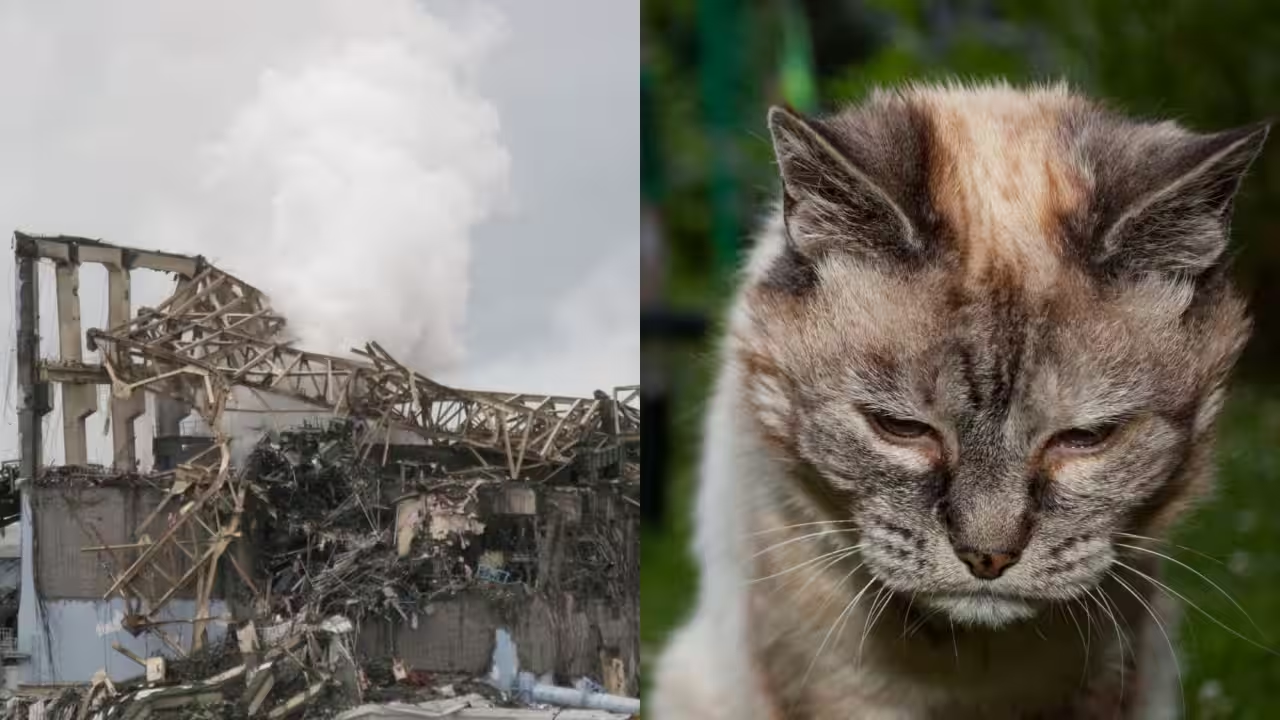
People find it difficult enough to leave their homes quickly. For pets, it can mean being abandoned with no one to feed them and no indication of when someone will return. This is what happened to many dogs and cats near the Fukushima Daiichi nuclear facility during the March 2011 accident, and it sets the stage for one of the most amazing animal survival stories to emerge from the exclusion zone. In November 2015, a cat called Meeko was discovered around half a mile (about 800 metres) from the damaged facility, after surviving on her own for around four and a half years. SPCA International, a nonprofit animal welfare group that supports the rescue organisation Animal Rescue Nyander Guard, describes her survival as miraculous. It says Meeko now lives in a foster home nearby that also serves as a cat café.Why pets were left behindThe trouble began with a magnitude 9.0 earthquake in March 2011 that triggered meltdowns at three of the four reactors at the Fukushima Daiichi plant. People who lived near the plant were evacuated, but companion animals and cattle remained where they were. In the weeks that followed, Fukushima prefectural authorities began searching for pets inside the no entry zone, a 20 kilometre radius around the plant, the Asahi Shimbun later reported.Prefectural officials later described the scope of that search to the Asahi Shimbun. They said 463 dogs and 545 cats had been captured and kept at a shelter over four years and eight months. About 30% were returned to their owners, about 60% found new homes, and the remainder died in the shelter. In December 2015, the prefecture closed the shelter, concluding that it was highly unlikely any pets remained in the restricted area. That Meeko was found only weeks before the closure shows how hard it was to account for every animal.How rare survival wasMayumi Itoh, a former political science professor at the University of Nevada, Las Vegas, examined the animals’ fate in her 2018 book Animals and the Fukushima Nuclear Disaster, published by Palgrave Macmillan. The publisher’s description says about 100,000 residents were evacuated from the 20-kilometre zone while companion animals and livestock were left behind, and that about 90% of the animals in the zone died. It calls the book the first comprehensive english-language study of those animals, and it sets the government’s policy against the work of volunteer groups that filled the gap.Against that figure, Meeko’s four and a half years stand out. She survived four winters and nearly the full length of the prefecture’s capture programme before anyone found her. SPCA International’s statement does not explain how she found food and shelter, and it does not say whether she had any outside help, such as the feeding sites that rescue groups maintain in the zone. It says only that she lived on her own. What is clear is the time frame and the distance. No one expected to find a cat living half a mile from a plant that had suffered three meltdowns. Her rescue also sits inside a longer effort that did not end when the shelter did.Rescue work that goes onAnimal Rescue Nyander Guard provides medical care to rescued animals, reunites families with their pets and finds new homes for cats and dogs, SPCA International said. Dogs that live in heavily radiated areas and cannot be removed are monitored and cared for there throughout the year. The feeding points in the exclusion zone use boxes set up high with small entrances, so larger wild animals cannot reach the food. A dog named Piccolo had been living on his own in the zone for over six years, though Nyander Guard made regular trips to feed him and look after his health.Some of these stories end happily. A cat called Dot, rescued in 2013, stayed at the Nyander Guard shelter until June 2016, when her owner was reunited with her after his daughter found a photo of the cat online and contacted the group. They had been apart for five years. Others were never given the chance. Love, a cat, lived in the exclusion zone for six years and died alone in August 2017, SPCA International says. Her owner had hoped to return home, but radiation levels were too high.Some have opted to stay and care for the animals themselves. Sakae Kato, who used to manage a small construction firm, told Reuters in 2021 that he was caring for 41 cats in his home in Namie and an empty structure on his land and had buried another 23 in his garden. Meeko’s story comes down to a few facts. She was rescued about half a mile from the Fukushima Daiichi plant in November 2015, after surviving on her own for almost four and a half years, and she now lives in a foster home that doubles as a cat café. Her survival stands out in a zone where, according to Itoh’s book, about 90% of the animals died, and her rescue shows why private groups kept searching after the prefecture closed its shelter.You use AI every day. Now get your AI Quotient. Take the AIQ test.
Topics in this story
Gathered from external sources. Rights to this text belong to whoever originally published it.