Kenya halted eight baobabs from being shipped to Georgia after a licensing outcry in 2022; the export later went ahead in 2023, and all eight trees died
The export of eight baobabs from Kenya to Georgia faced controversy over environmental permits and local community impact, resulting in the death of all trees shortly after their relocation.
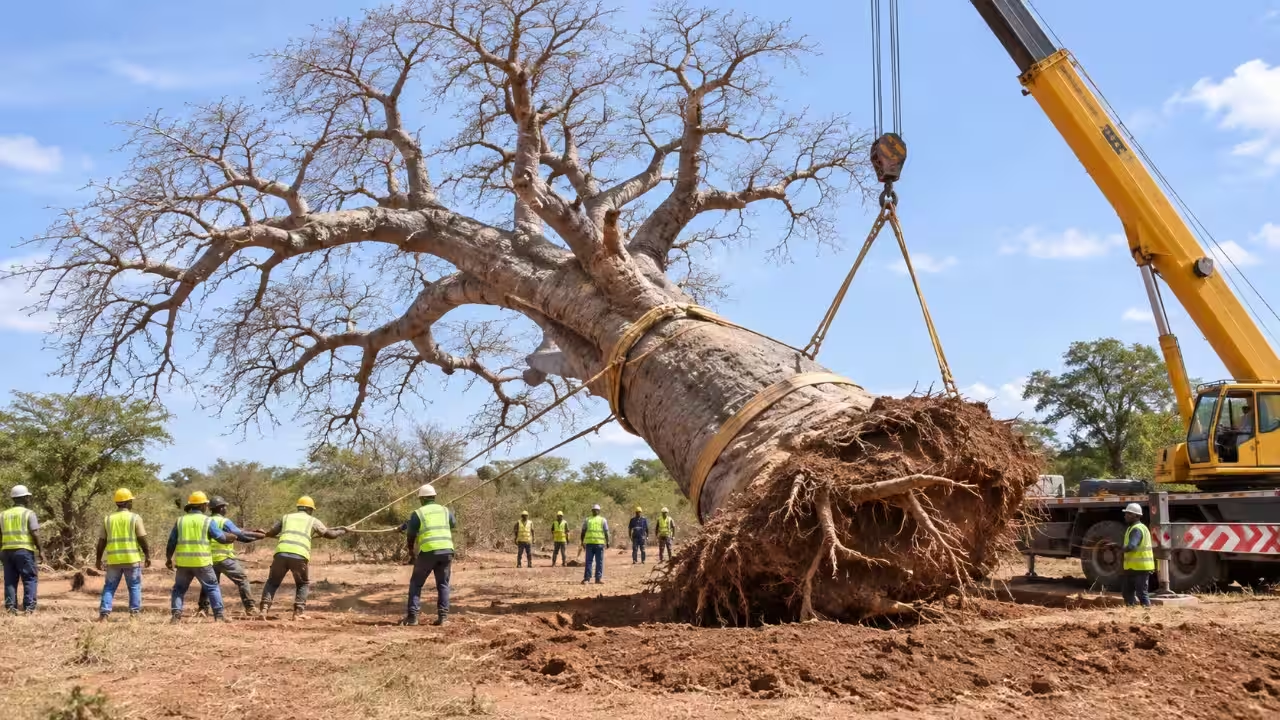
Kenya’s export of eight adult baobabs to Georgia sparked debate on conservation, local community interests, and biological resource trade. The Baobabs were dug out of their homes in Kenya's coastal Kilifi County for a botanical park that was associated with Bidzina Ivanishvili, the outgoing prime minister of Georgia. In November 2022, the government suspended the export, citing a lack of necessary permits and approval, but eventually, permission was granted. On August 24, it was confirmed that the eight trees were dead, illustrating the risk of moving giant trees across the world.How the export plan triggered an outcry The controversy broke out after contractors began buying mature trees for villages in Mtondia and Tezo in Kilifi County. The Guardian reported that the offers ranged from 100,000 to 300,000 Kenyan shillings for each mature baobab. Farmers in the largely poor community hailed the money, which earned them a well-paying living, but conservationists questioned whether the relevant permits had been obtained, and whether the National Environment Management Authority and the Kenya Forest Service had issued approval. The Health Inspector Service, which issued the export permit, was also involved when the environmental authority letter asked whether the necessary procedures had been followed.In November 2022, President William Ruto directed the Ministry of Environment and Forestry to investigate how the licence was being issued. The transportation of the eight trees was halted by the Ministry, and the Environment CS, Soipan Tuya, told the media that the environmental impact assessment licence was obtained illegally. The government also pointed out that it was important to comply with the Nagoya Protocol, which sets out the guidelines and the regulations for genetic material through prior informed consent and fair and equitable benefit sharing. This was not a final stop for the movement of the trees. In August 2023, the Kenyan Senate was told that the export was initially interrupted because the concerned agencies had to conclude that the procedures had not been followed. The project officials were later contacted, and it was found that compliance was in order, and the export was then allowed.Why the trees were moved and what happened in GeorgiaThe eight baobabs were destined for Shekvetili Dendrological Park, on Georgia’s Black Sea coast. The park opened to visitors in 2020 and brought trees and other plants from across the globe. The export drew attention because of the park’s link to Ivanishvili, Georgia’s prime minister in 2012-13. Mature trees must be excavated, and some roots are often severed or damaged. This requires some amount of effort to take out a tree, and even the most robust trees can be under stress if the process is drawn out.The parks administration later explained what took place. The trees had actually been uprooted in 2021. But did not reach Georgia until October 2023. The trees were planted on 8 November that year, by which time they had been out of the ground for nearly two years and had actually been badly kept, in declining health. They died after 6 to 7 months. The problem was the holdup of the project that took so long.What the deaths mean for baobab conservationEight trees down, and the ecological and cultural significance of baobabs is once again in the spotlight. The dam has eight giant baobabs native to sub-Saharan Africa. Leaves, fruit, and bark have value, and the tree’s iconic bottle-shaped trunk stores water and allows it to thrive in a dry environment with seasonal rainfall. Research published in Environmental Management examined baobabs in a 15-square-kilometre area in Kenya. It identified 432 trees in a 2,015-square-kilometre area and noted the significance of species to households, such as providing food and other available resources. It also highlighted issues with regeneration of the trees and why the death of the biggest and most mature baobab trees was much more significant than the death of an individual tree.This episode illustrated the importance of open licensing and informed community consultation. While the benefits of getting trees to the market may bring immediate financial returns, ensuring the local communities understand their long-term benefits is as critical as completing export paperwork. The loss of trees may not necessarily mean that the prospect of international translocation of baobabs is not possible. It is a demonstration of the kind of risk that is involved in removing plants without undertaking the proper planning and looking for the right growing conditions.You use AI every day. Now get your AI Quotient. Take the AIQ test.
Topics in this story
Gathered from external sources. Rights to this text belong to whoever originally published it.