The original Iron Man No. 1 opening page had gone to auction; Marvel Studios founder offered this rare artwork in hope to surpass the $3.8 million July sale of another Iron Man artwork
The original opening page of Iron Man No.
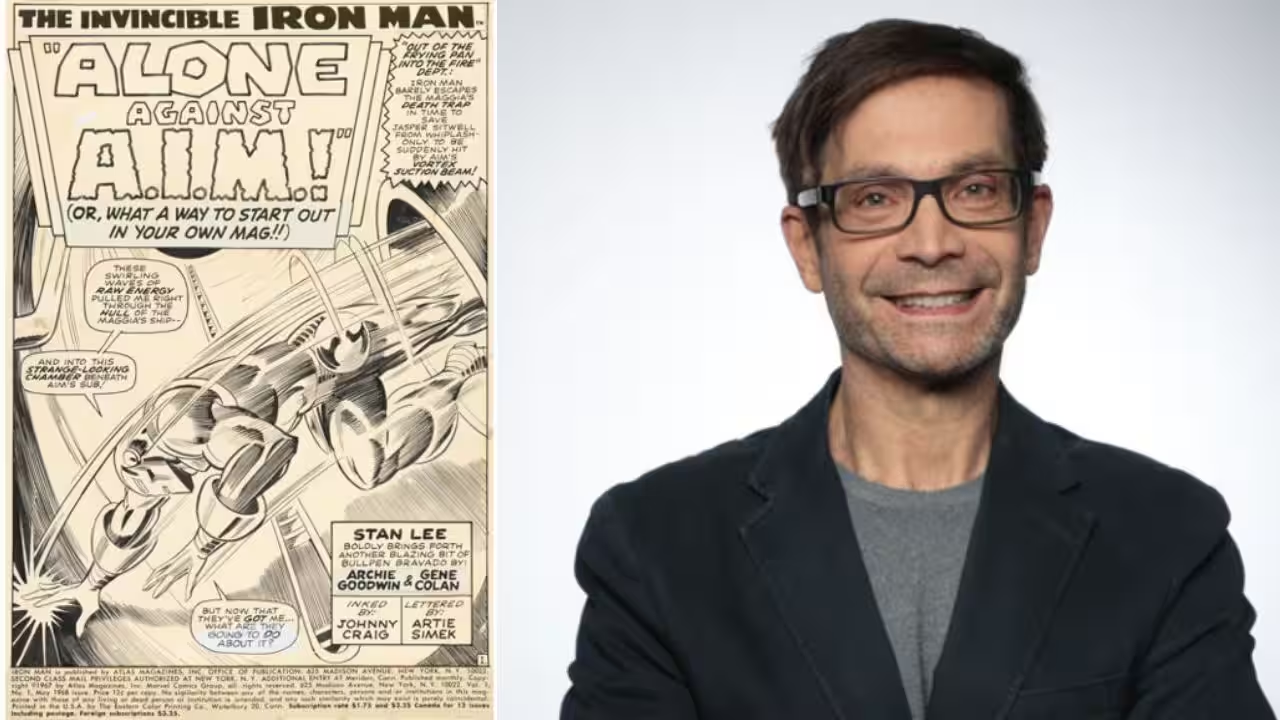
The original opening page of Iron Man No. 1, published in May 1968, was offered for auction by David Maisel, the founding chairman of Marvel Studios who helped launch the Marvel Cinematic Universe in 2008. Created by artist Gene Colan and inked by Johnny Craig, the artwork marks the beginning of Iron Man's first solo comic book series. Heritage Auctions announced the rare piece as a highlight of its September 25–27, 2026, Comic Art Signature Auction. The offering followed another historic sale in July, when original Iron Man artwork fetched $3.875 million.Why is the original Iron Man No. 1 opening page historically significantAccording to Heritage Auctions, the original splash page represents an important moment in Marvel Comics history because it opens the first issue of Iron Man's solo series. A splash page is a large illustration that occupies most or all of a comic book page, often giving a story a dramatic opening.Iron Man had already appeared in Tales of Suspense No. 39 in March 1963, when readers were introduced to Tony Stark and his armoured superhero identity. However, the May 1968 publication of Iron Man No. 1 gave the character his own ongoing comic book title.The opening artwork therefore represents more than a memorable illustration. It marks the beginning of a new chapter in the character's publishing history, which eventually helped establish Iron Man as one of Marvel's most recognisable superheroes.Maisel considered the page one of four historically important Iron Man comic book artworks. The others are the cover and opening page of Tales of Suspense No. 39 and the cover of Iron Man No. 1. Among these, the original Tales of Suspense No. 39 cover artwork is not known to have survived, while the Iron Man No. 1 cover has remained with the same owner for decades.How did David Maisel become connected to the artworkMaisel's connection to the page extends beyond his interest in collecting original comic book art. As founding chairman of Marvel Studios, he played a significant role in developing the MCU and bringing Iron Man to the big screen in 2008.Maisel supported the decision to launch the cinematic universe with Iron Man, a character whose popularity at the time was more modest than that of some other Marvel superheroes. His lifelong enthusiasm for the character and confidence in Tony Stark's appeal helped influence that choice.The film, starring Robert Downey Jr. as Tony Stark, became the starting point for Marvel's interconnected cinematic universe. Iron Man subsequently became a central figure in the franchise, making the original comics that established his identity even more significant to collectors.Maisel also viewed the history of Marvel as a relay, with the original creators establishing the characters before later generations brought them to new audiences. In that context, the opening page of Iron Man No. 1 represents a symbolic link between the comic book creators and the people responsible for adapting their work for cinema.What made Gene Colan's illustration distinctiveColan's artwork was one of the principal reasons Maisel was drawn to the page. He praised the artist's ability to make Iron Man's armour appear expressive and almost flexible rather than rigid.He also admired the cinematic quality of Colan's work. The composition and presentation of the character reminded him of the visual storytelling needed to bring a comic book superhero to life on screen.Johnny Craig's inking completed the original illustration. The combination of its historical importance, large-format illustration and distinctive artistic style made the page particularly appealing to Maisel. Its place at the beginning of Iron Man No. 1 also distinguishes it from artwork taken from later issues.For collectors, original comic book art offers a direct connection to the creative process behind familiar characters.How does the artwork compare with Iron Man's record-breaking saleThe September offering followed a major auction result involving another important page from Iron Man's early history. On July 10, 2026, the original opening page of Tales of Suspense No. 39 sold for $3.875 million at Heritage Auctions. The artwork introduced Iron Man in the March 1963 issue and established a new auction record for original comic book art.The result surpassed the previous record of $3.36 million, set in January 2022. The July sale demonstrated the demand for historically important superhero artwork. The two Iron Man pages represent separate milestones. The Tales of Suspense No. 39 artwork marks the character's first appearance, while the Iron Man No. 1 opening page represents the beginning of his solo comic book series.What other original comic book artwork featured in the auctionHeritage Auctions' September 25–27 Comic Art Signature Auction also featured artwork from several influential comic book series.According to the auction house's announcement, highlights included Jack Kirby's cover artwork for Fantastic Four No. 56, an illustration associated with the classic Marvel series. The sale also featured original work from Frank Miller's Daredevil run, including a page featuring Elektra's first story appearance in issue No. 168 from 1981.Other notable pieces included Jim Lee's cover for X-Men No. 6 from 1992 and artwork from Detective Comics No. 68, featuring the first cover appearance of Two-Face in 1942. The auction also included an early Superman cover by co-creator Joe Shuster for Action Comics No. 22. These works brought together original illustrations from different periods of comic book history.You use AI every day. Now get your AI Quotient. Take the AIQ test.
Topics in this story
Gathered from external sources. Rights to this text belong to whoever originally published it.