Operation Economic Outcast needs an off-ramp, not just a noose
Treasury Secretary Scott Bessent announced Operation Economic Outcast on Aug. 24, a massive expansion of sanctions aimed at severing Iran’s ties to the global economy by targeting the infrastructure used for evasion.
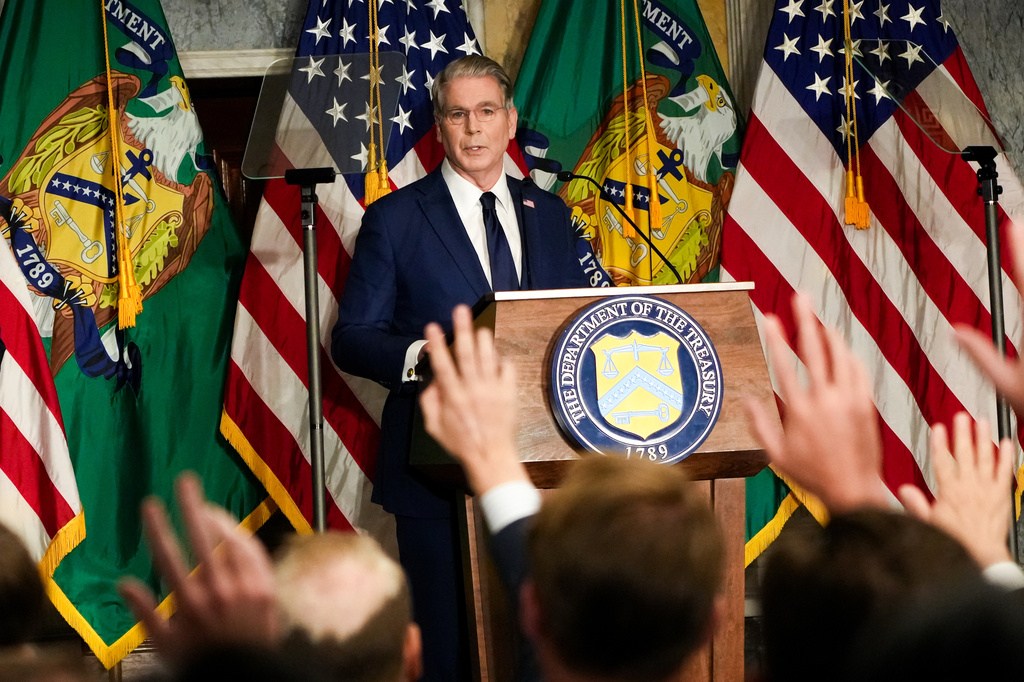
Treasury Secretary Scott Bessent did not undersell it. Announcing Operation Economic Outcast on Aug. 24, he framed it as an “economic D‑Day,” a deliberate invocation of allied resolve to justify what he described as an unprecedented effort to sever Iran’s remaining ties to the global economy. The language is dramatic. The harder question is whether the policy can deliver what the rhetoric promises.
Strip away the framing and the announcement marks a real escalation in scope, even if not in kind. Treasury issued five sectoral sanctions determinations at once — digital assets, technology, gold, aviation and shipping — rather than continuing the piecemeal approach of targeting individual transactions.
Under Executive Order 13902, these determinations give the Office of Foreign Assets Control a basis to designate foreign persons operating in, or providing services or support to, those sectors, wherever they are located.
According to Treasury’s release, the Office of Foreign Assets Control also designated nearly 60 entities, individuals and vessels tied to nuclear and missile procurement, cyber operations linked to Iran’s Ministry of Intelligence and Security, and sprawling shadow‑fleet shipping networks stretching from Hong Kong to Switzerland.
The Office of Foreign Assets Control also suspended several general licenses, including one covering academic exchanges and certain educational services, as well as licenses authorizing specified remittance activity. New guidance tied sanctions risk to shipping decisions around the Strait of Hormuz.
Washington has mounted broad Iran sanctions campaigns before. What distinguishes this one is its attempt to treat the infrastructure of evasion — brokers, exchange houses, logistics firms, and front companies — as targets in their own right. Bessent’s language captures the intent: a “ zero‑leakage” system, backed by deadlines the administration says it has communicated privately to foreign governments, and the threat that any institution facilitating Iran‑linked money laundering will be cut off from the U.S. dollar system.
For all its breadth, the Aug. 24 action stopped short of one of its most consequential possible moves: sanctioning major Chinese financial institutions. China remains Iran’s largest oil buyer and one of Tehran’s most important commercial outlets.
The new designations touch Chinese and Hong Kong‑based procurement and shipping networks, but not the country’s major banks — a step Washington has so far avoided, as a Donald Trump‑Xi Jinping meeting is planned in Washington for Sept. 24 and the administration seeks to preserve a fragile trade truce with Beijing.
Asked whether the United States might go easy on China to preserve that relationship, Bessent said that “ no one is above the reach of U.S. sanctions ” — without specifying when or how that threat would be enforced.
That makes the announcement both an enforcement action and an ultimatum. If Washington ultimately declines to confront those institutions, Iran may retain a crucial outlet regardless of how many secondary intermediaries are sanctioned. If it does act, it risks folding an already complex Iran policy into a far larger U.S.-China confrontation.
The campaign’s credibility will turn less on the number of names added to the sanctions list this week than on whether Washington is prepared to impose costs on the actors whose cooperation has proven hardest to obtain.
The campaign rests on a familiar coercive diplomacy assumption: that enough economic pressure can force a change in behavior. History suggests a more complicated reality. Regimes facing existential pressure do not reliably negotiate; they often adapt.
The relevant question is not whether sanctions can cause pain — they clearly can — but whether the target believes compliance will produce durable relief, and whether the demands are limited enough to accept without threatening the regime’s survival.
Iran has spent decades refining tools for this scenario: discounted oil sales, front companies, barter, informal finance, and cryptocurrency. Its political economy gives the regime strong incentives to protect hard currency for security institutions first, pushing the adjustment cost onto ordinary households, producing a poorer, more securitized Iran rather than a more compliant one.
This has direct regional implications. Tehran’s influence in Iraq and Lebanon is sustained partly through financial and logistical networks this campaign aims to disrupt. Weakening those networks may reduce Iran’s capacity to project power through allied militias, but financial stress can also make those actors less predictable, especially where proxies retain autonomy from Tehran.
The humanitarian dimension is easy to overlook. Suspending licenses covering certain remittances and cultural or academic transactions may close channels that matter little to the regime’s revenue but matter a great deal to ordinary Iranians.
None of this means the campaign is destined to fail. It means the outcome depends on choices Washington has not yet made public.
Economic isolation is a tool, not a strategy. A negotiated settlement requires specifying what Tehran must do, what relief is available in return, and how compliance would be verified, because “reintegration” without those terms reads less like an offer than a demand for surrender.
Credible assurances that compliance would not simply trigger new demands.
If the goal is outright capitulation, planners should weigh the possibility that a cornered regime chooses confrontation over concession, especially if it concludes economic pressure is merely the opening phase of a campaign for regime change.
Operation Economic Outcast may be one of Washington’s most ambitious efforts yet to sever Iran’s access to the global economy. It may weaken the regime significantly. But whether that produces diplomacy rather than a wider war will depend less on the severity of this week’s sanctions than on what Washington is prepared to do — and offer — once the deadlines it says it has communicated to foreign governments begin to expire.
Charbel A. Antoun is a Washington-based journalist and writer specializing in U.S. foreign policy, with a focus on the Middle East and North Africa.
Topics in this story
Gathered from external sources. Rights to this text belong to whoever originally published it.