Israel wraps up voting in do-or-die election for Netanyahu: What to watch
Israeli voters headed to the polls Tuesday for a closely watched election that is widely regarded as a referendum on Prime Minister Benjamin Netanyahu and his administration. The election, which could endanger Netanyahu’s nearly 19 years leading the country, has seen record turnout. Voting closed at 10 p.m. local time, or 4 p.m. EDT. Here’s…
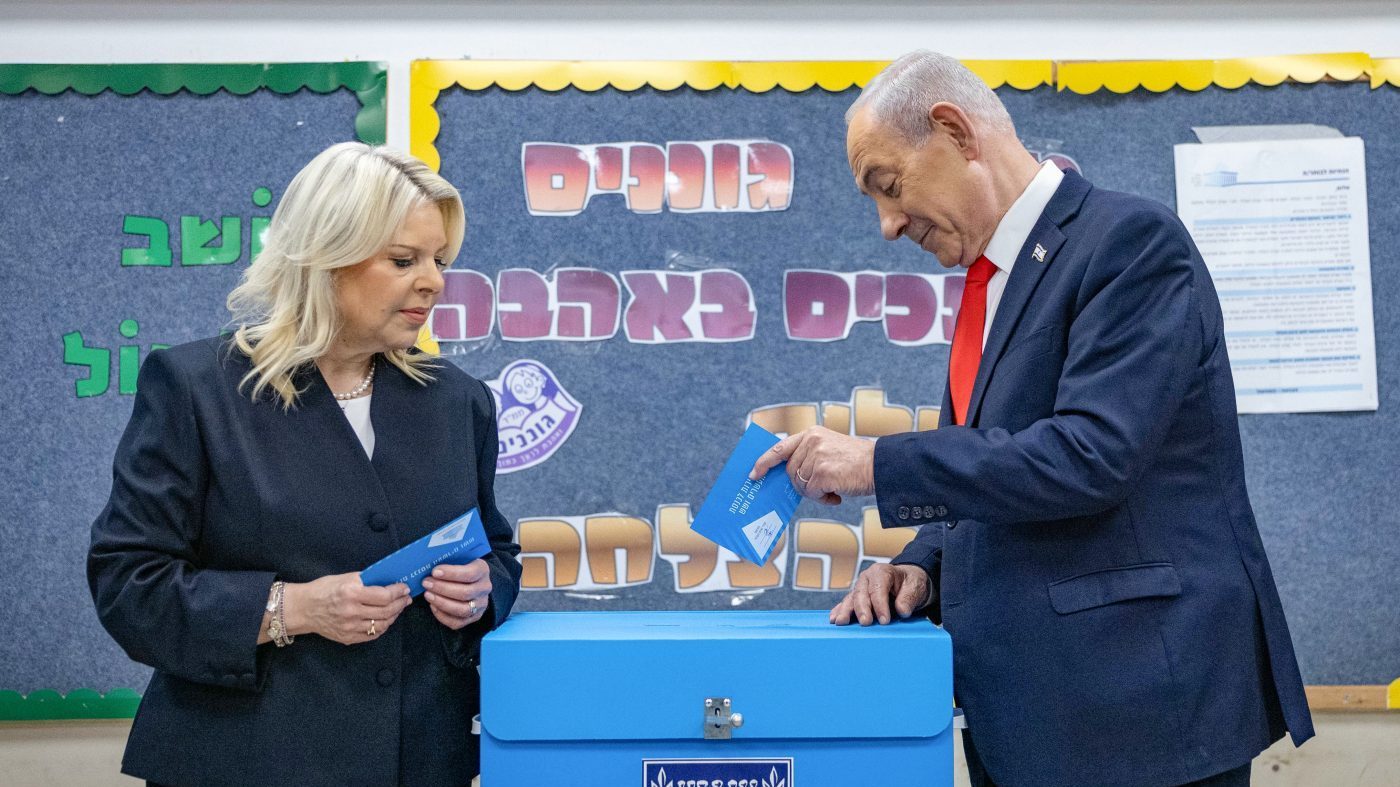
Israeli voters headed to the polls Tuesday for a closely watched election that is widely regarded as a referendum on Prime Minister Benjamin Netanyahu and his administration.
The election, which could endanger Netanyahu’s nearly 19 years leading the country, has seen record turnout. Voting closed at 10 p.m. local time, or 4 p.m. EDT.
Here’s what to know about this pivotal election:
Many consider this election as one of the most consequential in Israel’s history, coming as Netanyahu faces scrutiny over his administration’s response to Hamas’ Oct. 7, 2023, attack on an Israeli music festival, which killed around 1,200.
Since the group’s assault, the prime minister has headed an ongoing military offensive in Gaza. As of late September, according to Gaza’s Health Ministry, the Palestinian death toll of Israel’s war had reached 74,000.
The prime minister, who has led the country on-and-off for nearly 19 of the past 30 years, has faced rising discontent among Israelis for his job performance.
Netanyahu is facing several challenges from major opposition party leaders, including his former military chief of staff and a right-wing nationalist.
Voter participation in this election hit an over 50-year high Tuesday , with strong turnout from Israel’s largest Arab-majority towns, The Jerusalem Post, an Israeli newspaper, reported.
Over 74 percent of eligible voters had cast their ballots as of 8 p.m. local time, according to the country’s Central Elections Committee (CEC). This was 3.7 percentage points more than the total turnout in Israel’s 2022 election.
Netanyahu has accused Arab voters in the country of “trying to steal the election” in his efforts to boost voter participation among his supporters.
“We’re at war for our home,” he wrote in a Tuesday post to social platform X. “Muslim Brotherhood supporters are raiding the polling stations and stealing the elections. Go out and vote, recover it!!”
The prime minister’s political party, Likud, announced plans earlier this month to send religious Jewish observers to polling sites in Arab communities to “prevent fraud.”
Critics accused the party of attempting to intimidate Arab voters, who make up a fifth of the country’s population, from voting in this election.
Israel’s elections differ from ones in the U.S in that citizens vote by party, not by the individual candidate. The proportion of votes each party receives is tied to the number of seats they earn in the Knesset, Israel’s 120-member legislature.
Party leaders will then have up to 42 days to assemble a coalition of at least 61 of the Knesset’s members — a simple majority — to support a candidate for prime minister.
If this effort fails, as is currently predicted by polling, Israeli President Isaac Herzog can pass the mandate to another lawmaker to try to fulfill within 28 days. If this is also not successful, the country will hold another election.
Topics in this story
Gathered from external sources. Rights to this text belong to whoever originally published it.