In 2022, commercial palaeontologist Jason Cooper found a Stegosaurus on his Colorado property; two years later, Apex sold at Sotheby’s in New York for $44.6 million
Discover the incredible story of Apex, the Stegosaurus fossil found in Colorado, which was auctioned for a groundbreaking $44.6 million, setting new records in the palaeontological world.
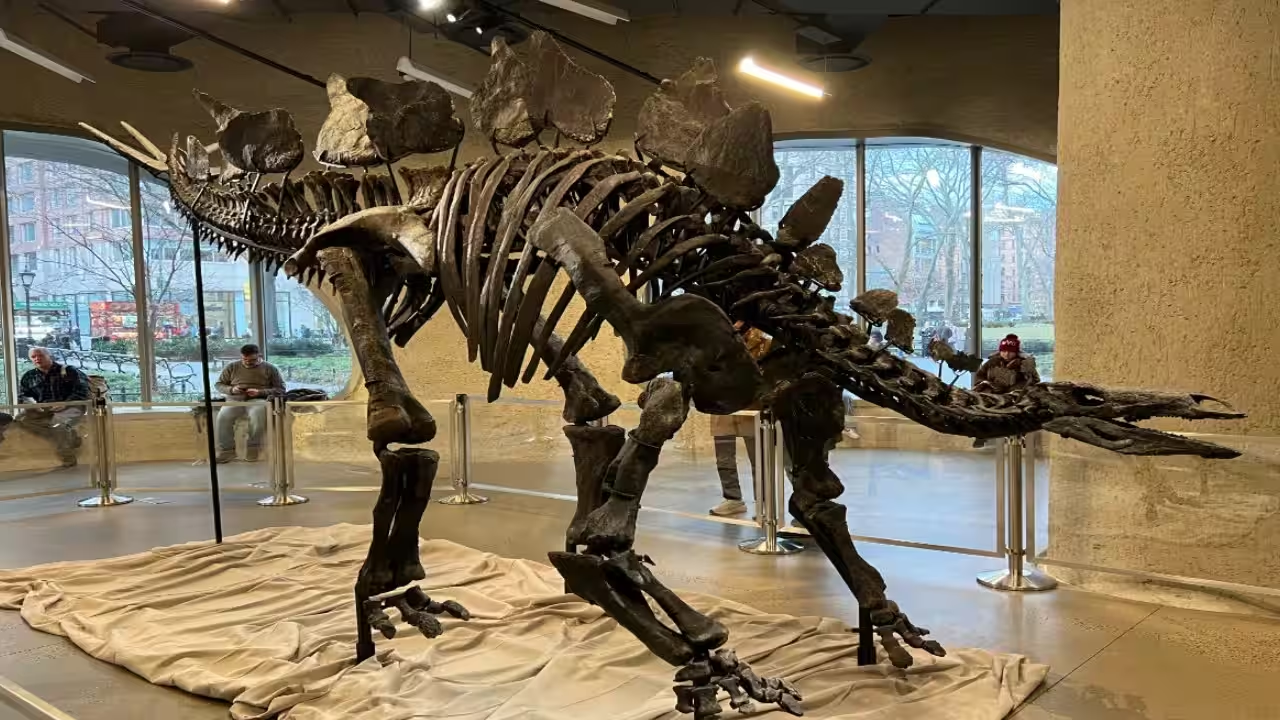
In 2022, commercial palaeontologist Jason Cooper came across the remains of a Stegosaurus on his property in Colorado. The skeleton had remained preserved in sandstone. Two years later, the fossil became the subject of a bidding frenzy in New York. According to the Guardian, the skeleton, named Apex, became the most expensive fossil ever sold at auction when Sotheby’s offered it in July 2024. The result was 11 times the auction house's low estimate and set a record for a natural-history specimen.150 million years in the makingApex was found in 2022 at Cooper's property near Dinosaur, a town in Moffat County, Colorado. Sotheby’s team worked with Cooper from the discovery through excavation, restoration, preparation and mounting. It was the first time for the auction house that they had been directly involved. RELICTUM Journal dated the specimen to 150 million years ago.According to the Guardian, seven bidders took part in the bidding by telephone, and the whole contest lasted for more than 15 minutes. It concluded with a price of $44.6 million, which dethroned the $8.36 million sale of Sue, the first dinosaur ever sold at auction, in 1997, Sotheby's noted.What made Apex so completeThe skeleton measured about 3.4 metres in height and 8.2 metres from its nose to the end of its tail. The Guardian compared its size with Sophie, the Stegosaurus displayed at London’s Natural History Museum, and reported Apex to be 30% larger. Apex had retained 254 fossilised bone elements from an estimated total of 319, the Guardian reported. Sotheby’s said the excavation and preparation process had also preserved its contextual material. This included an impression of fossilised skin and three ossicles, or pieces of throat armour. Those ossicles were also included in the sale alongside the skeleton.The remains were embedded in hard sandstone, which helped prevent the bones from becoming distorted. Sotheby’s account of the specimen’s condition also recorded evidence of rheumatoid arthritis. The Guardian reported that the condition suggested the dinosaur had reached an advanced age. However, the skeleton showed no indications of injuries sustained in combat or damage caused by scavengers after death.A billionaire buyer and a museum debut Immediately after the auction, the buyer was not publicly identified. The buyer intended to consider lending Apex to an institution in the United States. The buyer also wanted the dinosaur to remain in the country where it had been discovered, the Guardian reported.According to RELICTUM Journal, the purchaser was identified as financier Kenneth Griffin. Subsequently, Apex was placed on loan at the American Museum of Natural History in New York in December 2024, the Journal reported. It was then installed in the atrium of the museum’s new science centre, where visitors could see it and the museum's palaeontologists could examine it.The loan gave the museum access to a specimen not just for public exhibition but also for scientific study. RELICTUM Journal reported that researchers were given access to Apex to investigate Stegosaurus growth and biology. The auction itself included more than the Stegosaurus. Sotheby's offered meteorites, minerals, gogottes and, for the first time in one of its natural-history sales, Palaeolithic tools.You use AI every day. Now get your AI Quotient. Take the AIQ test.
Topics in this story
Gathered from external sources. Rights to this text belong to whoever originally published it.