Chicago artist Mary Ellen Croteau collected more than 7,000 bottle caps over two years; she turned them into an 8-by-7-foot self-portrait
Discover how Chicago artist Mary Ellen Croteau collected over 7,000 bottle caps to create an eye-catching 8-by-7-foot self-portrait, raising awareness about plastic waste and recycling.
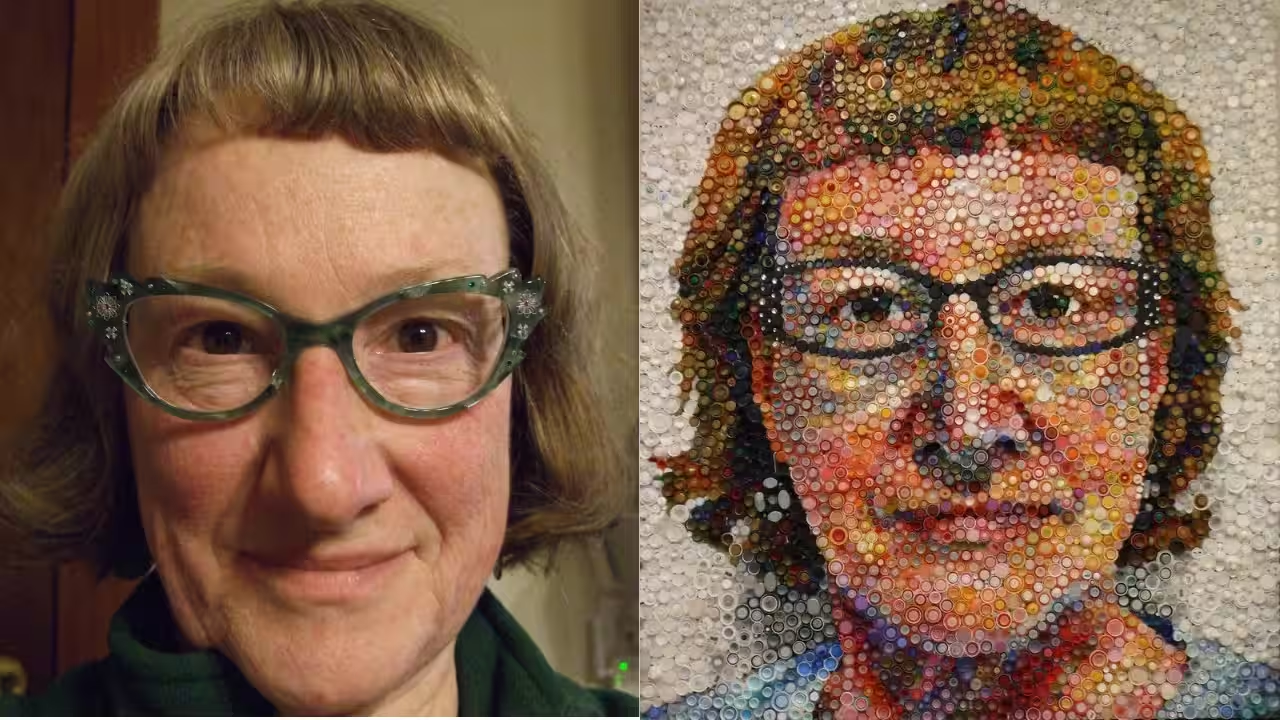
Most plastic bottle caps disappear into a bin and are forgotten within seconds. Mary Ellen Croteau, a Chicago-based artist who passed away in 2019, gave thousands of them new lives. The Mary Ellen Croteau website shares that she collected more than 7,000 bottle caps over two years. She spent seven months turning them into CLOSE, an 8-foot by 7-foot self-portrait. The work is colourful and impossible to ignore. It also raises a simple question: where does plastic waste actually end up?Two years of collecting, seven months of building CLOSE is a huge self-portrait that used more than 7,000 plastic bottle caps. Collecting this many caps took two years, which amounts to an average of 10 plastic caps daily. Creating the portrait took another seven months. According to her website, this artwork is dated as far back as 2011. It lists the size as 8 feet by 7 feet, or about 2.4 by 2.1 metres. That work is part of her bottle caps series that ran from 2010 to 2019. The caps were not collected from just one source. Her material included plastic waste that her friends and family collected in their own homes. She also used plastic garbage that she got from dumpsters at a recycling centre at North Park Village. Her goal was to bring attention to the litter that was often left unrecycled.Why plastic became her material Croteau’s website explains her idea in simple words. Plastic does not compost or biodegrade and is made from petroleum. What little gets recycled can also end up causing pollution in its own way. She said that single-serve plastic bottles are the worst kind of plastic and excessive packaging comes next. The site adds that her aim was to make this waste visible and to connect throwaway culture with responsibility for the Earth.Research shows the extent of the problem. The 2017 Science Advances study by Roland Geyer, Jenna Jambeck and Kara Lavender Law estimated that some 6.3 billion metric tons of plastic waste had been produced by 2015. About 9% of it was recycled, 12% incinerated, and 79% ended up in landfills or the natural environment. The same paper found that some 42% of all non-fibre plastics produced had been used to make packaging. The same pattern was seen in the United States as well, where Croteau lived. Data from the Environmental Protection Agency for 2018 showed that the nation produced 35.7 million American tons of plastic. This made up 12.2% of its municipal solid waste. Only three million tons were recycled. That was 8.7% of the plastic produced. PET bottles and jars fared better at a recycling rate of 29.1%, but still, the majority of them were not recycled.More than one portrait CLOSE was part of a larger body of work. Plastic World, a spring 2013 exhibition, ran from 1 April to 5 May at the Northwestern University’s Dittmar Memorial Gallery. It included nine of Croteau’s works, including CLOSE. Other works included A Measure of Consumption, a 175-foot installation of about 600 plastic bags. Another, My Eye, was a close-up of her own eye made from bottle caps and lids of different sizes. Croteau's later work in the series shifted to larger themes. She described them as large pictures of ecological disasters made out of bottle caps. Titles include Wildfire, Alberta 2015, Melting Glacier, Greenland and Tsunami. There is also a how-to guide on the website for anyone who wants to give bottle cap art a shot. One artwork might not solve the problem of plastic around the world, but it can make the problem a lot easier to see.You use AI every day. Now get your AI Quotient. Take the AIQ test.
Topics in this story
Gathered from external sources. Rights to this text belong to whoever originally published it.