Great Bird Photos: The Winners Of Audubon Photography Awards 2026
The gorgeous winners of the Audubon Photography Awards are a celebration of the best bird photography and also of the ways birds connect people across geogra...
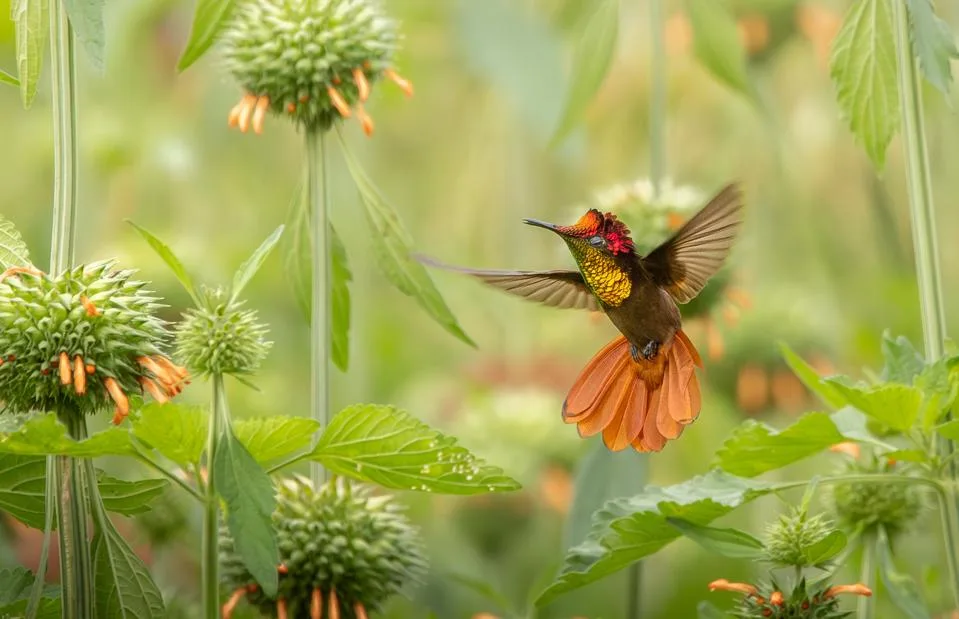
The Audubon Society has announced the winners of the 2026 Audubon Photography Awards, celebrating remarkable photographs and videos that capture the beauty of birds and the conservation challenges they face.
Now in its 17th year, the Audubon Photography Awards help tell the story of bird conservation across the Americas. For the second consecutive year, the competition welcomed winners from Chile and Colombia, as well as the United States and Canada.
The international scope of the photo awards highlights the ways birds connect people across countries, habitats and ecosystems and the challenges they face while helping to tell the story of hemispheric bird conservation.
Audubon Photography Awards Across Continents
Judges awarded nine prizes to residents of Chile and Colombia and eight prizes to residents of the United States and Canada. Entries were judged anonymously by two separate panels, with each panel selecting winners and honorable mentions for its respective region.
In addition to $5,000, each Grand Prize winner will receive a voyage to Antarctica with HX Expeditions combining birding, conservation and exploration.
Other honors include the second annual Birds Without Borders Prize , which recognizes images of birds whose migratory routes cross international boundaries. The Conservation Prize celebrates photographs that illustrate the threats birds face or show how conservation action can help them thrive.
Many birds found in Chile, Colombia, Canada and the United States are increasingly threatened by habitat loss and climate change. Through coordinated conservation work across countries and regions, Audubon supports species including the Roseate Spoonbill, Lesser Horned Owl and Tennessee Warbler throughout their annual life cycles.
Birds are important indicators of environmental health, reflecting the overall state of ecosystems and the planet, making their study vital for global environmental monitoring and conservation.As conditions change, their populations and behavior can reveal the effects of habitat destruction, climate change and other pressures on ecosystems. Their stories can also inspire communities to take action.
Audubon Photography Awards: The Top 100 Bird Photos
The National Audubon Society is a nonprofit conservation organization with 120 years of science-based and community-driven impact. Its work focuses on protecting birds and the places they need—now and in the future.
The 2026 Audubon Photography Awards winners and honorable mentions are published online in both English and Spanish. The winning images will also appear in the fall 2026 print edition of Audubon magazine.
The annual Top 100 bird photos will be announced on September 23. Additional selections will be presented in digital galleries on Audubon's website throughout the year.
The 2027 Audubon Photography Awards will open for entries on January 13, 2027.
Wild wading birds gather each year to nest in this rookery where the alligators deter feral cats, raccoons, and other nest predators. In a cove beneath dense vegetation, a spoonbill takes a bath, as a shaft of light illuminates its pale plumage and pink wings.
Roseate Spoonbills are often observed foraging, but bathing behavior offers a different view into their lives. Of the world's half-dozen species of spoonbills, only the Roseate bears bright pink plumage and is the only spoonbill in the Americas.
This imposing Lesser Horned Owl, 'the ghost of the desert', was found in the unique desert landscape of northern Chile, where the rugged terrain traps sea mist in ravines and where cacti and vibrant wildflowers thrive.
The largest owl in Chile gets this nickname because seeing one is so rare that it's like an apparition.
Until recently, this nocturnal hunter of southern South America was considered a Great Horned Owl, a species widespread from Canada and Alaska to northern Argentina.
But it has a very different voice, featuring two rapid hoots followed by a guttural trill. It's not exclusively a desert owl. Like its northern relative, the Lesser Horned Owl, it has adapted to a variety of habitats, from scrubby forests of the high Andes to rocky canyons and lowland desert.
A female Common Merganser with a flatfish takes to the air to protect her catch from other mergansers.
Mergansers are among the few ducks that regularly eat fish, diving and swimming gracefully underwater to capture them in their long, slim bills.
Saguaro cactus blossoms begin opening in early April in southeast Arizona and only bloom for about a day and a half. This female woodpecker's head completely disappears into the blossom as it samples the nectar.
In dry lowlands of the southwestern United States and northwestern Mexico, Gila Woodpeckers have a close relationship with the giant saguaro cactus, an icon of the Sonoran Desert. When the saguaro blooms, the birds visit the flowers and aid in pollination.
Later they return to eat the fruits and excavate a nest in the cactus. The soft inner pulp stiffens around the birds' nest cavity over time, and the resulting hard shell may serve as a natural birdhouse for other species for many years to come.
Nesting is not just a relationship between two birds; it's often a whole set of species interactions. When a wax palm dies, woodpeckers peck into the bark, creating hollows that Yellow-eared Parrots later occupy.
This pair offered a more intimate scene: their ritual of preening, an essential behavior for maintaining and strengthening their bond.
For Yellow-eared Parrots of the Colombian Andes, survival depends on wax palms of the genus Ceroxylon. Although they will feed on other kinds of fruits, the hard, reddish fruits of wax palms provide the mainstay of their diet.
Yellow-eared Parrots also breed in colonies in groves of tall wax palms
This Golden-rumped Euphonia was photographed in Alto del Zarzo, in Caldas Colombia, where a local energy company had implemented an environmental education program.
The bird builds its nest with dried mosses and lichens, showing its intimate relationship with the plants that sustain their life cycle.
Euphonias were once considered to be small, odd tanagers until genetic studies showed they were more closely related to finches.
Golden-rumped Euphonias are widespread in South America, with pairs and small flocks wandering through forests feeding on small fruits. Their favorite is mistletoe.
When nesting the male and female work together to build a messy globular structure of grass, moss and plant fiber, often on an epiphyte-laden tree. The strategy helps hide their young from predators.
This migrating Tennessee Warbler stayed for more than a week after discovering an abundant food source: a well-timed mass emergence of flying ants. In just a short time birding around his yard, Nick Parayko has documented more than 70 species, a reminder of the diversity within urban environments.
The Tennessee Warbler was so named because pioneer naturalist Alexander Wilson, traveling west of the Appalachians in 1810, saw his first one there.
The species splits most of its time between the tropics and Canada. During spring migration and on the northern breeding grounds, males may sing from treetops.
But in their southward migration, which begins in late summer, Tennessee Warblers are often seen in low shrubs or weedy fields, where insects abound.
At Cannon Beach, Oregon, squadron after squadron of Brown Pelicans flew low across the water. Their destination: a small creek that met the ocean where hundreds bathed in the fresh water.
Brown Pelicans are such familiar sights along the Pacific Coast that it's easy to assume they're always around. But in fact, some of these birds make major seasonal movements. After breeding in winter and spring many colonies in western Mexico and southern California regularly move north along the coast beginning in early summer. Flocks of hundreds may gather at favored spots.
In the remote Almirantazgo Sound in Chile, the biting cold, ever-changing light, this Black-browed Albatross calmly tilted its head, to observe the photographer with the same curiosity with which he was photographing it.
This iconic species of the Southern Seas.is one of the smaller and most widespread albatross species. It breeds on islands in the sub-Antarctic and southern oceans, and ranges at sea as far south as the Antarctic continent and north to offshore waters of Brazil and Australia.
While the birds might seem free to wander the seas of the world, studies show that individuals from different nesting colonies tend to migrate to different regions of the ocean outside the breeding season. Those from South Georgia Island, for example, mostly move to waters off southern Africa, while those from the Falklands favor the seas east of South America.
On the banks of the Elqui River in November, when the Spectacled Tyrant breeds in Chile, this male, in a spectacular display, plummets from high and just before landing, performs a 360-degree flip while spreading its wings, a maneuver that lasts microseconds.
While many members of the tyrant flycatcher family are drab in color and rely only on voice to defend their territories, the male Spectacled Tyrant is an exception. He wears a flashy pattern and shows it off, flying high and then diving, wings half-spread and calling loudly. The air rushing through his wing feathers produces a buzzy whistle.
White-tailed Tropicbirds nest in the caldera walls of an active volcano, and Liron Gertsman made the trip to the Halemaʻumaʻu Crater before the Kīlauea volcano erupted. White gases on the left of the photo are primarily water vapor and carbon dioxide; the blue gas on the top right is sulfur dioxide; the brown dust is volcanic ash; and red lava glows on the right.
The birds nest in the crater's cracks, including at times around still-active volcanoes, safe from predators, and use the thermals generated from the volcano's heat to gain lift as they fly out to gather food.
Tropicbirds are beautiful, long-tailed seabirds that range throughout the world's oceans, mainly in the tropics. Seldom seen from mainland shores, they raise young on oceanic islands.
In the Chilean Patagonia a couple of Crested Caracaras are seemingly gazing at the mountain range.
Although caracaras belong to the falcon family, their habits are strikingly different from those of their faster-flying relatives. Crested Caracaras, the most familiar species, are widespread in open country from the tip of South America to the southern United States. They often feed as scavengers, joining vultures to dine on carrion, but they are also versatile hunters, catching everything from rodents and birds to snakes and scorpions.
In addition to watching for prey from a perch or while flying, these long-legged raptors may walk on the ground to seek large insects or wade into shallow water to catch fish.
In the Andean foothills, a lek – gathering of male birds that meet in a specific area to perform competitive courtship displays and attract female mates -- a dozen male Andean Cock-of-the-rock birds danced for two females.
A testament to nature's resilience before the fact that, despite efforts to raise awareness for conservation, locals keep cutting down forest to plant coffee or create pasture.
Found in its namesake nation for less than half the year, the Canada Warbler is a long-distance migrant. It spends the non-breeding season mostly in South America at middle elevations in the Andes, where it largely sticks to dense understory of rain forest and cloud forest.
It will sometimes join with flocks of other migrant or resident birds—especially those that follow swarms of army ants. The Canada Warbler then seizes the chance to grab smaller insects that the ants scare up.
In this magical yet desolate mountain landscape, some of the country's last wax palm forests have survived, even as multinational corporations continue clearing these ecosystems to make way for monocultures of Hass avocado crops.
The Yellow-eared parrot's survival depends on the wax palm. This image of the bird and one palm surrounded by crops conveys a message of vigilance: Thanks to the tireless efforts of environmental advocates, the species was saved from near extinction.
A large parrot of the Andes, this species was formerly common in parts of Colombia and northwestern Ecuador, but suffered steep losses due to habitat destruction. By the late 1990s, its population was estimated at only about 80 individuals. With intensive efforts to protect its habitat, Yellow-eared Parrot numbers have bounced back, with recent estimates of more than 2,000 birds -- still a dangerously low number.
if avocado plantations keep encroaching, the parrot's story of recovery could flip the other way.
In the cliffs of Isla Nosa in the Shetland Islands where Northern Gannets nest, a dead bird hangs from a fishing line as others go about their lives around it.
Huge, long-winged Northern Gannets hunt their prey with spectacular plunge-dives, arrowing into the sea to grab fish below the surface. They sometimes run afoul of commercial fishing operations, become entangled in fishing nets and drown.
Ironically, while gathering material to build their nests on island cliffs, they may pick up fragments of discarded fishing gear from the water or shorelines, working these bits in with grass, seaweed and other items. Either adult or young gannets may become caught in the unbreakable synthetic fibers.
This species already faces many challenges, including climate change and disease.
See all the winners and Honorable mentions of the Audubon Photography Awards 2026 here .
Topics in this story
Gathered from external sources. Rights to this text belong to whoever originally published it.