In 2012, Thai engineers embedded geotextile and geogrid in a Highway 11 test section; the best layout recorded 11 mm of rutting after 80 wheel passes, versus 17 mm in the control
Discover how innovative geotextile and geogrid reinforcements on Thailand's Highway 11 significantly reduced rutting, improving road safety and longevity. Research highlights optimal placement for maximum benefits.
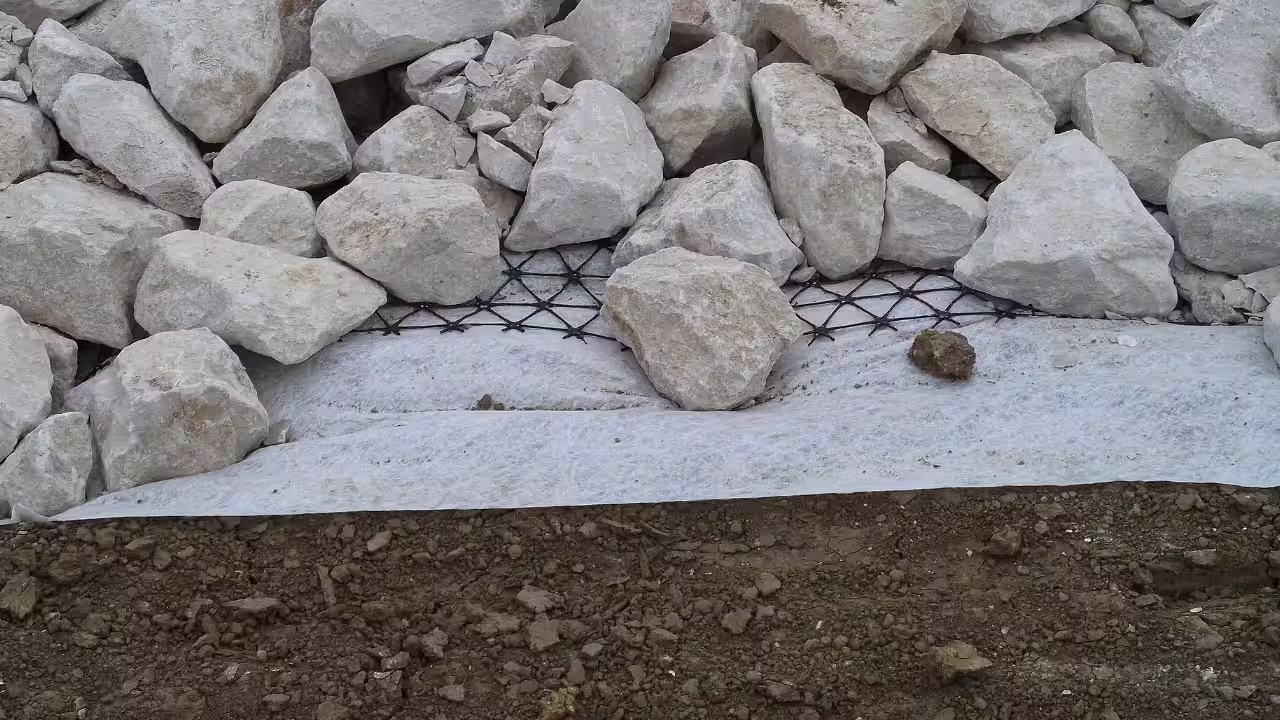
Heavy traffic can gradually damage asphalt roads, leaving grooves where vehicle tyres repeatedly pass over the same area. These depressions, known as ruts, can affect driving comfort, drainage and road safety. In Thailand, researchers tested whether embedding geosynthetic materials inside pavement layers could help roads withstand repeated traffic loads. This study was conducted using a large-scale trial on Highway 11, Uttaradit Province. In February 2012, four sections of road pavement were constructed, comprising three reinforced sections and one non-reinforced section. This study revealed that the use of geotextile and geogrid at various depths of the road pavement increased resistance to rutting.Four pavement sections tested on Highway 11The research was led by Thanongsak Imjai, Kypros Pilakoutas and Maurizio Guadagnini. Their initial findings appeared in a 2015 paper, "Advanced Geosynthetics in Flexible Pavement: A Full-Scale Test and Numerical Study", published through the University of Sheffield Engineering Symposium. The team made four testing sections, each one of 50 m, between kilometre points 102+700 and 102+900. Three sections were reinforced using geosynthetics, while the fourth section, named P1, acted as the control section without reinforcement. Two materials were used for testing. Geotextiles are permeable textile-type materials that are used to separate soils and aggregates. Geogrids are a type of material that is used to stabilise aggregates. Every testing section has its own arrangement of geosynthetic material. In the case of the P4 section, there was paving fabric near the top of the base layer and the geogrid below the base but near the sub-base layer.Early loading tests showed lower ruttingThe researchers utilised 20-tonne, 30-tonne and 40-tonne trucks to investigate the reaction of the pavement sections to the applied loads. They also attached sensors for measuring the deformation and stress experienced by the road construction. According to the 2015 University of Sheffield Engineering Symposium paper, section P4 recorded a maximum rut depth of 11 mm after 36 months of service. The unreinforced control section, P1, recorded a maximum rut depth of 17 mm over the same 36 months, the paper reports. P4 also did better than the other two reinforced sections, P2 and P3, which recorded 17 mm and 18 mm in the same paper. These readings were taken after three years of service on the highway.Longer monitoring confirmed the benefits of reinforcementIn the second study titled "Performance of Geosynthetic-Reinforced Flexible Pavements in Full-Scale Field Trials", which appeared in the journal Geotextiles and Geomembranes in April 2019, the investigators observed the four sections for around 60 months. Maximum surface rut depth ranged from 17 to 23 mm in the four sections investigated. The section without reinforcement suffered the highest surface deformation, while the reinforced sections resisted rutting better than the unreinforced control. Section P4, which used the geotextile and geogrid, was the most resistant to rutting.Additionally, the investigators made comparisons between observations made in the field and the predictions generated using a numerical model created by the University of Sheffield. This study indicates that geosynthetic material could be helpful in enhancing the performance of flexible pavements and preventing deformation as a result of vehicle traffic. Moreover, the study highlights the importance of positioning the reinforcement appropriately. Although the study took place on a single highway, it provides important information for engineers. The findings also suggest that the effectiveness of geosynthetic reinforcement depends on how it is placed within a pavement layers.You use AI every day. Now get your AI Quotient. Take the AIQ test.
Topics in this story
Gathered from external sources. Rights to this text belong to whoever originally published it.