Quote of the day by Jim Carrey: "You can fail at what you don't want, so you might as well take a chance on doing what you love" — a powerful lesson on fear and failure
US News: Many people choose careers and life paths based on what appears safe rather than what they genuinely want. But Jim Carrey's famous observation challen.
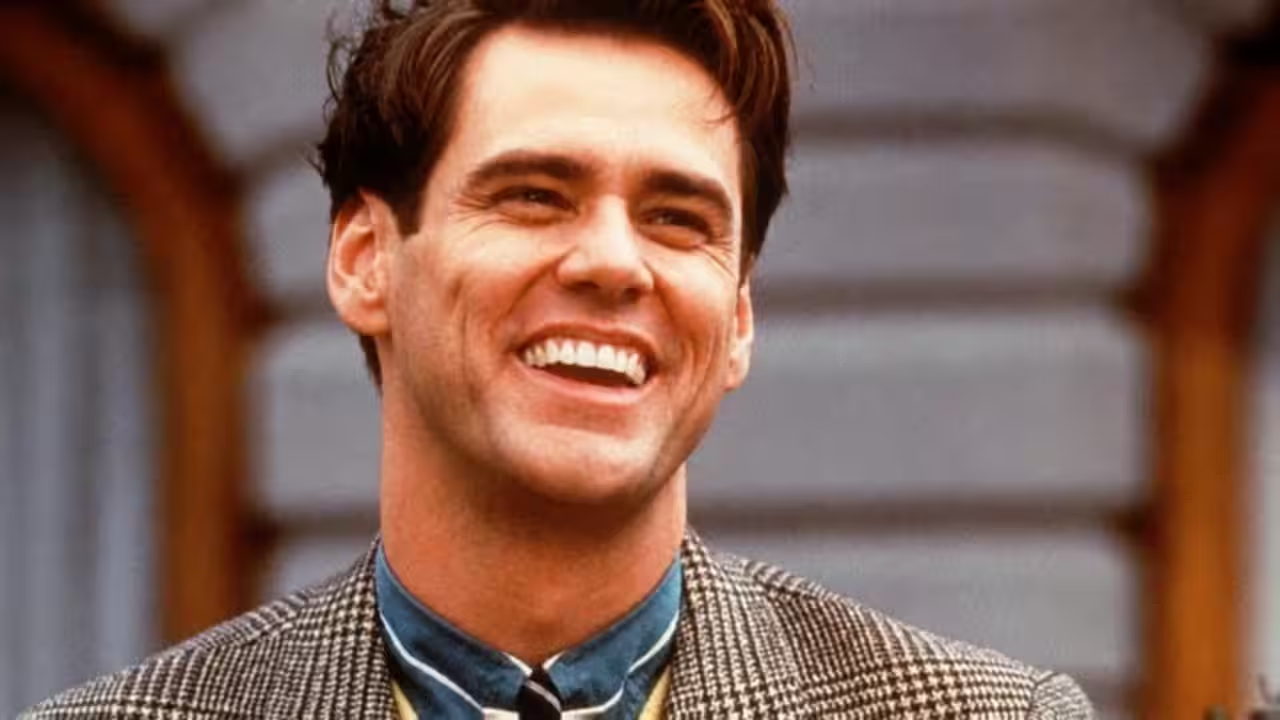
Many people choose careers and life paths based on what appears safe rather than what they genuinely want. But Jim Carrey's famous observation challenges the assumption that choosing the safer option protects us from failure."You can fail at what you don't want, so you might as well take a chance on doing what you love," Carrey said during a commencement speech in 2014. The message is simple but uncomfortable: failure is possible even when we make cautious choices. If risk cannot be completely avoided, fear alone may not be a good enough reason to abandon something that matters to us.Quote of the day by Jim Carrey "You can fail at what you don't want, so you might as well take a chance on doing what you love."Where this quote comes fromCarrey delivered the line while addressing graduates of Maharishi University of Management, now Maharishi International University, in 2014.The observation came from a deeply personal experience. Carrey told students that his father could have become a comedian but did not believe it was a realistic career. He instead became an accountant because it seemed like the safer choice.That security did not last. When Carrey was 12, his father lost his job and the family went through financial difficulties.Carrey said the experience taught him an important lesson: it was possible to fail at something you did not want to do in the first place. That realisation became the basis of one of the most remembered lines from his speech.What Jim Carrey's quote really meansThe quote is not a promise that following your passion will automatically lead to success.It argues something more practical. Choosing a conventional or apparently secure path does not guarantee that things will work out either.People often divide their choices into two categories: the risky thing they want to do and the safe thing they believe they should do. Carrey questions that distinction.Jobs disappear. Industries change. Businesses fail. Carefully planned careers can take unexpected turns. The supposedly safe choice therefore carries uncertainty too.If both paths contain risk, Carrey's argument is that fear should not automatically determine which one a person chooses.The safe option can fail tooPeople often associate failure with ambitious decisions such as starting a business, becoming an artist, changing careers or moving somewhere new.But staying where you are is also a choice.Someone can spend years pursuing a career they never particularly wanted and still lose the job. Another person might repeatedly postpone an ambition while waiting for ideal circumstances that never arrive.Carrey's quote changes the question from "What if I fail?" to something more revealing: "If failure is possible anyway, what is worth taking a chance on?"That does not eliminate the need for planning. It simply changes the role fear should play in making the decision.Fear can disguise itself as practicalityCarrey's wider commencement speech repeatedly dealt with fear and the choices people make because of it.There is an important difference between being practical and being afraid.Practicality means considering money, responsibilities, ability, timing and consequences before making a decision. Fear can sometimes make a person reject an opportunity before seriously testing whether it is possible.The two can easily look alike.Someone might say a career change is "unrealistic" when the deeper concern is the possibility of failure. Another person may keep postponing a creative ambition because there will always be a reason that makes waiting seem sensible.Carrey's message encourages people to recognise that difference.Failure does not always mean the choice was wrongFailure is usually treated as evidence that someone took the wrong path. But it can happen after sensible decisions as easily as after unconventional ones.A business might fail despite careful preparation. An actor might lose an audition despite doing everything well. Someone may apply for a dream job and be rejected.None of those outcomes automatically means the attempt was a mistake.Failure provides information. It may reveal what needs to change, what skills need improvement or whether another route would work better.Not trying produces a different problem: there may never be an answer.Why this idea remains relevant todayCareers today rarely follow one predictable route throughout a person's working life. People change industries, retrain, start businesses, build second careers and pursue opportunities that did not exist when they first entered the workforce.Technology and economic disruption have also weakened the assumption that a conventional career automatically guarantees long-term security.That does not mean everyone should quit a stable job and immediately pursue a dream.Taking a chance can also mean preparing carefully. Someone considering a different career can develop skills before leaving their current job. An aspiring entrepreneur can test an idea before investing heavily. A writer or musician can begin creating alongside other work.Risk does not have to mean recklessness.Other memorable quotes by Jim Carrey* "Fear is going to be a player in your life, but you get to decide how much."* "The effect you have on others is the most valuable currency there is."* "Your need for acceptance can make you invisible in this world."* "Risk being seen in all of your glory."These ideas reflect a recurring theme in Carrey's 2014 address: fear will always exist, but people still have some control over how much influence it has over their decisions.How to apply this quote in daily lifeStart by asking whether an important decision is being guided by genuine practical concerns or simply by fear of failure.If you want to change careers, identify the skills and financial preparation required. If you want to start something, test it on a smaller scale. If you want to write, perform, build or create, begin rather than waiting indefinitely for perfect circumstances.The lesson is not to ignore risk. It is to understand risk accurately.Then ask yourself: if the safer option can also fail, which possibility would you rather have genuinely tried?Why these words still inspire peopleCarrey's quote continues to resonate because it avoids one of the easiest promises associated with motivational advice. He does not say that doing what you love guarantees success.He says that avoiding what you love does not guarantee success either.His father's experience showed him that a seemingly secure choice could still end unexpectedly. The lesson Carrey drew from it was not that people should behave recklessly, but that fear should not be mistaken for certainty.Failure may exist on either road. Sometimes the more meaningful question is deciding which road is worth the attempt.Catch the latest World News and Live updates. Download the TOI app.
Topics in this story
Gathered from external sources. Rights to this text belong to whoever originally published it.