In 2012, bubbles, tremors and a diesel smell appeared in a Louisiana swamp; days later, the ground opened into a lake that eventually covered 37 acres
US News: In 2012, residents near Bayou Corne reported mysterious bubbles and tremors, leading to the sudden formation of a massive sinkhole that expanded into a 37-acre lake, forever changing the landscape and impacting local communities.
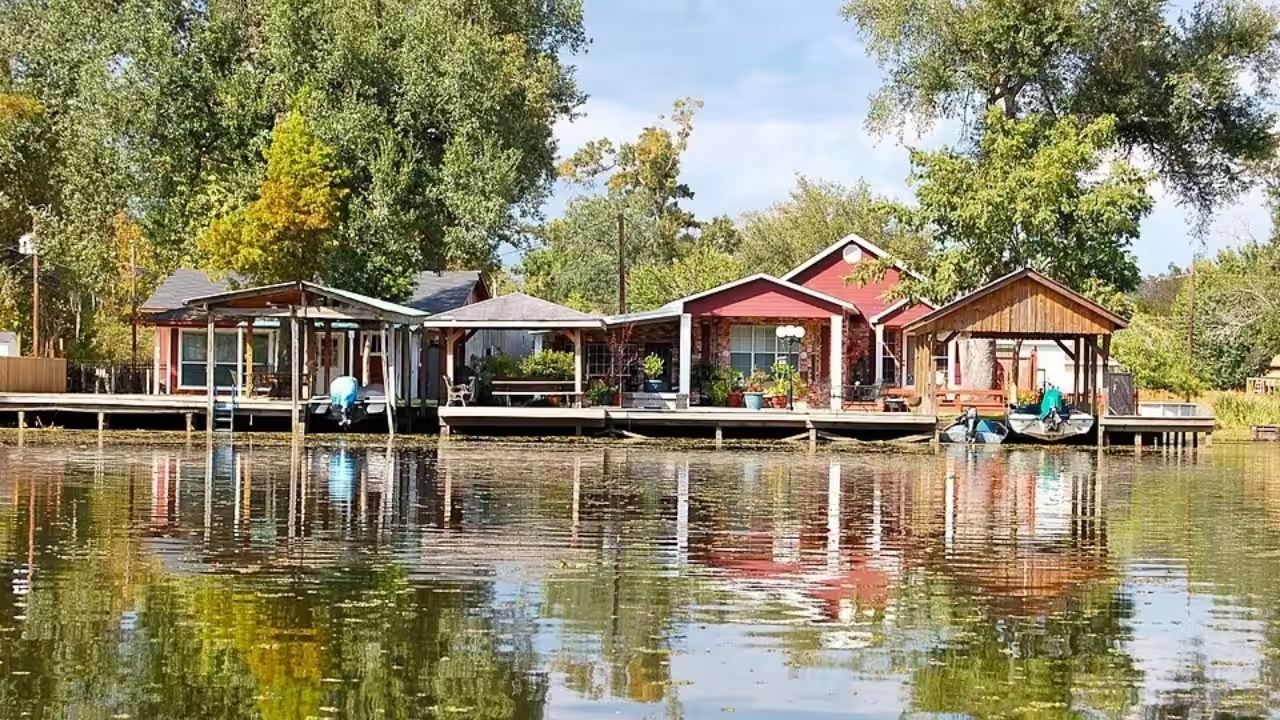
Residents around Bayou Corne in southern Louisiana had been reporting bubbles in the water and tremors that couldn’t be explained for weeks when a wooded section of swamp suddenly collapsed on August 3, 2012. A slurry-filled depression appeared where trees had stood, and the newly formed sinkhole began pulling water and surrounding ground toward it. Louisiana's Department of Energy and Natural Resources records show that state and federal agencies were investigating unexplained bubbling in Bayou Corne and nearby Grand Bayou during June and July 2012. On August 3, an area of wooded swamp began to subside, which prompted the state's commissioner of conservation to declare an emergency.Reports from the area described shaking beneath homes and bubbles rising through the bayou, and by late July, the frequency of the tremors had increased sharply. On the morning before the collapse, residents also reported a strong diesel-like smell, and a later aerial survey detected a diesel sheen on the surface of the slurry area, while gas continued bubbling through the water.The signs came before the collapseBayou Corne sits above the Napoleonville Salt Dome, which is a large underground salt formation that had been used for solution mining. The cavern that was involved in the incident was operated by Texas Brine, and investigations eventually linked the collapse to a breach along the side of the underground salt cavern. As material from the surrounding formation moved into the cavity, the ground above lost support.A Louisiana Transportation Research Center report later documented the event as a major subsidence episode that involved surface instability, horizontal displacement and seismic activity. The sinkhole formed about 1,500 feet south of Louisiana Highway 70, and the continuing ground movement created concerns for roads and other infrastructure in the area.The first opening was much smaller than the body of water that exists there today, and as the collapse continued, trees and marshland disappeared into the depression. Water from surrounding wetlands flowed toward the opening, while methane and other gases emerged from the area. Louisiana's incident record shows that the state emergency was declared on August 3, which was the same day the wooded area began to collapse. The evacuation eventually affected hundreds of people living near the sinkhole.From a swamp collapse to a permanent lakeContemporary measurements documented rapid growth during the first two years, while later accounts put the final surface area at roughly 37 acres. The 2024 technical account from the Solution Mining Research Institute says the sinkhole eventually reached about 37 acres, or roughly 15 hectares, as trees, shrubs and marshland fell into the expanding depression. The report also describes numerous gas-and-water bubble sites that appeared around the area after the collapse.State officials monitored methane and other emissions, while efforts were made to manage gas escaping from the underground system. Louisiana's Department of Energy and Natural Resources reported that an aerial survey detected the diesel sheen responsible for continued reports of a fuel-like odor, and the same survey found bubbling natural gas around the affected area.Something that had been a wooded swamp eventually became an expanding body of water surrounded by damaged vegetation and unstable ground. The collapse also altered how residents viewed the area around their homes. Roads, property and evacuation routes became part of a problem that could not be solved simply by filling the original hole. The mandatory evacuation was eventually lifted in 2016, but the community never returned to its pre-2012 population. The sinkhole itself remained as a large water-filled depression in the Louisiana landscape.Catch the latest World News and Live updates. Download the TOI app.
Topics in this story
Gathered from external sources. Rights to this text belong to whoever originally published it.