Israel’s election rhetoric: What candidates said, and how they performed
From Netanyahu to Ben-Gvir, campaign boasts and attacks on Arab parties have been met with a deadlocked result.
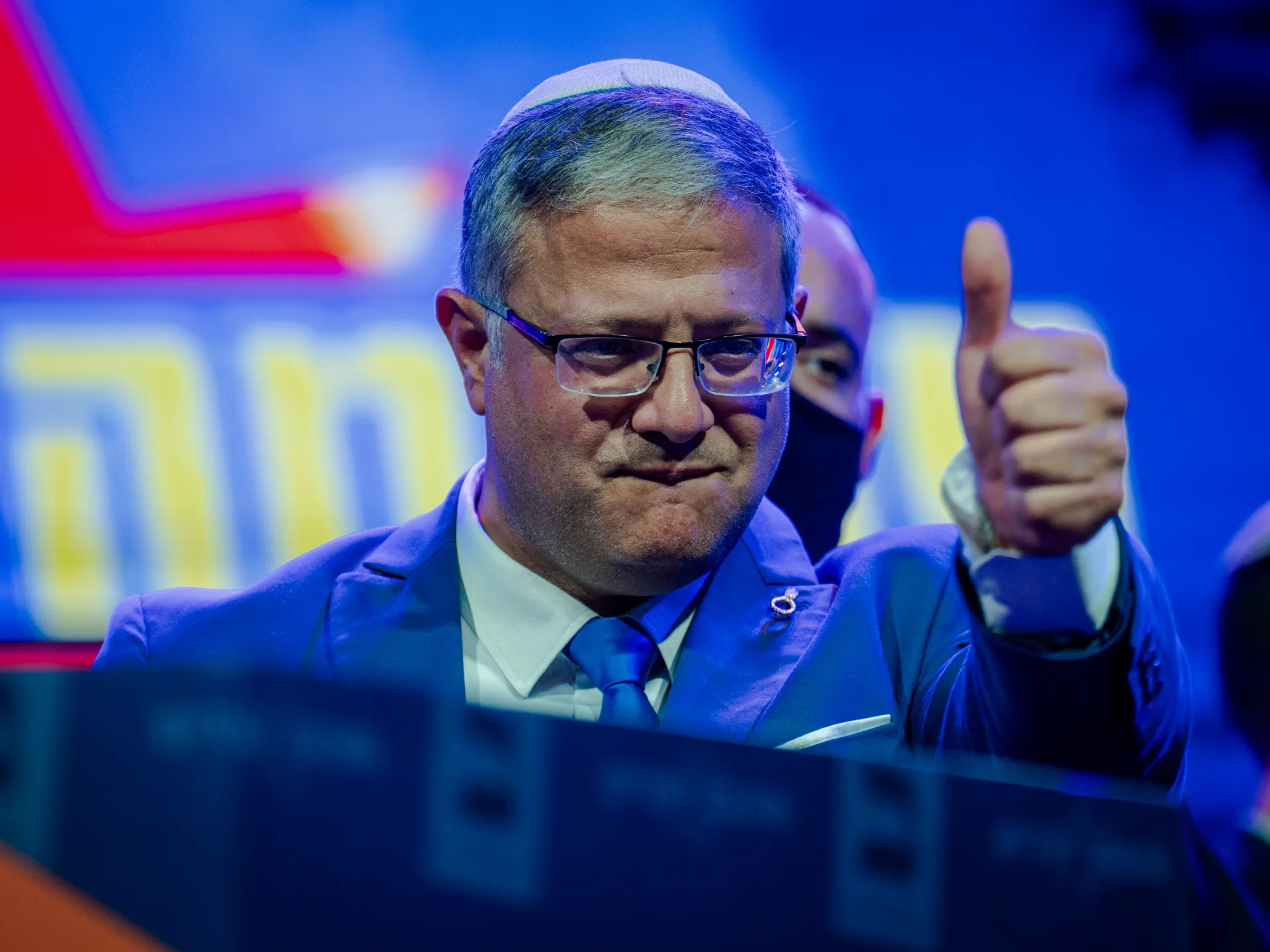
Israel’s parliamentary election on Tuesday produced no clear winner, with nearly 90 percent of ballots counted and both major political blocs falling short of the 61 seats needed to form a government.
Israeli Prime Minister Benjamin Netanyahu’s bloc is on course to win 53 seats in the 120-member Knesset, while the opposition bloc led by Gadi Eisenkot is expected to secure 48 seats.
The Arab-majority parties won 19 seats, a historic high, driven by record turnout among Palestinian citizens of Israel of about 80 percent. That has placed the Arab parties at the centre of coalition arithmetic, even as several party leaders ruled out governing with them.
So what did the main contenders say in the run-up to and during the vote, and how did they fare? Here is a look:
Benjamin Netanyahu, Likud: Elections ‘stolen by Arab parties’
Pre-election: In the build-up to the election, Netanyahu expressed confidence, telling The Jerusalem Post on October 22, “I’m gonna have five more terms.”
On Sunday, he targeted the opposition, with Haaretz citing a broadcast on Israel’s Channel 14 that Netanyahu warned if they win, they will “give citizenship to hundreds of thousands of Palestinians”, a move that would signal the “end of the Jewish state”.
Election day: On Tuesday, he said forming a government with Arab-led parties would be “a shame and a disgrace”.
“It is forbidden – simply forbidden – to endanger Israel and to establish a government that relies on anti-Zionist Arab parties,” he told supporters.
Post-election day: After the elections, Netanyahu’s Likud party took aim at Palestinian citizens of Israel who voted.
In a party statement shared by Netanyahu, it claimed the elections “were stolen by Arab parties that support terrorism and the elimination of the Jewish state through serious criminal offences”. According to The Times of Israel, police and the Central Elections Committee have already dismissed these claims.
What the results show: Likud is on course for 26 seats, the largest party, with 20.65 percent of the vote. But his bloc has 53 seats, eight short of a majority.
Gadi Eisenkot, Yashar Party: ‘I do not see an Arab party that accepts my principles’
Pre-election: In a September interview with The Jerusalem Post, he dismissed the idea he would need to form a coalition with Arab parties: “I believe the majority we receive will be much larger than what the polls currently show,” adding “I do not see an Arab party that accepts my principles.”
He also said his “inner feeling is that I now have the ability to defeat Netanyahu”.
Election day: Eisenkot rallied Israelis to get rid of “the worst government Israel has known”.
However, he acknowledged how tight the race was, saying, “We are on perhaps the most critical day since the founding of the state.”
Post-election day: On Wednesday, Eisenkot told his supporters the Israeli public “voted against” Netanyahu and promised, “to ensure that the people’s decision is translated into a Zionist government”.
What the results show: Yashar is on course for 21 seats, with 16.16 percent. His bloc has 48, 13 short of a majority, and he cannot reach 61 without the Arab-led parties.
Naftali Bennett, Together Party: ‘The October 7 government is going home’
Pre-election: In February, months before the vote, Bennett told a closed conference of party activists that he stood by his 2021 decision to govern with Ra’am, but said he would not repeat it.
He said, “We will establish a unity government under my leadership … We are going to win, and we are going to form it,” Israel National News reported.
Election day: “Netanyahu has lost, and the October 7 government is going home,” Bennett told supporters in Tel Aviv.
Post-election: In a post on X, Bennett told Israelis to “lift your heads” and said he will do everything “to establish a Zionist Alliance of Servants government”.
What the results show: Together is on course for 12 seats with 9.07 percent, narrowly behind the Joint List.
Itamar Ben-Gvir, Otzma Yehudit: Palestinians in Gaza ‘shouldn’t live’
Pre-election: In his election campaign, Ben-Gvir expressed his most genocidal views yet, saying in August that there are Palestinians in Gaza “who are not worthy of life. They shouldn’t live. They’re not even people.” He called for Israel to kill “30 to 40” people in Gaza every night.
Election day: “If you want this country to stay Jewish and Zionist, if you don’t want it to be in the hands of (Israeli Knesset members) Mansour Abbas and Ahmad Tibi, go out and vote,” he told supporters at the entrance to the Arab city of Kafr Qasim.
What the results show: Otzma Yehudit is on course for seven seats, with 5.58 percent, less than half of the 15 he wanted.
Bezalel Smotrich, Religious Zionism-Zehut: ‘Jewish settlements will be established in Gaza’
Pre-election: In a statement he issued in August, he promised an expansion of his settlement “revolution” with a programme for the “Judaization of the Negev and the Galilee” at the expense of Palestinians, as part of his campaign.
Election day: He warned on Facebook of high turnout in communities of Palestinian citizens of Israel, claiming that failing to mobilise right-wing voters could let “terror supporters” into government.
That night, he told supporters “Jewish settlements will be established in Gaza.”
What the results show: Religious Zionism is on course for six seats, with 4.78 percent.
Yousef Jabareen, Joint List: ‘Change comes through Jewish-Arab partnership, a true and equal partnership’
Pre-election: In August, he stated that only “a large and strong Joint List will work with all its might to send the Netanyahu/Ben-Gvir/Smotrich government home”, according to The Jerusalem Post.
Election day, night: In a video statement, he said Netanyahu knew “we can put an end to his bloody reign.”
Post-election: He wrote on X that his party was ready for the “ousting of the Netanyahu government”, which he called one of “bloodshed”.
“Against a politics of supremacy, racism, and exclusion, we offer a completely different alternative. The change comes through Jewish-Arab partnership, a true and equal partnership,” he wrote.
What the results show: The Joint List is on course for 12 seats with 9.14 percent, making it the third-largest party by vote share.
Mansour Abbas, Ra’am: Netanyahu uses ‘scare tactic to mobilise right-wing voters’
Election day, night: In July, Abbas set Ra’am a goal of at least seven seats, enough, he argued, to make it the balance of power in a “government of change”.
Election day: He hit back at Netanyahu’s posts about Palestinian citizens of Israel, stating in a video that he was “lying and inciting against Ra’am, using it as a scare tactic to mobilise right-wing voters and drive them to the polls”.
What the results show: Ra’am is on course for eight seats, with 6.09 percent, beating his target of seven.
Avigdor Lieberman, Yisrael Beiteinu: ‘We will reach 61 seats’
Pre-election: On October 15, he claimed: “We will reach 61 seats or more for the change bloc.”
Election day: He urged patience, saying on Friday, “we’ll be able to talk about a much better and more optimistic picture.”
What the results show: Yisrael Beiteinu is on course for seven seats, with 5.93 percent.
Yair Lapid, Together: Netanyahu is ‘busy fear-mongering’
Pre-election: In September, he posted a statement which said, “Netanyahu ignored every warning before October 7, and now, 28 days before the election, he’s suddenly busy fear-mongering.”
Election day: He declared victory, stating, “The Netanyahu bloc has suffered a crushing defeat.”
What the results show: Together, which he co-leads with Bennett, is on course for 12 seats, with 9.07 percent.
Topics in this story
Gathered from external sources. Rights to this text belong to whoever originally published it.