In Manipur, a glass of drinking water comes at a price: Women trek through forests, villagers risk ambushes to repair pipelines amid conflict and drought
IMPHAL: In parts of Manipur, getting drinking water means walking through forests in search of a spring.
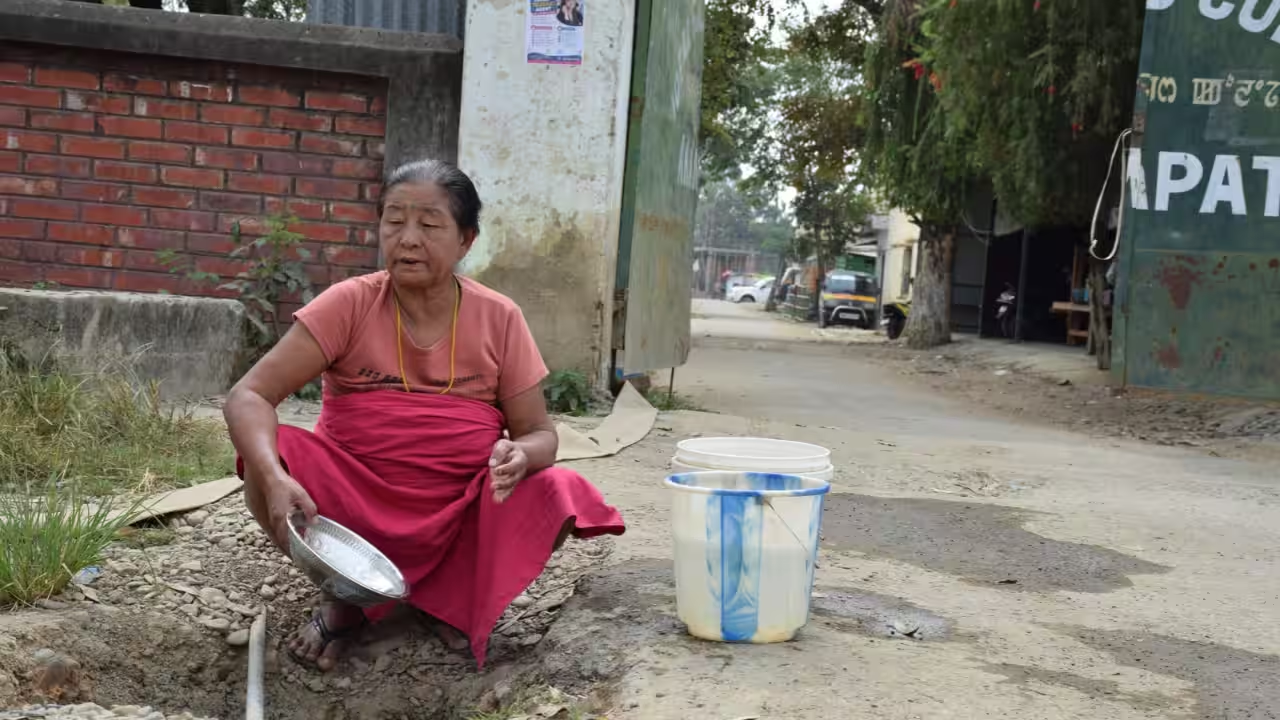
IMPHAL: In parts of Manipur, getting drinking water means walking through forests in search of a spring. Repairing a broken pipeline can be even more dangerous. In May, villagers from Konsakhul in Kangpokpi were ambushed while attempting to restore a damaged community pipeline. Two months earlier, two youths had died after setting out to repair water pipelines near the Ukhrul-Kamjong border, over 100km away.With Manipur recording a 45% deficit in monsoon rainfall, according to IMD, the onset of winter has brought fresh anxieties for communities already grappling with damaged infrastructure, shrinking natural sources and restrictions on movement.In hilly districts, where direct tap water often remains largely absent outside some district headquarters, villages have traditionally depended on natural springs and rainwater harvesting, according to wetlands and Loktak Lake activist Ram Wangkheirakpam. But several springs are now drying up, leaving communities with fewer reliable sources. “The conflict has made it harder to reach water sources and maintain supply lines,” Wangkheirakpam told TOI.The burden often falls on women, who walk long distances through forested stretches to fetch water. What was once a familiar part of village life has become more difficult as natural sources recede and movement across conflict-divided areas remains fraught.“In districts like Senapati, Ukhrul, and Chandel, villages marked 'covered' on paper, women and children still walk kilometre-long distances daily to fetch water from streams, springs, or community wells,” Wangkheirakpam told TOI, adding that in Imphal, too, municipal taps offer little assurance. “Households receive piped water for barely one to two hours, twice a week... Many have turned to private tankers, paying Rs 300-500 for 500-1,000 litres.”And for the 60,000-plus people displaced by the conflict and living across relief camps, the struggle is more immediate. At Churachandpur’s Tuibung Community Hall, 150 residents from 23 families share three toilets and pool their ?84 daily relief allowance to buy drinking water. At nearby Mandap camp, where 250 people remain in makeshift shelters, only two of eight toilets work—leaving residents like Hatnu, in her twenties, with little privacy to bathe or manage periods alongside a daily struggle for clean water.In Senapati, social activist R K Paul Chawang told TOI villagers “wake up as early as 3.30-4am in the winter cold to collect water from common points”, taking turns with buckets. Along with five Naga communities in 2025, Chawang filed a PIL in Manipur HC over alleged irregularities in Jal Jeevan Mission projects.Contacted for comment, a senior official in the Public Health Engineering Department (PHED), which executes drinking-water projects, said rural coverage was split into two streams: 38% under the Centre's Jal Jeevan Mission (JJM)—still awaiting Gram Sabha certification—and 62% under a New Development Bank-funded project. Work on the latter was progressing, the official said, adding that “discrepancies in online records were being corrected” and “village water supply had improved.”Stay updated with the latest Imphal news. Download the TOI App.
Topics in this story
Gathered from external sources. Rights to this text belong to whoever originally published it.