Iran: Account of US Air Force colonel’s rescue ‘fictional’
Iran on Thursday accused the U.S. of fabricating its account of how it rescued an Air Force colonel whose F-15E fighter jet was shot down over Iran in April, calling the claims “fictional and unacceptable.” The service member, referred to by his mission call sign of Bravo, recounted his story of survival earlier this week…
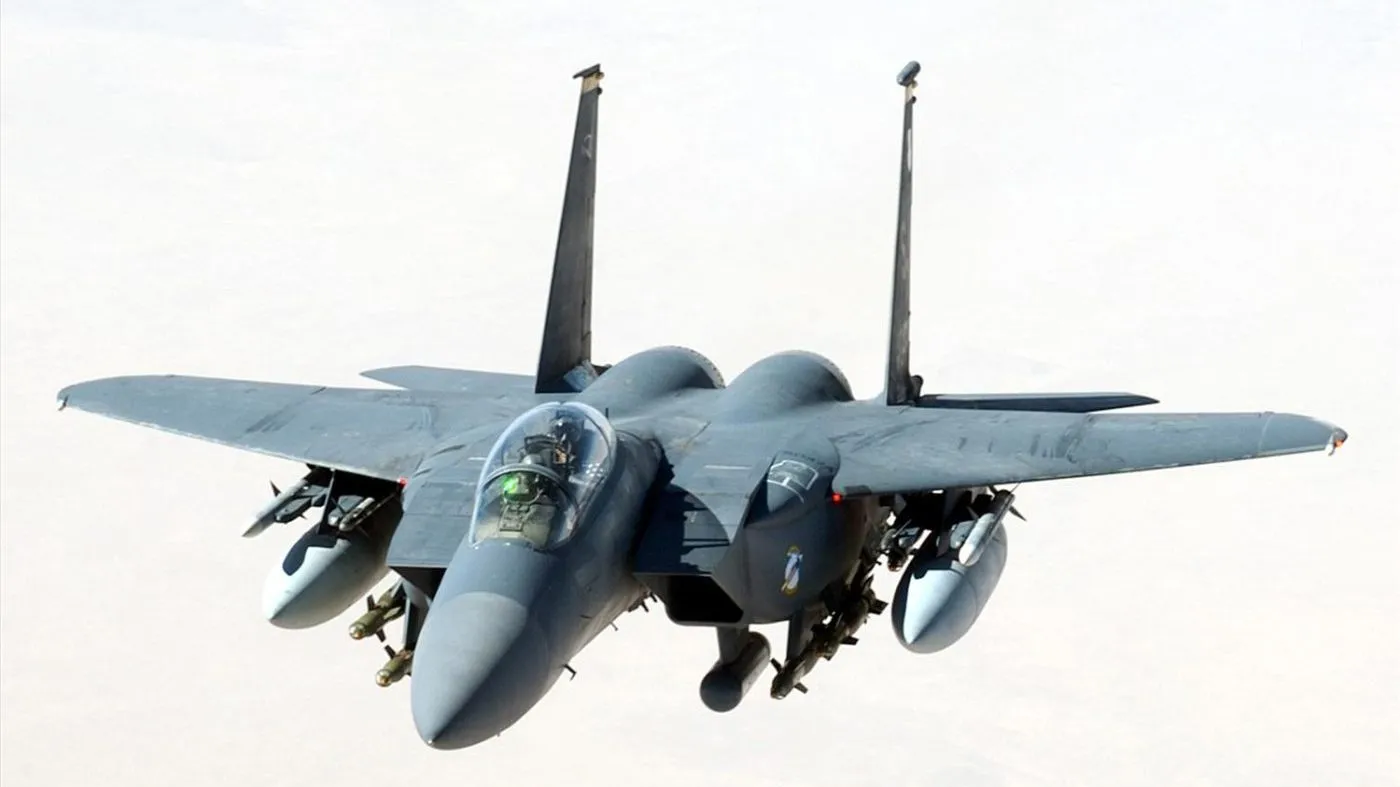
Iran on Thursday accused the U.S. of fabricating its account of how it rescued an Air Force colonel whose F-15E fighter jet was shot down over Iran in April, calling the claims “fictional and unacceptable.”
The service member, referred to by his mission call sign of Bravo, recounted his story of survival earlier this week on CBS’s “60 Minutes.” Bravo told host Norah O’Donnell that he was the weapon-systems officer of the two-man crew when their plane was struck and he plummeted at an estimated 70-100 mph with no parachute as it was damaged by an Iranian shoulder-fired missile.
But Islamic Revolutionary Guard Corps (IRGC) spokesperson Brig. Gen. Hossein Mohebbi told Iranian state media that “no sound mind would accept [the U.S.] narrative because it is fictional and unacceptable,” calling it war propaganda.
“The American pilot claimed that he fell at a speed of 160 kilometers per hour and survived, while his parachute did not even open and he crashed into the heart of a mountain,” Mohebbi said, accusing Washington of making up stories about its war achievements in the past.
He added that the U.S. is fabricating the crash and rescue as it is struggling in the more than six-month, deeply unpopular war against Tehran. President Trump has said the conflict will end after the midterm elections.
“The U.S. is embarrassing itself with these actions. These films (pilot interview) will definitely not only fail to bring any achievement … but will also become a source of ridicule,” Mohebbi said.
U.S. Central Command (Centcom) head Adm. Brad Cooper told CBS the crew shot down had been on a mission to conduct a strike on Iranian industrial facilities tied to the country’s drone and missile program.
Bravo said he and his partner, with the mission call sign Alpha, ejected when they could not save the jet. The latter ejected safely, but the colonel landed hard about 5 miles away. Both ended up in Isfahan, Iran, with a U.S. rescue team finding Alpha six hours later.
He added that he was able to alert U.S. forces that he was hurt but still moving and was located by two rescue planes a day later.
The Pentagon earlier received criticism for the highly publicized CBS segment after CNN reported Defense Secretary Pete Hegseth and his political appointees in the Pentagon pressured the two airmen to participate.
Three sources told the outlet that the crew members initially were hesitant about doing the interview, with one raising concerns about potentially being ordered to take part. Hegseth then met privately with them and asked whether they wanted to do it willingly rather than being forced, according to CNN.
Topics in this story
Gathered from external sources. Rights to this text belong to whoever originally published it.