Why an expensive restaurant can feel uncomfortable even when you can afford it: Psychology explores how childhood money lessons, spending habits and social expectations can shape the way adults experience luxury
The bill is within budget. Rent is covered, savings are intact and there is no immediate financial reason to worry.
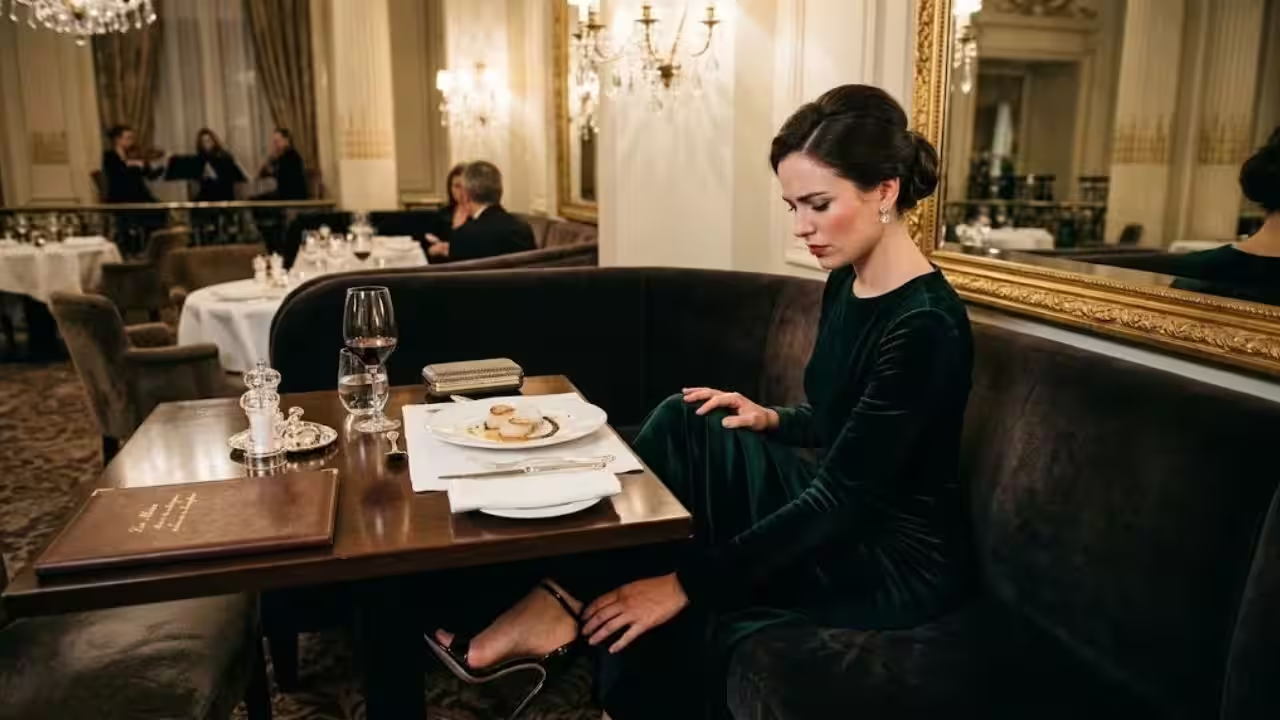
The bill is within budget. Rent is covered, savings are intact and there is no immediate financial reason to worry. Yet, when the menu arrives at an expensive restaurant, something changes. Prices suddenly seem excessive, another drink feels difficult to justify, and the cost of dinner starts competing with the groceries, bills or savings it could have paid for. For some people, the discomfort persists even when someone else is paying.The contradiction is not necessarily about how much money they have. It may reflect what money has come to mean to them. Family lessons, past financial uncertainty and habits built over many years can influence spending decisions long after a person's financial circumstances improve. Psychology and financial research offer ways to understand this tension, although feeling uncomfortable at a luxury restaurant alone does not establish a particular psychological pattern.The money rules we learn before earning our ownChildren learn about money through more than formal lessons. They observe how their families shop, save, discuss bills and respond to unexpected expenses. Repeated messages such as "don't waste money", "always keep something aside" or "eating out is unnecessary" can become lasting beliefs about what responsible spending looks like. Researchers call this process financial socialisation. A 2025 study by Timothy M. Todd and Han Na Lim, published in the Journal of Financial Therapy, examined the relationship between family financial socialisation and beliefs known as money scripts. The researchers found an association between family financial socialisation and money vigilance, a pattern involving attention to financial responsibility and risk.The research does not prove that childhood experiences cause discomfort at expensive restaurants. However, it helps explain why financial attitudes may remain important even when income changes. A person who grew up in a household where every purchase was carefully weighed might continue to question luxury spending after becoming financially secure. The old rule may have developed for good reasons, but it may not automatically adjust to new circumstances.When saving becomes an automatic responseMoney scripts are deeply held beliefs that influence how people think about earning, spending, saving and financial security. They can include the belief that money should always be protected, that expensive purchases are wasteful or that spending on oneself requires justification. Such beliefs are not automatically unhealthy. Maintaining emergency savings, avoiding unnecessary purchases and living within one's means can be sensible choices. The difficulty arises when guilt becomes disconnected from the person's actual financial situation.Consider someone who can comfortably afford a ₹5,000 dinner but instinctively compares it with several home-cooked meals or a contribution to savings. This is an example of opportunity-cost thinking: money spent on one thing is money that cannot be used elsewhere. That comparison can be useful when making financial decisions. But if it repeatedly turns an affordable, genuinely desired experience into a source of anxiety, the person may benefit from examining the rule behind the reaction.A related concept is money vigilance, which emphasises caution, saving and awareness of financial risks. Research on money scripts suggests that these attitudes can be associated with financial behaviour, but their effects depend on the circumstances. Being careful with money is not the same as being unable to enjoy spending it. A useful question is whether the meal is genuinely poor value for the individual or whether spending on it feels wrong simply because it costs more than they are accustomed to paying.Affording luxury is different from feeling you belongThe price of a meal is only one part of the experience. Expensive restaurants can also come with unfamiliar menus, formal service, elaborate dining conventions and an atmosphere that makes some guests more self-conscious. Someone visiting such a restaurant for the first time might wonder which cutlery to use, how to pronounce a dish or whether asking the server for an explanation will make them appear inexperienced. These concerns can exist even when the bill is easily affordable.Sociologist Pierre Bourdieu's concept of cultural capital offers one way to understand this distinction. Cultural capital includes knowledge, familiarity and social skills that help people navigate particular environments. Money may provide access to a setting, but familiarity can influence how comfortable a person feels within it.A study by Alan Warde, Lydia Martens and Wendy Olsen, published in the journal Sociology, examined dining out through the ideas of cultural variety and social distinction. The researchers explored how restaurant choices and familiarity with different cuisines can carry social meanings beyond the food itself. Their work does not suggest that everyone from a less affluent background feels out of place in fine dining. Instead, it shows how dining preferences and experiences can intersect with social background and familiarity.How to tell whether the discomfort reflects your valuesNot everyone wants to spend money on luxury dining, and there is no reason to treat that preference as a problem. Someone may simply value travel, hobbies, family experiences or savings more than an elaborate meal. Others may prefer casual restaurants because they enjoy the food and atmosphere more. The important distinction is between choosing not to spend and feeling unable to spend despite wanting the experience and being able to afford it. A few questions can help clarify the difference. Is the concern about the real impact on your finances, or does the price trigger guilt regardless of your budget? Are you uncomfortable because you dislike the experience, or because the setting feels unfamiliar? Does the purchase conflict with your current priorities, or with a rule you learned much earlier in life?These questions are not a diagnosis. They are a way to examine whether a spending decision reflects present-day priorities or an automatic response shaped by past experience. Financial security does not require anyone to enjoy expensive restaurants. Nor does it mean every luxury purchase is worthwhile. But understanding the beliefs behind spending discomfort can help people make choices with greater awareness. Sometimes the most revealing part of an expensive dinner is not the bill itself, but the old rule that tells us what we should feel about paying it.You use AI every day. Now get your AI Quotient. Take the AIQ testGet the latest Lifestyle News and more. Download the TOI app.
Topics in this story
Gathered from external sources. Rights to this text belong to whoever originally published it.