Designers are obsessed with 'unfitted' kitchens. Here's how to get the look without renovating
Small changes are the secret to these charming, British-inspired cook spaces.
Our experts independently review everything we recommend. If you buy through our links, we may earn commission.
Just a couple of years ago, if you asked someone what their dream kitchen looked like, they'd probably describe something straight out of the restaurant in The Bear: clean, white cabinets; sleek counters; integrated commercial-level appliances. But as maximalism (the idea that "more is more") has taken hold over the design world, our view of the kitchen has gotten a lot, well, quirkier.
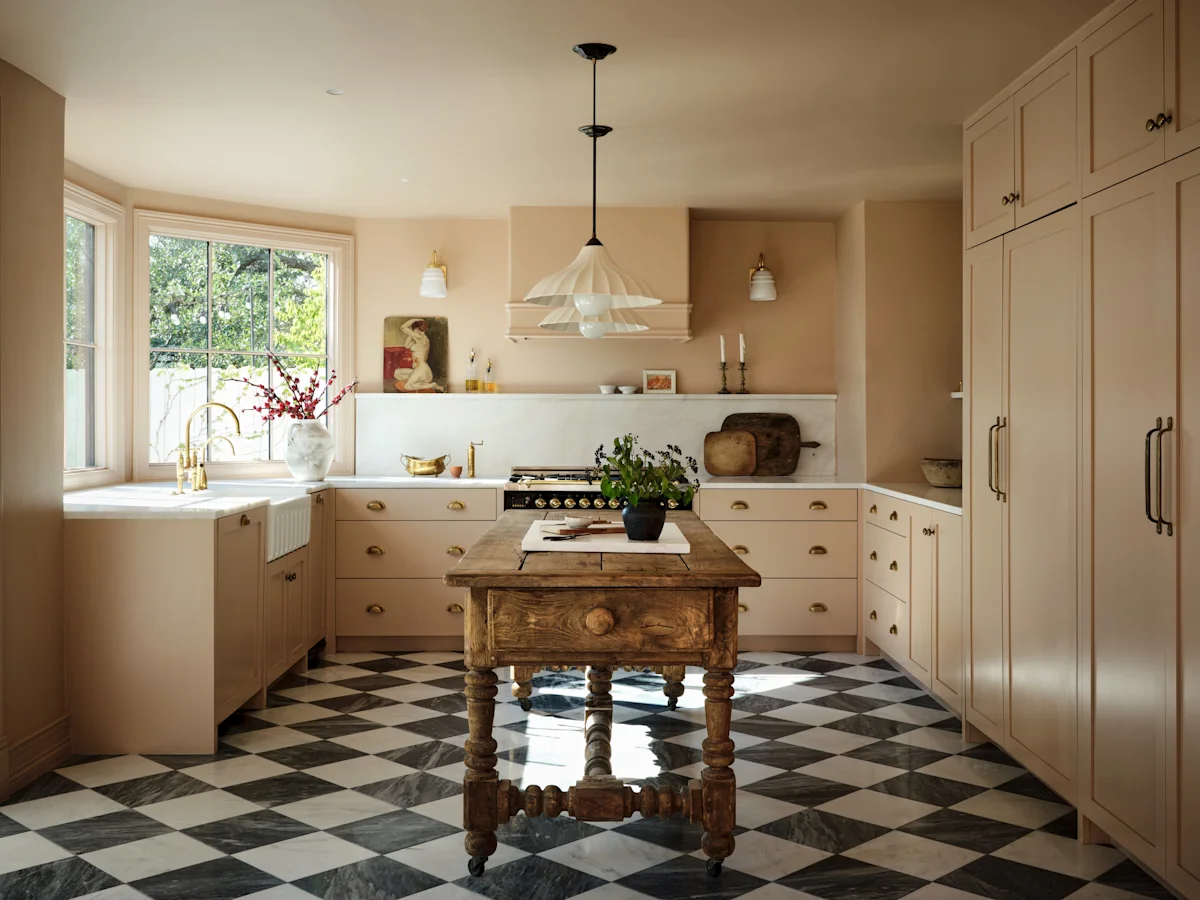
Enter the "unfitted" kitchen. Huge in England, this style replaces wall-to-wall built-in cabinetry with individual pieces of furniture. Nothing's anchored in place (for that reason, it's also called a "freestanding" kitchen), and the pieces are mixed and matched to give the space a homey, one-of-a-kind look. But you don't have to rip out your existing kitchen to create the same charming effect in your own house. Here's everything to know about this British design trend, and how to do it the easy way.
"For years, everything was gray and white, very new build vibes and cold, without patina and history and elegance. But people are coming back to craft and to warmth," says interior designer Erica Harrison, founder of the Detroit-based firm Hudson & Sterling . Claire Zinnecker, founder of Claire Zinnecker Design in Austin, adds, "I think people are craving homes that feel more personal and less prescribed. There's something charming about a kitchen that feels like it has evolved over time."
Because freestanding kitchens celebrate imperfection, they can take a lot of the stress out of decorating. "It's more of a layered approach — not matchy-matchy," explains Amber Clore Morales, ASID, founder of A. Clore Interiors in Sanford, Fla.
Beyond aesthetics, "unfitted" kitchens are flexible. You can move pieces around as needed or more easily upgrade them if, for example, your dinnerware collection grows and you need additional storage. Unlike built-in cabinetry, you're not locked into a specific layout.
The easiest way to try an "unfitted" kitchen for yourself is to add storage pieces with personality. They could be as simple as open shelving for corralling spices (or propping up some pretty artwork!) or as elaborate as replacing your kitchen island with a wood dining table. You can also focus on small details that will give your space a vintage, collected-over-time look, such as replacing your cabinet hardware with unlacquered brass knobs and pulls, explains Amber Lewis , founder of the Los Angeles-based firm Amber Interior Design and author of the forthcoming book, Interiors .
"I've always said every space needs something with a little age or imperfection to ground it, and kitchens have been left out of that for too long because they're treated as pure function. This trend is really just people asking their kitchen to feel as considered and personal as every other room in the house," she says. Ready to give it a go? Here are more "unfitted" kitchen essentials designers love.
Instead of hiding everything behind closed doors, put your collections on display, suggests Lewis. "Try open shelving in wood or a reclaimed material, mixed with a few closed pieces, so you're not staring at total clutter," she says. Shelves and storage pieces like baskets can help your kitchen feel less builder basic and more unique, adds Clore Morales. Plus, they let you incorporate more decor into what's typically a utilitarian space. Shae Wilder, manager of designer relations at the luxury appliance company BlueStar , recommends filling shelves with beloved dishes, but also art! "For the past few years, we have seen a trend of the 18-inch-tall backsplash with a shelf to hold artwork, spices and fresh herbs. Even everyday items have a moment to become a backdrop," she says.
Sure, you could put these steel-and-wood baskets on the counter for spoons, napkins or small condiment jars, but they also come with mounting hardware so you can hang them on your wall. (Just make sure to buy two hooks for each, as they're not included.) They'd look great stacked one above the other on a pantry door or by your sink for your sponge and dish soap.
The scalloped edges on this unit give it that cottagecore look that's become so popular. Each shelf measures about 4.5 inches deep, perfect for beloved mugs, oft-used spices or even a small potted plant.
"Speaking of open storage, I love the idea of a pot rack," says Clore Morales. "I've done many of those for our clients to give a little nod to traditionalism in the kitchen." Bonus: One of these can free up so much space in your cabinets. Use them for stock pots, colorful enameled pans and cast iron skillets for maximum British country charm.
Weathered wood trim gives this ceiling-mounted rack extra flair. It's just the right size for hanging over a small kitchen island, and the top is covered in a metal grid to serve as an extra shelf for anything that doesn't fit on the 12 heavy-duty S-hooks.
Can't you imagine this rack sitting above an old-fashioned stove in a Cotswold cottage? It can support up to 88 pounds of cookware (that's a lot of pots!) and comes in classic finishes like gold, oiled bronze and black.
If you've never changed out your cabinet hardware , you might be surprised by how much of a difference these tiny items can make in your space. For an "unfitted" kitchen, shop for knobs and pulls in a warm finish, "something that can patina over time and have marks of the history of the home," says Harrison, who loves unlacquered brass knobs in small, delicate designs. "Materials like unlacquered brass and aged bronze will last a lifetime because they have already," adds Clore Morales.
The traditional shape of these cabinet pulls would add a sense of history to even modern white cabinets. They're a pretty way to warm up your space without spending a lot.
Rejuvenation specializes in traditional and historical-inspired hardware, and the Naomi knob is an excellent example of what they do best. Made from unlacquered brass, it will develop a patina over time.
Those big stationary kitchen islands that match your cabinetry perfectly — you know, what you see in most new builds — aren't quite right if you want an "unfitted" kitchen. Instead, look for something distinctive that can move wherever you need it. Better yet, make sure it has a hard-wearing surface that shows its age, such as wood. "When you look at the unfitted kitchen, you're seeing different stones and butcher block — everything's really built around function," says Clore Morales.
This clever cart packs in a lot storage, with a silverware drawer, two shelves and even a towel rod on the side. The whitewashed finish has country character, but if you want something more subtle, it also comes in black.
IKEA's kitchen carts are practically the stuff of legend. This one has more minimalist Swedish vibes than English country, and is a great compromise if you like the idea of mixing and matching pieces but prefer a modern look. At 33 inches long, it offers plenty of prep space, and the four casters can be locked to keep it in place.
Another island alternative — and a true hallmark of this style: using a kitchen table as your prep space. "An antique wood table is essential," says Harrison. "Something that isn't too large and has smaller legs, so it feels refined." Lewis, who has built entire rooms around antique pieces, says, "It should read as furniture first, function second."
The turned wood legs on this table make it look really special. Made from ash, it has a scratch-resistant finish on the top, but when it comes to "unfitted" kitchens, don't worry about being precious with your things. The more dings and wear, the better!
If the idea of doing prep work at a standard-height dining table doesn't strike your fancy, this is a great solution. At 36 inches, it's standard counter height and it looks distinctly like a piece of farmhouse furniture, with its rustic gray finish and tapered legs. Two fixed shelves offer clever storage for your most-used mugs, cookbooks or spices.
If you need storage on a larger scale, a standalone cupboard is the way to go for the "unfitted" look. "I love keeping traditional cabinetry where function is needed and then filling in with individual pieces," explains Zinnecker. Look for a hutch or a Hoosier cabinet (which has a mix of open and closed storage and sometimes an additional pull-out work surface). It should be a statement piece and ideally, an antique, says Lewis. "It should be big enough to be a real anchor, not just decorative."
Designed for holding drinks, bread and any fruits or veggies that don't need refrigeration, this unit is the ultimate mini pantry. Wire mesh doors allow for air circulation, and it even has a drawer at the bottom for packaged goods or extra utensils.
Topics in this story
Gathered from external sources. Rights to this text belong to whoever originally published it.