Whose side are we on? Trump’s Ukraine policy is baffling.
The tilt toward Russia makes no sense.
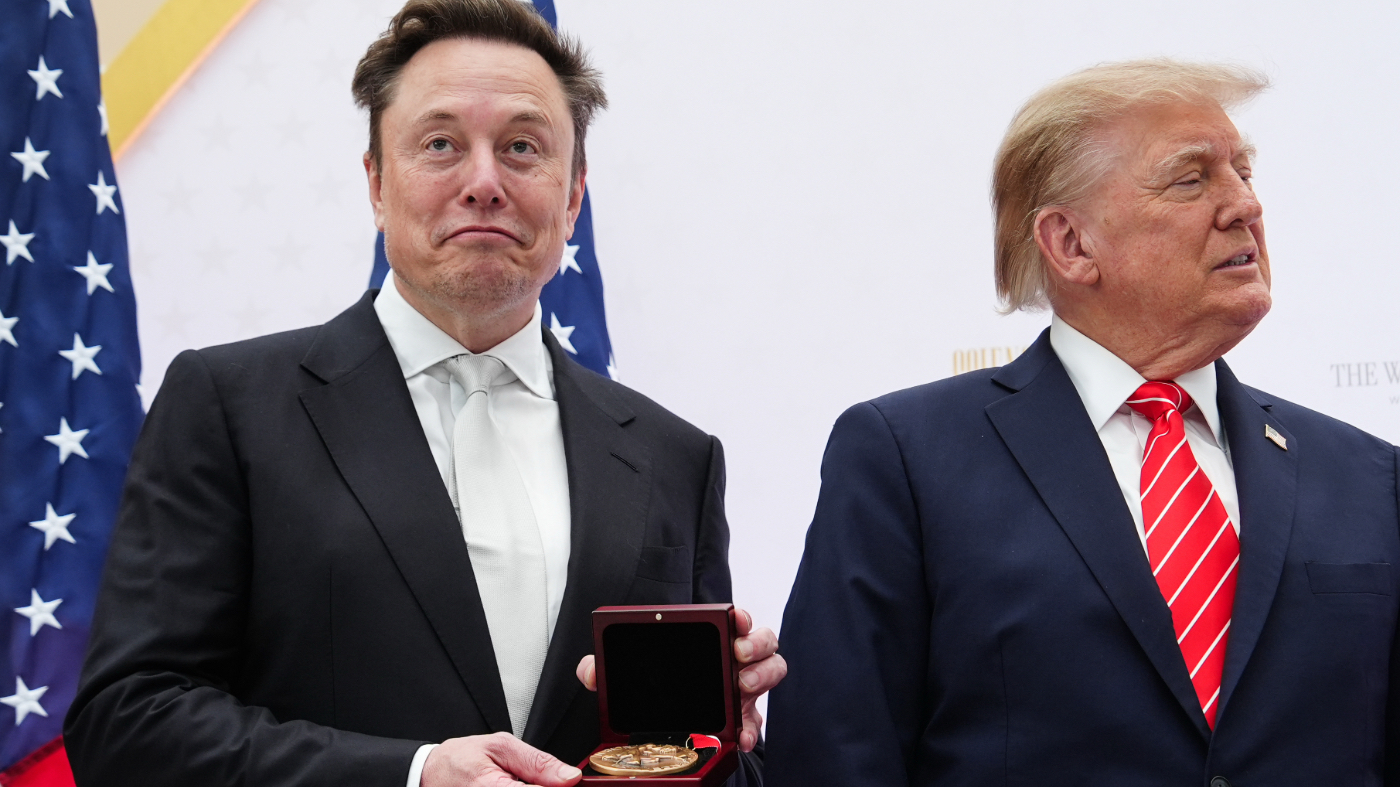
President Trump’s Ukraine policy has been, as Winston Churchill famously said of Russia, “a riddle wrapped in a mystery inside an enigma.” In 2025, he humiliated Ukraine’s president Volodymyr Zelensky in the Oval Office. He also gave Russian strongman Vladimir Putin the red-carpet treatment , ended direct American economic and military aid to Ukraine and pushed absurd peace plans that only appease Russian aggression.
The tilt toward Russia makes no sense . Speculation runs wild. Is Trump is afraid of Putin? Does Putin have blackmail material on him? Is he a Russian asset?
I think of a line often attributed to Churchill: “You were given the choice between war and dishonor. You chose dishonor, and you will have war.”
In the days since he last spoke to Putin by telephone, Trump has announced a sanctions waiver for Russian diesel supplies to the global market. He may have been involved in throttling Ukraine’s access to vital battlefield satellite systems. He put sweeping new sanctions against Russian on hold , called for Zelensky’s ouster and blocked vital supplies to Ukraine of U.S.-made Patriot interceptor missiles both from the U.S. and European governments .
The sanctions waiver lets Russia sell diesel on the global market , and gives Putin extra cash for his war on Ukraine.
But as far as global diesel supplies go, the limiting factor remains the Iran War and the Strait of Hormuz . The Russian deal’s impact on domestic fuel prices will be minimal, and the upside impact on Russia’s economy significant.
Trump waived the sanctions, which he said was “in the national interests of the United States,” just before they would have become effective. He did not explain why or what those interests were. The sanctions were intended to squeeze Russia’s finances for its war against Ukraine. The waiver was a gift to Putin that he did not deserve.
Rep. Don Beyer (D-Va.) made no bones about his disgust: “Trump’s latest surrender to Putin again betrays our Ukrainian partners and defies clear congressional intent of legislation designed to punish Russia for its illegal war of aggression.”
Inexplicably, Trump appears to have made good on his threats to restrict Ukraine’s access to intelligence and its use of Starlink, including the satellite service’s military version. Ukraine relies on two satellite systems related to Elon Musk’s SpaceX. One is Starlink, which handles communications, defensive drones and coordinating ground forces. The other is Starshield, used for offensive purposes and controlled by the U.S. government.
Although Trump declared he had arranged an “ energy ceasefire ,” on Oct. 14, Russia launched 39 ballistic missiles and more than 120 drones against energy and civilian targets in Ukraine. Ukraine received no intelligence warning from the U.S. Ukrainian operators, without Starlink, found they could not control drones at speeds above 100 mph.
Russia’s salvo was one of the largest attacks of the war , killing at least six Ukrainians and leaving at least 600,000 without power. Someone had obviously tipped off the Kremlin about the window of opportunity.
The sequence of events had a flavor that could have come from the pen of Bret Harte, where three play poker: One is shot, and the two survivors blame each other. Musk has been critical of Zelensky’s war against Russia. It appeared at first blush that he deliberately sabotaged Ukrainian military operations while they were underway, in defiance of American national security policy. But Musk blamed Trump: “Starshield systems are owned and controlled by the US government. Any limits on speed or usage are decided by the U.S. military and ultimately” the president, he wrote.
Trump said that neither he nor Musk had caused the limitations: “In fact, I don’t even think it was slowed down, from what I understood.” About Musk’s possible role, Trump said , “it wasn’t me, and it wasn’t Elon, as I understand.” But Reuters had reported that the order to limit Starshield for Ukraine came from inside the White House.
According to sources familiar with the discussions, it was Musk who had approached Trump with the idea of slowing down the systems in Ukraine, and Trump agreed. One source said Musk “tweeted out that he was innocent and that it was the U.S. administration that did it.” So, whodunit? The source said: “The reality is that they were both in it.” Ultimately, American officials blamed Musk for the restriction.
Zelensky said the speed and usage restrictions had been deliberately imposed on Starshield. “This is a planned operation.” The Ukrainian leader suggested that the restrictions, which began overnight on Oct. 13, were in place until Saturday, when he announced that operations were back to normal. A bipartisan group of U.S. senators has demanded an investigation into the disruptions .
Whose side are we on in Ukraine? Trump has left us mystified.
James D. Zirin is a former federal prosecutor in the Southern District of New York and a published legal analyst.
Topics in this story
Gathered from external sources. Rights to this text belong to whoever originally published it.