Archaeologists discover rare gold bear ornament in ancient Saka burial mound in Kazakhstan, alongside human remains and scattered artefacts
Archaeologists have discovered what appears to be a gold bear figurine at a Saka-period burial mound in Almaty, Kazakhstan.
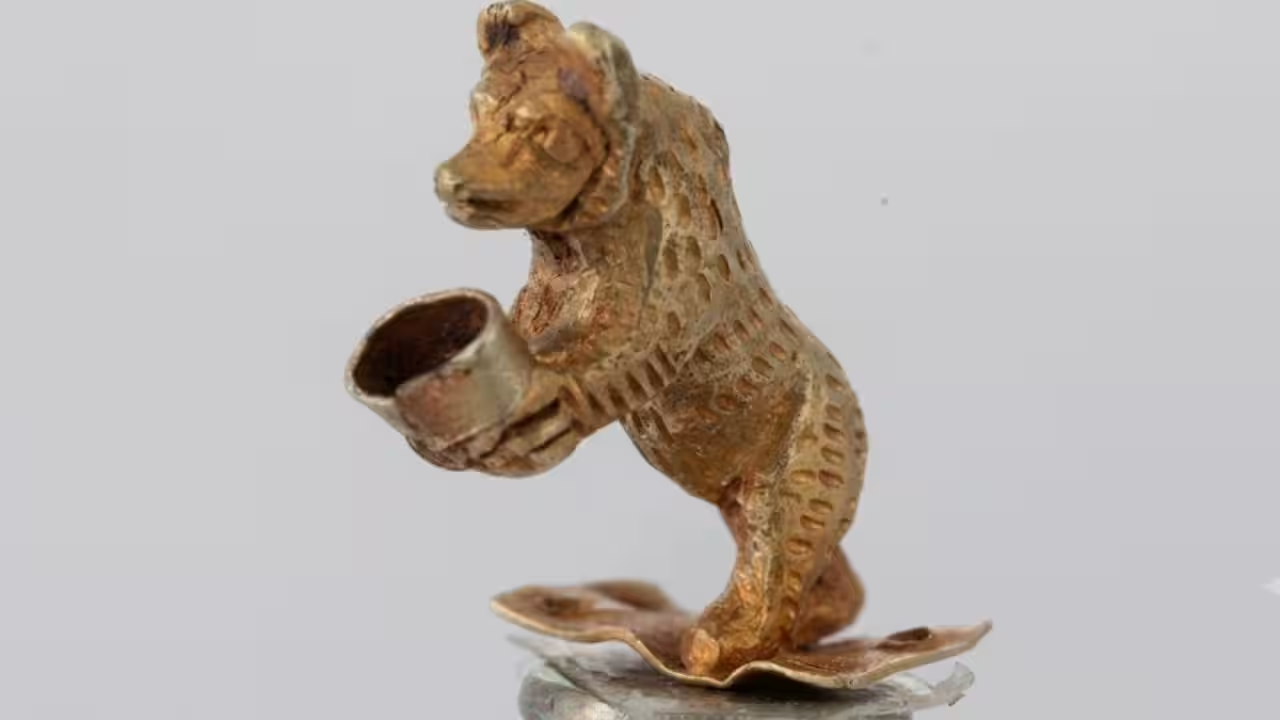
Archaeologists have discovered what appears to be a gold bear figurine at a Saka-period burial mound in Almaty, Kazakhstan. The find was made during emergency excavations at the Karagaily burial ground in the Nauryzbay district. The mound had been looted in ancient times, leaving artefacts scattered across the site. The burial mound is provisionally dated to the 4th-3rd centuries BCE.According to the Almaty city administration, the ornament is believed to be a small cast-gold bear intended to decorate a headdress. Archaeologists also recovered numerous human remains and fragments of Saka pottery. Researchers believe four adults and three children may have been buried there, although the exact number is not yet known.The rare gold bear figurine and its connection to Saka headdressesThe most notable find appears to be a small gold figurine shaped like a bear. Archaeologists believe it was made by casting and may have been used to decorate a headdress. Holes in the plate suggest that the ornament could have been sewn onto the headwear.The Almaty city administration said similar objects were characteristic of Saka-period clothing. It cited a gold finial shaped like an argali found on the headdress of the Golden Man. Another comparison came from the Kok-Kainar burial ground, where a small leopard sculpture was found in 2014. That object was also an element of a headdress. The bear figurine is described by the museum association’s director as unique to Kazakhstan, with no similar find previously recorded there.What archaeologists found inside the ancient Saka burial moundThe Karagaily burial mound measures 25-26 metres in diameter and about 2.5 metres high. A preliminary dating based on study of the burial ground places it in the Saka period, between the 4th and 3rd centuries BCE. The mound had been looted in ancient times, and the looting pit measures three metres.Excavations uncovered a significant quantity of human remains, as well as fragments of Saka pottery. Most of the artefacts had been scattered after the looting. Researchers believe the mound may have contained the burials of four adults and three children. However, the exact number of people buried there has not yet been established. Further analysis is planned to clarify the burial circumstances and establish the number of individuals.What makes the ancient gold bear ornament significantMarat Mugalovich Nurpeisov, a senior researcher at the Almaty Museum Association, said the unusually large number of remains recovered there was of particular interest. Such burials are uncommon in Kazakhstan, he added.Burial mounds of a similar size were generally intended for one or two people. Researchers plan to carry out additional analyses to clarify the circumstances of the burial and determine the exact number of individuals. The work will include specialists in anthropology.Lyazzat Kudaibergenovna Sagyndykova, director of the Almaty Museum Association, said, "The sculptural bear figurine is unique to Kazakhstan. No similar finds have been discovered before. This discovery makes it possible to trace cultural parallels across the entire Eurasian region, from the Black Sea region to the Altai.”Other archaeological discoveries across AlmatyAfter the archaeological investigations and scientific processing of the recovered materials are complete, the most valuable artefacts are expected to be included in an exhibition at the Almaty Museum and shown to the public. The Almaty Museum Association received a special licence for archaeological excavations in 2022 and began conducting independent research in the city.That year, it found an undisturbed Saka warrior burial in the Alatau district, dating from the 5th to 2nd centuries BCE. Finds included fragments of a gold-inlaid sword, gold animal-style ornaments, silver objects, and human remains. In 2024, excavations found human bones, bronze fasteners, and nails. In 2025, archaeologists identified an ancient looters’ tunnel in one mound.You use AI every day. Now get your AI Quotient. Take the AIQ test.
Topics in this story
Gathered from external sources. Rights to this text belong to whoever originally published it.