Iceland votes to reject EU accession talks: What happens next?
The referendum result halts Iceland’s bid to reopen EU membership talks, with 52.5 percent voting against the proposal.
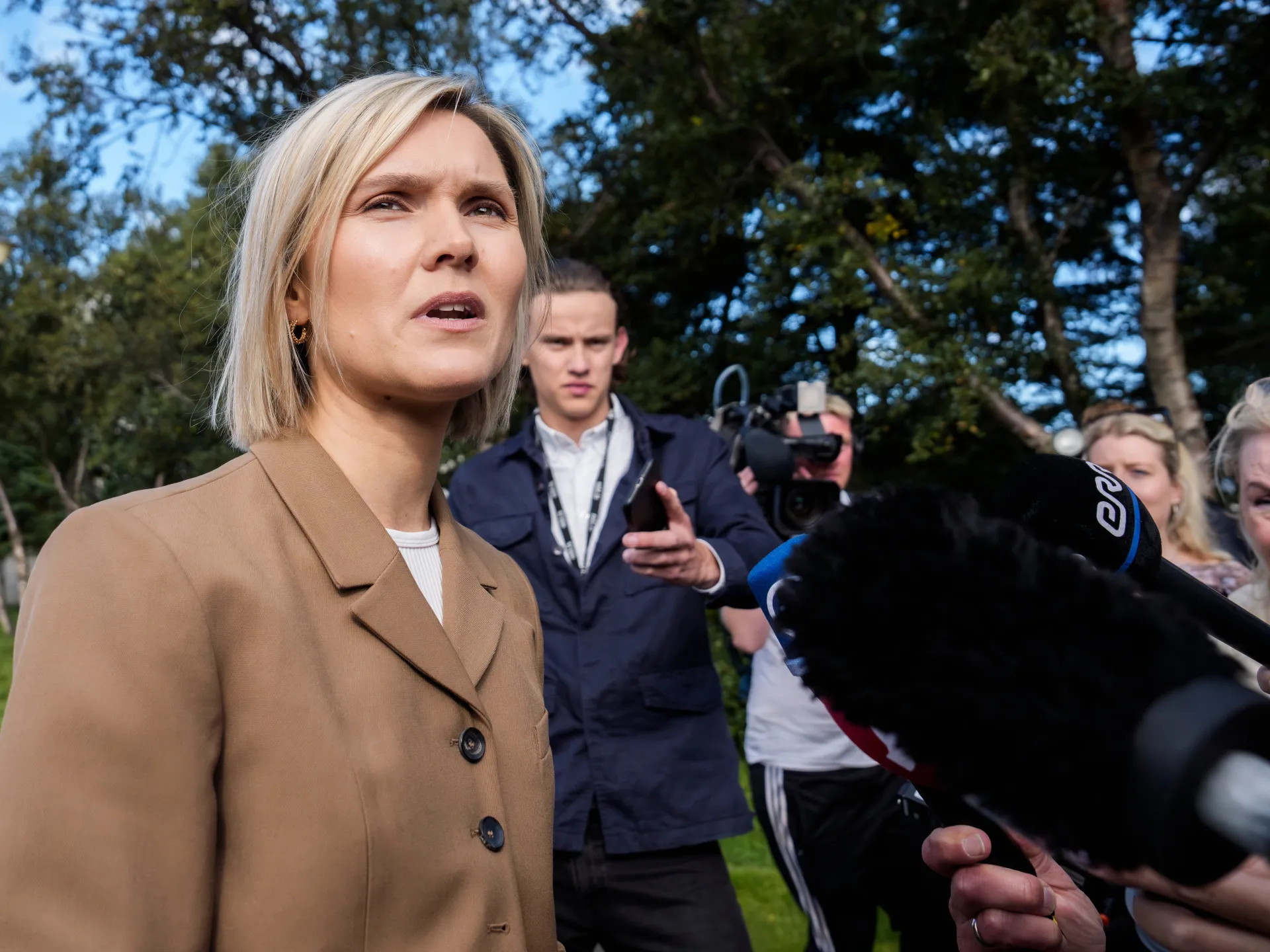
Voters in Iceland have rejected a proposal to resume negotiations on joining the European Union, dealing a setback to the government’s push for closer ties with the 27-country bloc.
With almost all votes counted, the “no” side was ahead by 52.5 percent to 47.5 percent, according to national broadcaster RUV. Official results have not been announced yet.
The result is not a vote on EU membership itself, but on whether Iceland should reopen accession negotiations that were suspended more than a decade ago.
The government had argued that renewed talks could help Iceland confront growing economic and geopolitical pressures, including tensions over Arctic security.
Opponents of accession instead focused on protecting Iceland’s fishing waters and general sovereignty-related issues that would arise if the country became part of the bloc.
The referendum asked Icelanders a simple question: Should Iceland resume accession negotiations with the European Union?
It was not a vote on whether Iceland should actually join the EU. A “yes” result would have allowed the government to restart negotiations with Brussels. Any eventual agreement on membership would then have been put to voters in another referendum.
In 2009, Iceland applied to join the EU, following a financial crisis that severely affected its economy. Negotiations were suspended in 2013 after a eurosceptic government came to power.
Technically, the referendum result is nonbinding, but the coalition government headed by Social Democratic Prime Minister Kristrun Frostadottir has vowed to respect the result.
The “no” side won, according to RUV, with 52.5 percent against 47.5 percent for “yes”. Some votes from one constituency were still pending, but they were not expected to change the result.
The outcome represents a setback for Frostadottir’s government, which had presented the referendum as a “now or never” moment for the EU debate.
What’s the debate in Iceland on joining the EU?
The debate has largely centred on the economy, fishing rights and the cost of living.
The most important argument put forward by opponents against membership was the fate of the country’s fishing industry, a major part of Iceland’s economy.
Gudrun Hafsteinsdottir, the opposition leader who campaigned for the “no” vote, rejected claims that Brussels could solve Iceland’s economic problems.
“These are not problems that Brussels will solve for us. These are problems that Icelandic politicians must solve,” she said.
Supporters, however, argued EU membership could help address Iceland’s high inflation and interest rates. Iceland’s central bank rate is eight percent, compared with 2.25 percent at the European Central Bank.
Some also saw adopting the euro as a potential source of economic stability. Nevertheless, Iceland already has close economic links with the EU.
It belongs to the European Economic Area and the Schengen free-travel zone, giving it access to the EU’s single market without being a member.
The EU debate gained urgency because of a changing geopolitical environment surrounding Arctic countries. Iceland is a NATO member, but has no military of its own and depends heavily on its allies for defence.
However, the country’s left-leaning coalition government, elected in 2024, moved up the EU referendum it had planned for next year after US President Donald Trump mistakenly named the country four times while speaking about his policy towards Greenland.
The government argued that closer ties with Europe could provide Iceland with greater protection and strengthen its position amid growing tensions in the region.
Frostadottir said the campaign had raised discussion about Iceland’s place in the world and its broader geopolitical position.
“We’ve been waiting for this for years to be able to have a vote,” Frostadottir said, adding that her government would continue its work regardless of the outcome.
It is unlikely that Iceland will resume EU accession negotiations during the current government’s term, which runs until 2028.
The government had already said it would respect a “no” vote. It is also expected to refer to parliament the question of whether Iceland should formally withdraw its EU membership application.
For now, Iceland will remain outside the EU while continuing its existing relationship with the bloc through the European Economic Area and Schengen.
Topics in this story
Gathered from external sources. Rights to this text belong to whoever originally published it.