In 2022, California launched a floating salmon-collection experiment in Shasta Reservoir; redesigns reduced predator encounters and increased the number of endangered fish collected
California's innovative floating salmon-collection system at Shasta Reservoir has shown promising results in enhancing the collection of endangered winter-run Chinook salmon and reducing predator encounters, paving the way for fish recovery efforts.
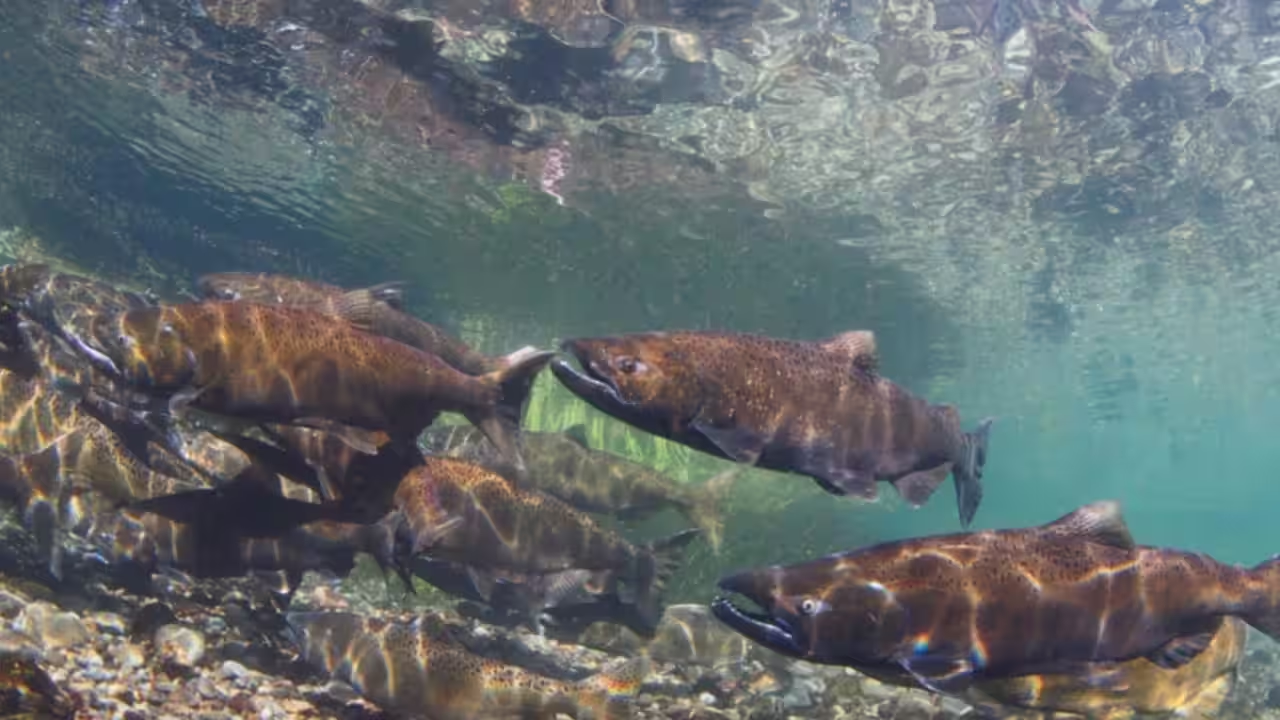
In 2022, California launched a trial floating system in Shasta Reservoir to help restore endangered winter-run Chinook salmon to their habitat in the McCloud River. The California Department of Water Resources led the four-year pilot project. It tested whether young salmon migrating downstream could be collected before dispersing into the reservoir and transported around Shasta Dam. The construction of Shasta and Keswick dams in the 1940s blocked access to high-elevation, cold-water rivers where Chinook salmon spawned. In an update in January 2026, DWR reported that redesigning and relocating the collection system lessened predator presence around it and increased the number of fish collected. These improvements represent progress in testing a fish-passage strategy, though they do not yet demonstrate that the fish population has recovered.Why California developed a floating salmon-collection systemWinter-run Chinook salmon reportedly used the upper Sacramento River watershed, which included the McCloud River for spawning and early development. The fish population was left dependent on areas downstream of the dams after the construction of Shasta and Keswick dams, as they blocked their access to these upstream habitats. These lower-elevation waters can be challenging to manage during droughts and periods of high temperatures. According to DWR, climate change and drought place additional pressure on the species because warmer water can threaten the survival of eggs and young fish. Therefore, restoring access to colder historical habitat is a part of a broader effort to improve the population’s resilience to changing environmental conditions.The central challenge faced by the project is getting juvenile salmon out of the McCloud River before they enter the much larger Shasta Reservoir. The Juvenile Salmonid Collection System (JSCS) uses a floating structure, guidance nets, a temperature curtain, a debris boom and a fish trap to direct migrating fish towards a collection point. Once captured, the young fish can be placed in transport containers and moved downstream around the dams, thus allowing them to continue their journey towards the Pacific Ocean.From initial testing to redesigningThe project received $1.5 million in funding in February 2022. Following this, DWR began testing the first version of the collection system in September. During the initial phase, engineers and biologists evaluated the system’s hydraulic performance and temperature conditions. In 2022, no salmon were collected, as the priority was to test how the structure operated and determine how its position and layout could be improved.In 2023, the project expanded to include juvenile salmon collection. DWR also conducted “efficiency releases,” in which hatchery-raised, tagged juvenile salmon were released upstream of the system so researchers could measure how many were captured later on. To evaluate the performance of the physical structure, the engineering team conducted efficiency releases by tracking hatchery-raised juvenile salmon introduced upstream of the JSCS and measuring the exact number successfully gathered in the trap.According to the state agency’s January 2026 data, information gathered during the pilot project informed an improved second version of the system in late 2025. Additionally, the department moved the collector from its earlier position where the McCloud River meets the reservoir into the river environment itself. The changes reportedly reduced predator presence near the system and increased collection numbers.What the results mean for salmon recoveryThe larger reintroduction program seeks to repopulate winter-run Chinook salmon in their native range above Shasta Dam, while enabling their offspring to migrate downstream to the ocean. According to the 2026 report, at least two pairs of adult winter-run Chinook salmon have migrated from the lake back into the McCloud River to breed. While the migration of these adult fish is promising for the reintroduction project, it does not provide evidence that the collection system alone led to their migration.The project has involved DWR, the California Department of Fish and Wildlife, NOAA Fisheries, the Winnemem Wintu Tribe, the US Fish and Wildlife Service and other partners. This partnership brings together engineering, fisheries science, and Indigenous knowledge to tackle the problems created by the dams.You use AI every day. Now get your AI Quotient. Take the AIQ test.
Topics in this story
- Chinook salmon
- Shasta Reservoir
- salmon recovery
- endangered species
- California Department of Water Resources
- California salmon collection experiment
- winter-run Chinook salmon restoration
- Shasta Reservoir salmon recovery
- McCloud River salmon habitat
- juvenile salmon collection system
- climate change impact on salmon
Gathered from external sources. Rights to this text belong to whoever originally published it.