Meet Harsh Jaiswal, Mohan Pedhapati and Rahul Maini: 3 Indian-origin researchers who used Claude to breach OpenAI systems, won $6,500 bounty
US News: Three Indian-origin cybersecurity researchers, Harsh Jaiswal, Mohan Pedhapati and Rahul Maini, demonstrated how Anthropic's Claude AI could be used to.
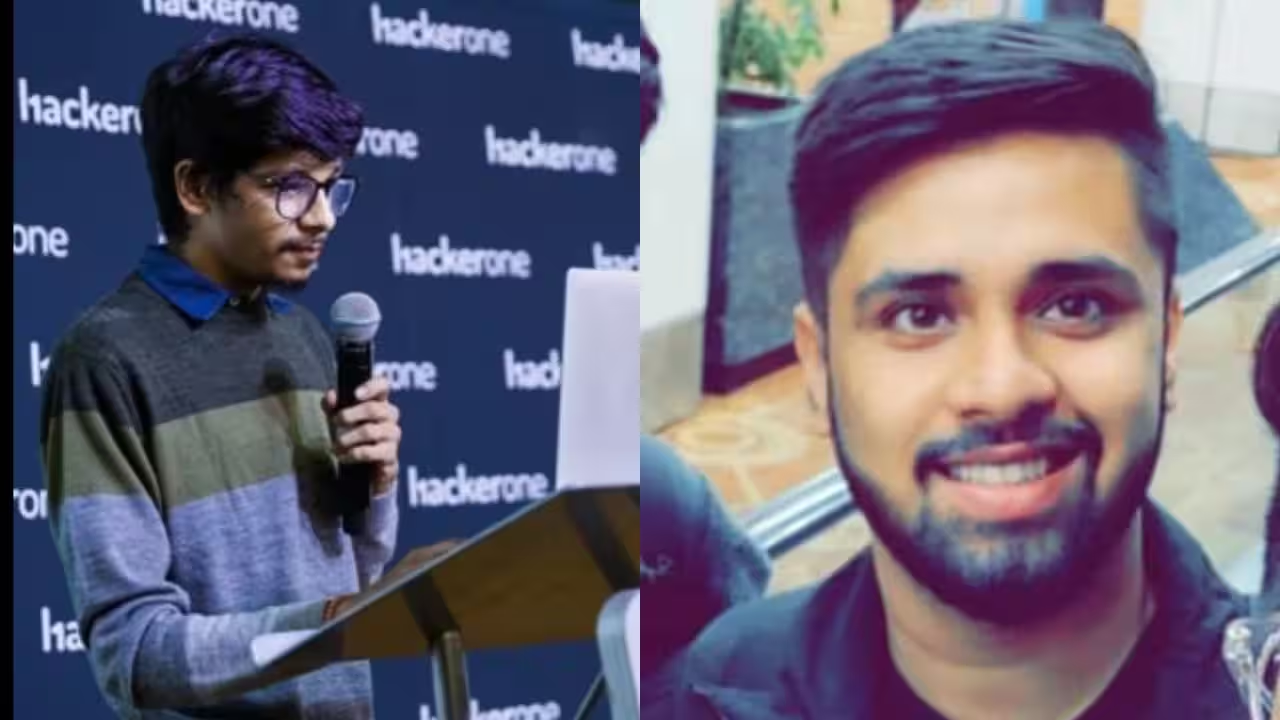
Three Indian-origin cybersecurity researchers, Harsh Jaiswal, Mohan Pedhapati and Rahul Maini, demonstrated how Anthropic's Claude AI could be used to exploit vulnerabilities and gain access to OpenAI employee accounts and the company's internal code repository, Wall Street Journal reported.The researchers, who work at cybersecurity startup Hacktron AI, carried out the research in July 2026 while investigating security weaknesses at leading AI companies. They eventually chained two separate vulnerabilities to move from OpenAI's public community forum to employee ChatGPT and Codex accounts and then to an internal GitHub repository.The researchers said the entire chain, from their initial discovery to demonstrating access to OpenAI's internal repository, took less than 72 hours. They spent under $3,000 on AI tokens and won a bounty of $6,500 after they disclosed the issues to OpenAI.How did the researchers get into OpenAI's systems?The attack began at community.openai.com, OpenAI's community and help forum, which is operated using the third-party platform Discourse.Hacktron researchers discovered that specially crafted HEIC/HEIF image files could exploit a vulnerability in the image-processing software used by Discourse. The vulnerability was linked to the `libheif` image-decoding library and could allow remote code execution — essentially giving an attacker the ability to execute commands on the affected server.However, gaining control of the forum server alone did not provide direct access to OpenAI's internal code.To safely demonstrate proof of access without viewing sensitive IP or source code, they used a compromised employee's Codex account to submit a harmless pull request to OpenAI's internal private repositoryThey prominently used Anthropic's Claude AI models (spending under $3,000 in API tokens) to help write, debug, and port the binary exploits faster, showcasing how offensive AI capabilities accelerate vulnerability research.Then they reported the findings responsibly through Bugcrowd and HackerOne to OpenAI and Discourse. OpenAI patched the identity issue shortly after notification and awarded them a $6,500 bug bounty.In a statement to Forbes, OpenAI spokesperson Drew Pusateri said the company thanked the researchers “for contacting us and sharing their findings,” and noted that it had resolved the vulnerability.'No brand name, colleges or companies'Tech commentator Deedy Das pointed out that none of the three researchers had any big college name on their CVs. "Here are the LinkedIns of the 3 Indian guys who hacked OpenAI with Opus 5 in 2 days for Catch the latest World News and Live updates. Download the TOI app.
Topics in this story
Gathered from external sources. Rights to this text belong to whoever originally published it.