1,300-year-old wallaby teeth found in Queensland with resin still attached reveal how ancient people made necklaces and headbands
Rest of World News: Twelve animal teeth found in a rockshelter in northern Queensland have revealed evidence of a rare form of ancient personal adornment. Discovered at t.
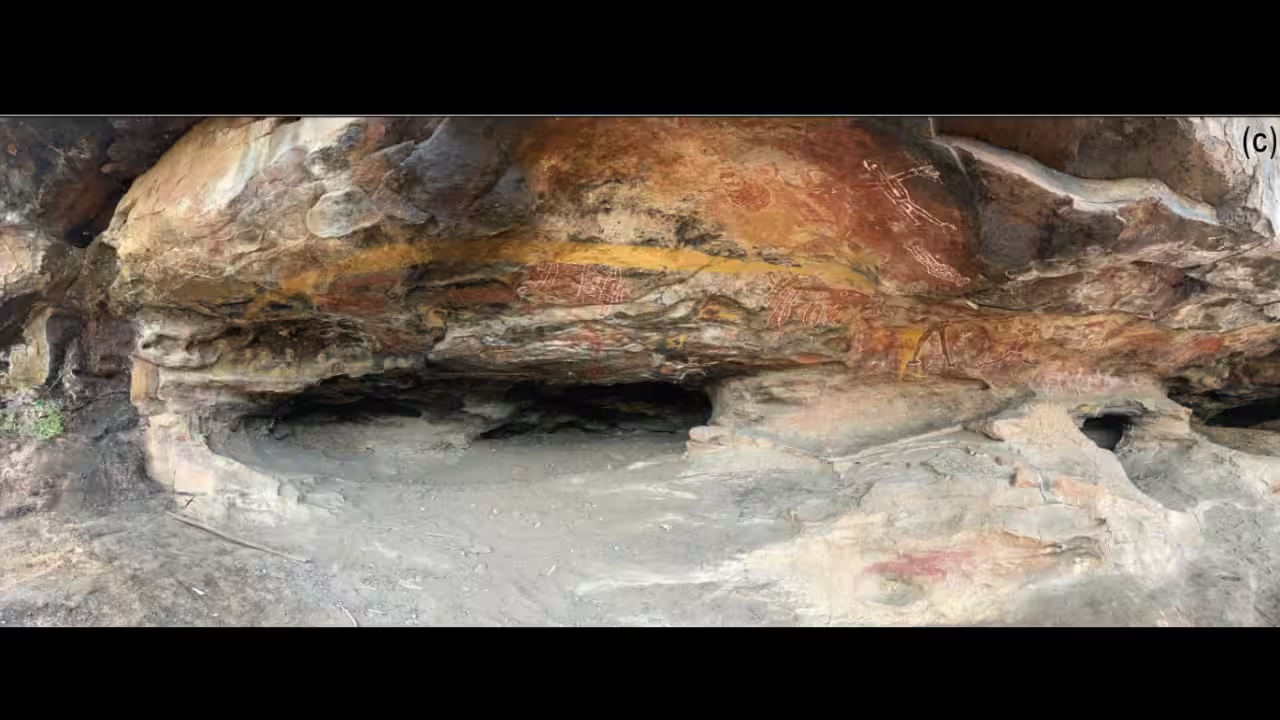
Twelve animal teeth found in a rockshelter in northern Queensland have revealed evidence of a rare form of ancient personal adornment. Discovered at the Windmill Way site in southeast Cape York Peninsula, the macropod incisors were found with small balls of plant resin attached to their roots. Radiocarbon dating of two resin samples placed the objects at roughly 1,100 to 1,300 years old. Chemical analysis identified the resin as primarily coming from grass trees, while traces of plant fibre and a fragment of animal hide were also found among the remains. The teeth showed no clear signs of having been used as cutting, scraping or drilling tools. Instead, the arrangement of resin and fibres indicates that they were probably attached to string. Researchers therefore identify the objects as likely components of a necklace or headband. Rock art from nearby Biniirr National Park provides additional evidence for macropod teeth being incorporated into personal ornaments in the region.What did the resin analysis reveal about the 12 wallaby teethChemical analysis showed that the adhesive on all 12 teeth contained compounds consistent with resin from grass trees (Xanthorrhoea). Several samples were specifically consistent with Xanthorrhoea johnsonii, while one tooth also contained compounds associated with Erythrophleum chlorostachys resin. According to the study published in Australian Archaeology, titled ‘An assemblage of resin-mounted macropod incisors from Quinkan Country, Cape York Peninsula, Queensland’, the presence of two resin types on one artefact could indicate that it was reused or repaired, or that the adhesive was deliberately made using two resin sources.The resin was not spread across the teeth in a broad coating. Instead, it formed small, neat balls pressed and smoothed around the extreme root ends. Five teeth also contained plant cellulose fibres associated with the resin, with four showing fibres positioned laterally in a way consistent with string attachment. One tooth contained a small fragment of animal hide embedded in its resin ball. The researchers therefore proposed that the resin balls may have acted as stopping devices, preventing twisted two-ply plant fibre string from slipping towards the root of each tooth.How did researchers identify the wallaby teeth as ancient jewelleryThe researchers found several lines of evidence supporting an interpretation as personal adornment. The teeth showed no convincing use-wear associated with practical tasks, while their resin-mounted roots and traces of plant fibres were consistent with attachment to a string. The study concludes that the 12 incisors were most likely components of a necklace or headband, although it cannot establish whether they belonged to one object or several separate objects.Rock art from two shelters in nearby Biniirr National Park also provides evidence relevant to the interpretation. One motif depicts an anthropomorphic figure with apparent ceremonial regalia, including a headdress containing a series of elongated objects interpreted as possible macropod incisors. Another motif appears to show a necklace made from teeth. The researchers note that these painted representations are approximately 45–50 kilometres northeast of Windmill Way and provide supporting evidence for the use of macropod incisors in personal ornaments in the region.What makes the Windmill Way wallaby teeth discovery significantThe Windmill Way discoveries are significant because organic ornaments are rarely preserved in Australian archaeological sites. The study notes that animal-tooth ornaments have previously been documented mainly in burial contexts, particularly in southeastern Australia, while convincing examples from non-burial archaeological contexts are extremely uncommon. Comparable ornaments include pierced kangaroo teeth and necklaces or headbands incorporating animal teeth.The preservation of the Windmill Way material also allows researchers to identify details that would otherwise have disappeared. More than 500 pieces of plant fibre string had previously been preserved at the site, and the resin on the teeth provided an additional record of organic technology from the pre-contact period. The teeth represent an extremely rare Late Holocene example of personal ornamentation from a non-burial archaeological context in Australia, while the direct dating of the resin provides an age for the objects themselves rather than relying on the age of a burial.Catch the latest World News and Live updates. Download the TOI app.
Topics in this story
Gathered from external sources. Rights to this text belong to whoever originally published it.