Europe’s digital agenda is a gift to China
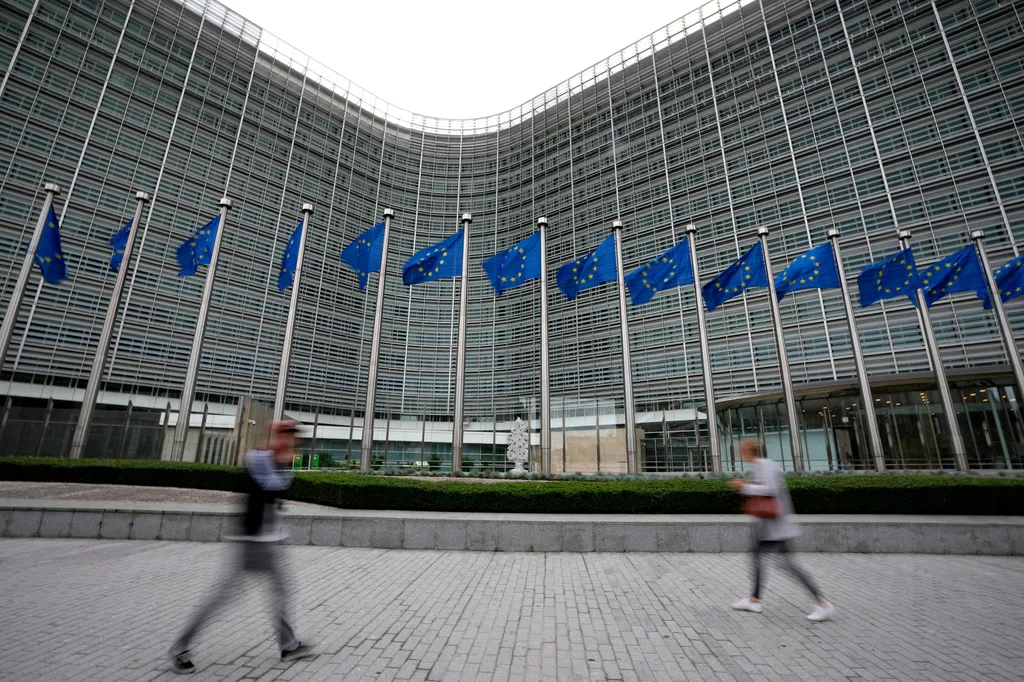
President Trump has announced plans to launch a Section 301 investigation into European Union trade practices, arguing that regulations like the Digital Markets Act and the EU Space Act unfairly target American companies.
Powerful AI chips are moving into China again . As Beijing does everything it can to close the gap with American AI companies, the U.S. and its European allies should pursue a trade and technology agenda designed to keep that gap open.
Instead, Brussels is spending its energy dismantling the American companies that are doing the heavy lifting.
The Digital Markets Act is sold in Brussels as a competition and consumer measure. It is neither. It imposes costs, mandates, and compliance burdens triggered by arbitrary thresholds: market capitalization instead of proven dominance, user counts instead of demonstrated harm.
The result is economic warfare disguised as regulation. Five of the seven gatekeepers currently designated by the European Commission are American: Alphabet, Amazon, Apple, Meta and Microsoft. Brussels has already fined U.S. firms €1.59 billion under the Digital Markets Act , including €890 million against Google in July, on top of billions more in antitrust actions against the same companies.
Brussels calls this fairness and digital sovereignty. But enforcement falls overwhelmingly on the American companies that built the modern digital economy, while European firms operate under a lighter touch. That does not make Europe stronger. It weakens American leadership abroad, hands China room to close the gap, and leaves European consumers paying more for worse alternatives.
The European Commission’s proposed EU Space Act, now moving through Parliament and the Council, applies to non-EU operators selling services into Europe. Its original proposal creates a “giga-constellation” category beginning at 1,000 satellites, a threshold that would subject American operators to requirements no European competitor currently faces. The original text also included reflectivity standards that fall hardest on companies flying at lower altitudes to deliver low-latency service, which again means American ones.
The U.S. State Department, SpaceX and the U.S. Chamber of Commerce have all filed objections on exactly these grounds. The State Department warns that parts of the Act could create non-tariff barriers and impose unacceptable regulatory burdens on American companies.
The pattern is the same as the Digital Markets Act: rules written to look neutral, but whose practical burdens fall disproportionately on American companies, slowing the Western tech industry at precisely the moment China is closing the gap.
President Trump has announced plans to open a Section 301 investigation into the EU’s trade practices. He used the same trade tool during his first term to challenge discriminatory digital services taxes abroad, and he has continued to use Section 301 aggressively in his second term. It works.
The White House AI Action Plan is built on cutting red tape so American companies can build and preserve U.S. leadership in artificial intelligence. Brussels is moving in the opposite direction.
In July, under the Digital Markets Act, the European Commission ordered Google to provide competing AI services greater access to Android features and made AI chatbots with search functionality eligible to receive Google Search data. This move to bring American AI assistants with search functionality under the European rules governing search engines strips out the intellectual property protections that made the innovation possible in the first place.
You cannot demand that American companies serve your market and simultaneously strip them of the protections that make serving it worthwhile.
President Trump has the right people pushing back. Commerce Secretary Howard Lutnick and U.S. Trade Representative Ambassador Jamieson Greer have put the EU’s digital rules at the center of the trade table, making clear there is no tariff relief. At the same time, Brussels treats fining American companies as a revenue model.
When Lutnick speaks, Brussels listens. I have seen it in action. U.S. Ambassador to the EU Andrew Puzder is carrying that message directly in Brussels, where the fight over Europe’s digital agenda is playing out. Michael Kratsios, President Trump’s science advisor, has built the policy case that these rules are not neutral regulation but a hostile act against American commerce.
The Section 301 investigation the president has announced is the natural next step, and the team should have every tool available to get reciprocity.
Allies do not get a pass on this. A Section 301 investigation would put the question where it belongs: whether European regulations such as the Digital Markets Act and the Space Act were written to discriminate against American commerce.
The answer will not be flattering to Brussels.
Juan Andres Caro serves as a senior fellow at America First Policy Institute. He previously served as deputy assistant secretary of commerce for international and space affairs at the National Oceanic and Atmospheric Administration.
Topics in this story
Gathered from external sources. Rights to this text belong to whoever originally published it.