In the 1970s, California’s Niles Cone groundwater basin needed protection from saltwater intrusion, so a water district began routing creek water into former gravel pits; 13 pits spanning roughly 300 acres now help recharge the aquifer
Discover how California's Alameda County Water District uses former gravel pits to recharge groundwater and protect against saltwater intrusion, ensuring a safe water supply for communities.
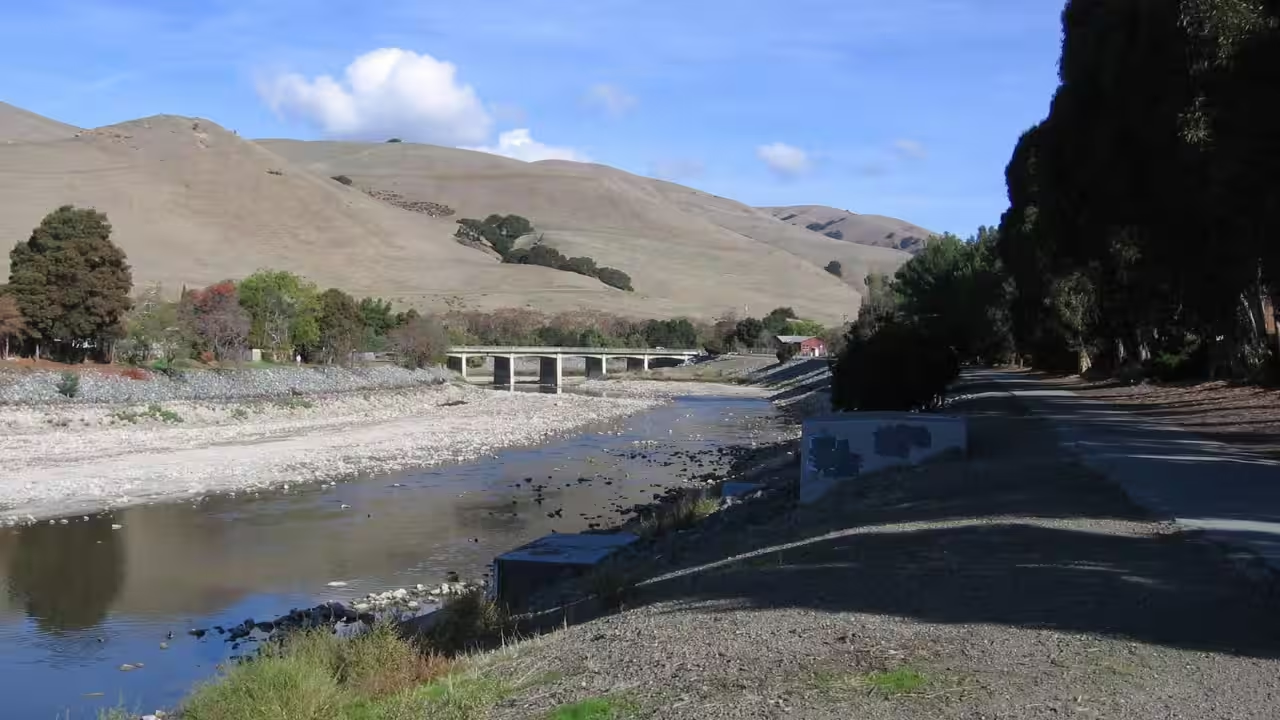
13 former gravel pits covered roughly 300 acres in Fremont, California, and now form part of a groundwater recharge system that is operated by the Alameda County Water District (ACWD), which directs water from Alameda Creek into the pits so it can seep underground. The district was working to protect the Niles Cone groundwater basin from saltwater intrusion in the early 1970s, which led to the establishment of the project. The problem was that seawater from San Francisco Bay had entered parts of the freshwater aquifer, which threatened a supply that was used by communities in southern Alameda County, and the district needed to replenish groundwater and limit the movement of saline water into freshwater zones.The current Quarry Lakes system uses water held behind inflatable rubber dams in the Alameda Creek Flood Control Channel, which the district diverts into former gravel quarries, where it percolates through the ground and replenishes the aquifer below. The district had used gravel pits for groundwater recharge since at least the 1930s, but the arrangement of lakes currently and diversion structures dates to the early 1970s.Saltwater intrusion prompted a wider groundwater recovery effortThe district installed its first rubber dam to increase groundwater recharge capacity in 1972, and two years later, it launched an Aquifer Reclamation Program for the specific reason of removing saltwater from the groundwater basin. In 1982, ACWD began drilling a group of wells as part of its Salinity Barrier Program, another measure that was intended to prevent saltwater intrusion, while the district also expanded its recharge infrastructure over time. Its third rubber dam was built in 1989, and it acquired additional recharge pits in 1990 and 1992.The groundwater basin lies beneath Fremont, Newark and Union City, and the ACWD says that it supplies up to half of the water used in those three communities. The district also operates wells that extract groundwater for distribution, and blends it with supplies from the San Francisco Regional Water System.USGS traced how recharge water moves undergroundA US Geological Survey study examined groundwater movement in the Niles Cone and southern East Bay Plain subbasins, where satellite-based measurements, groundwater chemistry and isotope analysis were used to investigate where recharge water travels and how the aquifers may connect. The study found that water entering the ground at Quarry Lakes can affect groundwater pressure as far as about five miles away, near the transition between the Niles Cone and East Bay Plain subbasins, and its influence on water quality was more local, since changes that were associated with recharge were apparent in wells less than two miles from the recharge sources.The researchers also found evidence that water can move through connected aquifers at different depths, since recharge from Quarry Lakes can reach the upper aquifer system at depths that went below 400 feet of the land surface and the deeper aquifer at depths that exceeded 650 feet. The findings also showed that the legacy of earlier saltwater intrusion has not completely disappeared, since parts of the Niles Cone basin still contain groundwater with elevated chloride concentrations that caused saline water to enter before the 1970s. The Quarry Lakes system continues to recharge the basin with water from Alameda Creek, and the former gravel pits now act as both groundwater storage areas and part of a regional recreation area, while the district continues to monitor groundwater quality and manage the risk of saltwater intrusion.You use AI every day. Now get your AI Quotient. Take the AIQ test.
Topics in this story
Gathered from external sources. Rights to this text belong to whoever originally published it.