Indonesia is building a school from residual plastic waste; even its floors, ceilings, pipes and frames will use discarded plastic
Bakti Barito is constructing what it describes as Indonesia's first school from residual plastic waste with the material used not only for bricks but also
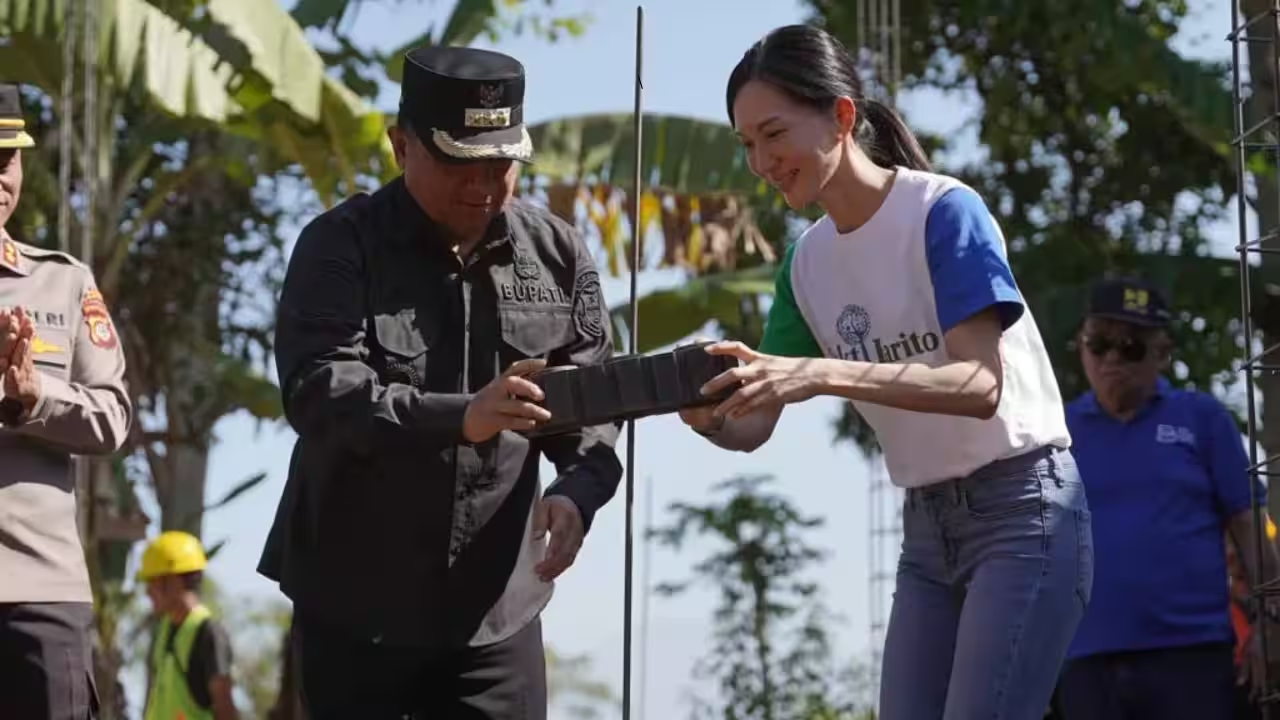
Bakti Barito is constructing what it describes as Indonesia's first school from residual plastic waste with the material used not only for bricks but also for floor panels, ceilings, roofs, pipes, and window and door frames. Bakti Barito, the philanthropic foundation of Barito Pacific Group, marked the groundbreaking on 12 June 2026 for the new SDN 3 Sukanegla building in Garut Regency. The project will transform approximately 15 tons of residual plastic waste into two classrooms and two toilet units. According to the Bakti Barito Foundation official press release, it targets low-value plastics, such as instant noodle wrappers and sachets, that have no economic value in the recycling market. The foundation had planned to inaugurate the school in July 2026, at the start of the new academic year.How is Indonesia building a school from residual plastic wasteThe foundation says plastic waste is used not only for the bricks but for all structural elements. It says every one of these components uses plastic waste. These include floor panels, ceilings and roofs, as well as pipes, window frames and door frames. Every one of these components uses plastic waste.The foundation says the project will transform approximately 15 tons of residual plastic waste into two classrooms and two toilet units for the children at the school. It adds that the school's construction is targeted for completion within a few weeks. According to the foundation's June announcement, the inauguration was planned for July 2026, at the start of the new Academic Year.What type of residual plastic waste is the initiative targetingThe initiative focuses on low-value residual plastics, which Bakti Barito identifies as the type of plastic waste accumulating most in local landfills (TPA). It distinguishes these from PET (Polyethylene Terephthalate), widely used for bottled drinks, PP (Polypropylene), widely used for food and beverage containers, and HDPE (High-Density Polyethylene), widely used for shampoo bottles and jerrycans packaging.Residual plastics such as instant noodle wrappers and sachets, the foundation says, have no economic value in the recycling market. As a result, this waste is routinely ignored by scavengers and informal sector workers, because it cannot be resold to commercial recycling plants. Bakti Barito states that by creating an alternative use for this neglected waste, the project diverts tons of plastic waste from the ecosystem and opens a new chapter in the circular economy.What did Fifi Pangestu say about Indonesia’s plastic waste initiativeFifi Pangestu, Executive Director of Bakti Barito, said during her remarks that environmental innovations must bring positive impacts and tangible benefits directly to local residents. She also appreciated the courage of the Garut Regency Government in pioneering the adoption of this solution. She described the plastic waste challenge as an opportunity to build something valuable for future generations, and said the collaboration of local governments and technology partners shows that residual plastics can be part of the solution by providing spaces for children to learn while helping to reduce the burden on the environment. In her words, "Change can happen when citizens, innovators, governments, and the private sector walk together."Bakti Barito says it hopes the initiative can become a catalyst for broader change across Indonesia, inspiring other regions to tackle the waste problem through eco-friendly infrastructure development. The foundation was established in 2011 and is the philanthropic arm of Barito Pacific Group, an integrated energy company whose entities include Chandra Asri Group, Barito Renewables (including Star Energy Geothermal), Griya Idola, Petrindo Jaya Kreasi (including Petrosea) and Indo Raya Tenaga. It says it is guided by its founders, Prajogo Pangestu and his wife Harlina Tjandinegara, and is dedicated to addressing Indonesia's environmental and educational challenges with its partners and the communities it serves.You use AI every day. Now get your AI Quotient. Take the AIQ test.
Topics in this story
Gathered from external sources. Rights to this text belong to whoever originally published it.