A 52-year-old Oregon farmer started building miniature castles from rocks cleared off his land in 1935, turning a winter hobby into a four-acre garden of stone bridges, churches and landmarks
In central Oregon, a collection of ordinary stones became the raw material for an unusual roadside attraction.
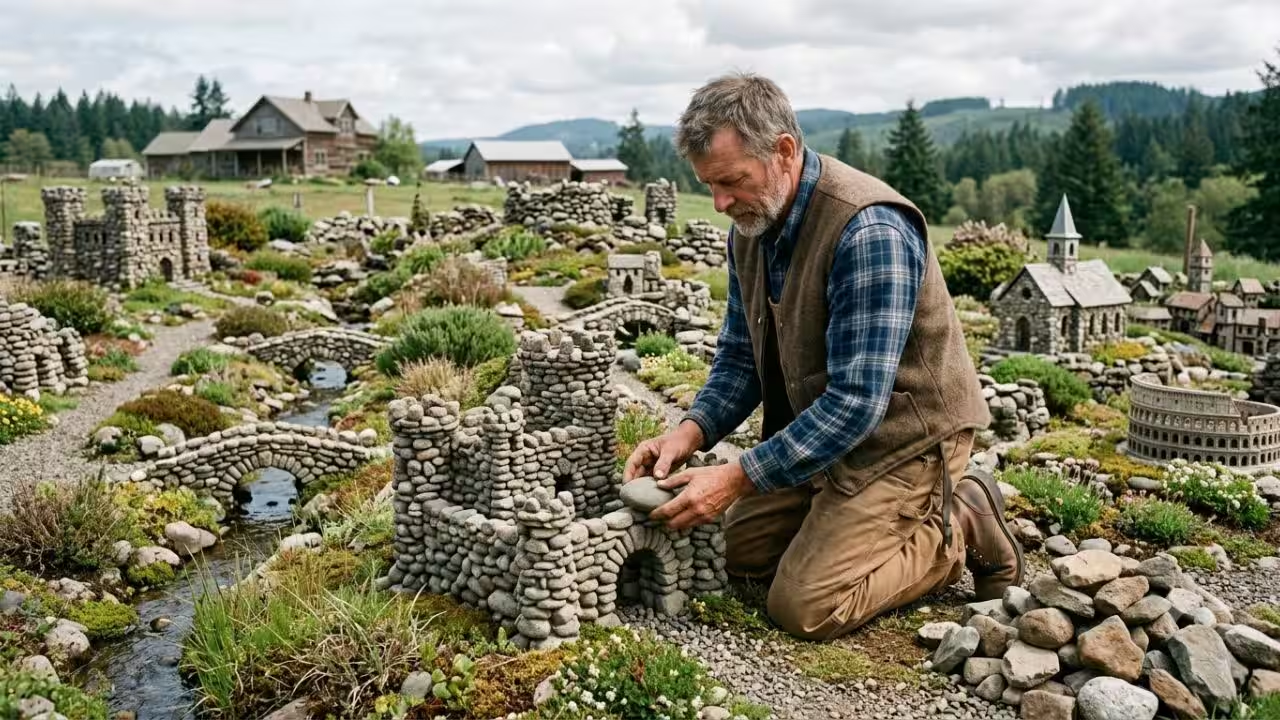
In central Oregon, a collection of ordinary stones became the raw material for an unusual roadside attraction. Rasmus Petersen, a Danish immigrant who had spent much of his life farming near Redmond, started arranging rocks into miniature buildings during the winter of 1935, according to Petersen Rock Garden, Museum and Peacock Sanctuary. He was 52, and what began as a seasonal pastime gradually spread across the land around his home. Small castles, churches, bridges and other structures took shape from stones gathered in the surrounding region, with ponds and planted areas added to the setting. The result became Petersen Rock Garden, a four-acre site that drew thousands of visitors during its early years and remains a recognised part of the area's history.How Danish immigrant began building Petersen Rock Garden at age 52Petersen arrived in Oregon in 1905, settling first in Junction City before claiming an 80-acre homestead near Redmond the following year. The land was acquired under the Desert Land Act, a federal scheme intended to encourage settlement and irrigation in arid parts of the American West. Farming became his livelihood, and by the 1920s he had expanded his agricultural holdings to 256 acres, growing hay and grain and keeping livestock.The Great Depression brought difficult conditions for farmers across the country. Petersen adapted by turning to potatoes, but it was away from the demands of agricultural work that he began developing a different kind of project. Reportedly, in 1935, at the age of 52, he started using the colder months to build small structures from rocks cleared from his land. What he made with them would eventually draw attention well beyond his immediate neighbours.The stonework that put Petersen Rock Garden on the mapThe stones were not simply building material. Petersen incorporated local agate, jasper, obsidian and other varieties into his miniature constructions, selecting pieces for their shapes, colours and textures. Bridges linked sections of the garden, while castles, churches and monuments gave the site the appearance of a small settlement assembled from the geology of the region.The work grew over time. Water features, fountains, mosses and flowers became part of the surroundings, adding living elements to the carefully arranged stonework. Petersen also collected stones from within roughly 85 miles of his home, according to the garden's historical account. That broad geographical reach meant the site reflected the variety of material found across central Oregon rather than relying entirely on rocks from a single field.Visitors began arriving while the garden was still developing. By 1938, the attraction had reportedly welcomed more than 7,000 people. What had started as something to occupy the winter months was becoming a destination in its own right.The miniature landmarks attract visitorsPetersen Rock Garden eventually covered four acres, with its stone creations arranged among landscaped areas and water. Its appeal lay partly in the contrast between the scale of the structures and the work required to assemble them. Buildings and bridges were made from individual stones, placed together to suggest larger architectural forms in miniature.The site also expanded beyond the garden itself. Historical accounts describe a museum, a diner and a pond with islands among its features. Reportedly, by the early 1950s, annual attendance was said to have reached around 120,000 visitors, placing the garden among the roadside attractions that drew travellers exploring Oregon.One plaque on the property sits beneath a miniature Statue of Liberty. It carries the inscription, “Enjoy yourself. It is later than you think.” The wording offers a small glimpse into the garden's character, although its buildings and collections remain the more substantial record of Petersen's years of work.New owners took steps to restore the historic garden and museumPetersen devoted himself to the project until his death in 1952. His wife, Nyleta Harris, whom he had married in 1950, continued managing the property until she died in 1987. The garden then passed into the care of her daughter, Adele Hegardt, and her husband, Harry. Following Adele's death, her daughter Susan Caward took on responsibility for the site.The stone structures, planted areas and water features all formed part of a landscape that had developed over decades, rather than a conventional museum collection that could be preserved indoors. In 2010, an Oregon family purchased the site, with preservation efforts organised through a nonprofit established to support the garden, museum and peacock sanctuary. The aim was to protect the attraction and restore features associated with its earlier years. A museum refurbishment followed in 2022 after a grant secured through local business Webfoot Home Improvements.A historic attraction enters a new chapterMore recent efforts have focused on bringing people back into the work of caring for the garden. Since 2022, Marci Wayman has been associated with new ownership and plans to develop the landmark as a community-stewarded nonprofit. Volunteers have helped with restoration and upkeep, while organisers have sought wider participation in deciding how the property should be preserved and used.The garden's future now depends on more than the stonework Petersen left behind. Its museum, landscape and other features need attention if they are to remain accessible, and community involvement has become part of that process. The original structures still connect the site to the farmer who began building them in 1935, long before the garden became a familiar stop for visitors travelling through central Oregon.You use AI every day. Now get your AI Quotient. Take the AIQ test.
Topics in this story
Gathered from external sources. Rights to this text belong to whoever originally published it.