World’s oldest shipwreck discovered off Turkey with nearly 4,700-year-old pottery revealing clues to ancient Mediterranean trade
Archaeologists have discovered the world’s oldest known shipwreck off the coast of Kekova Island in Antalya, Turkey.
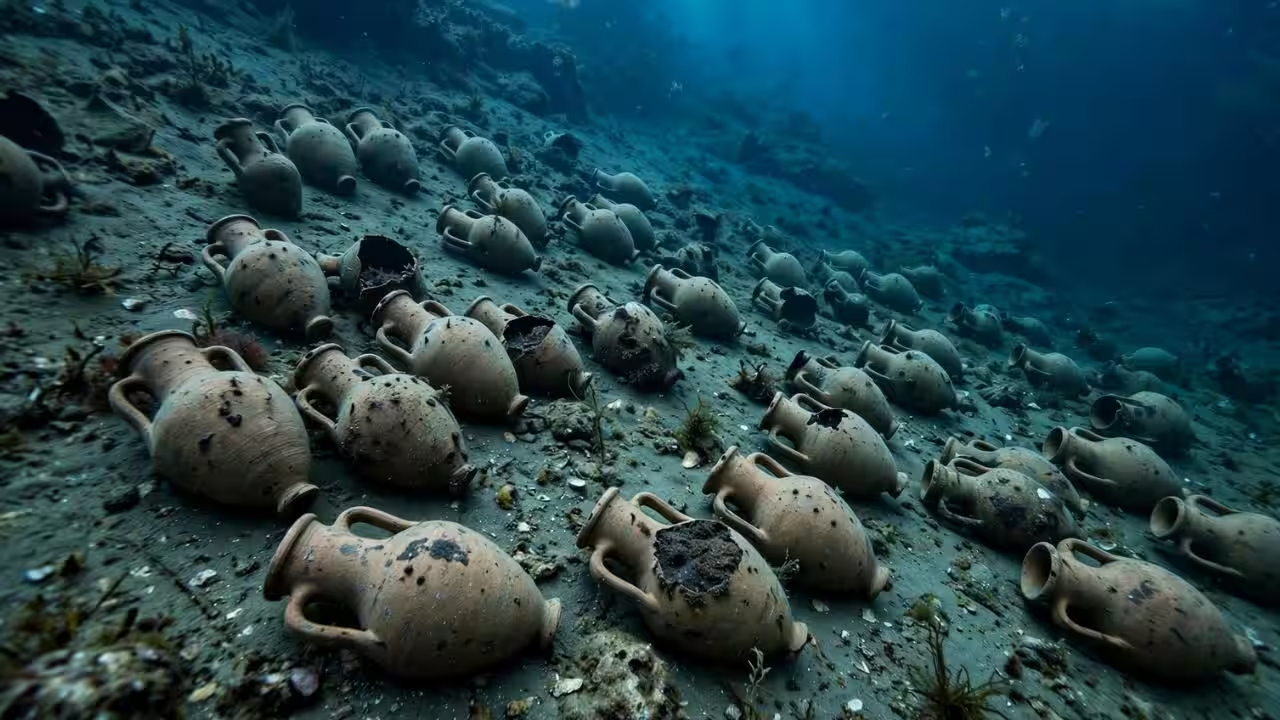
Archaeologists have discovered the world’s oldest known shipwreck off the coast of Kekova Island in Antalya, Turkey. The Early Bronze Age vessel dates back 4,400 to 4,700 years and was around 10 metres long, carrying more than 30 ceramic storage pots, known as amphorae, across the Mediterranean Sea.According to the BBC, the ship’s wooden structure has not survived; its cargo remains scattered across an underwater slope about 30 metres below the surface. Remarkably, some of the pots still contain traces of their original contents, giving researchers a chance to investigate the goods traded in the ancient world.4,700-year-old shipwreck was found with more than 30 ceramic pots in TurkeyThe wreck lies close to Kekova Island in Antalya, southern Turkey, with its artefacts scattered across an underwater slope about 30 metres beneath the waves. Archaeologists estimate that the vessel was around 10 metres long and used to transport goods across the Mediterranean Sea.The expedition, led by Professor Hakan Öniz of Akdeniz University, working with the Mediterranean Archaeology Association, recovered more than 30 ceramic storage pots and three large stone anchors. Ships carried spare anchors on long voyages, according to the expedition’s findings.The wooden structure has not survived, leaving the cargo as the principal evidence of the vessel. The discovery is now considered the world’s oldest known shipwreck, surpassing a wreck found near Dokos in southern Greece.How did archaeologists determine the age of the ancient shipwreckThe ship’s wooden structure has not survived, so archaeologists could not use radiocarbon dating to determine its age. Instead, they examined the shape and decoration of the ceramic pots, as pottery styles are associated with specific historical periods.The amphorae recovered from Kekova have two handles, a ridge around the middle, and a flat base. According to Öniz, their design matches pottery found in Egypt and the Middle East that dates back 4,400 to 4,700 years.The team also compared the pots’ decoration techniques to establish the wreck’s age. These features confirmed that the vessel dates to the Early Bronze Age, a period that coincided with the construction of the Great Pyramid in Egypt.What did archaeologists find inside the ancient shipwreck’s storage potsSome of the recovered amphorae remained intact and contained a thick, glossy residue despite spending thousands of years underwater. Dr Karin Sowada, an archaeologist from Macquarie University in Australia, examined the pots after they were brought to the surface and was surprised by how much material remained inside.Researchers are now analysing the residue to identify what the vessel carried. Possible contents include olive oil, wine or tree resins, although its exact composition has not yet been established. Sowada also suggested that the residue could have come from the reuse of the jars. Given their size, the vessels may have been emptied upon arrival and used again over many years.What does the ancient shipwreck reveal about early Mediterranean tradeArchaeologists believe the vessel began its voyage somewhere along the eastern Mediterranean coast. Its intended destination may have been the ancient city of Troy, in what is now northwestern Turkey, or the Minoan people in Crete.The journey would have involved risks. Strong currents and winds around Kekova Island have caused many shipwrecks, and the surrounding waters contain hundreds of wreck sites. Öniz said his thoughts turned to the people connected with the vessel, including the sailors, the pot makers and those who carried the heavy jars aboard.You use AI every day. Now get your AI Quotient. Take the AIQ test.
Topics in this story
Gathered from external sources. Rights to this text belong to whoever originally published it.