Meet Cecilia Brine, the 16-year-old California student who joined a Roman excavation in Spain and helped uncover ancient burials, coins and taverns
US News: For most teenagers, summer means lazing by the pool or catching up with friends. For Cecilia Brine, a student at Santa Monica High School, it meant so.
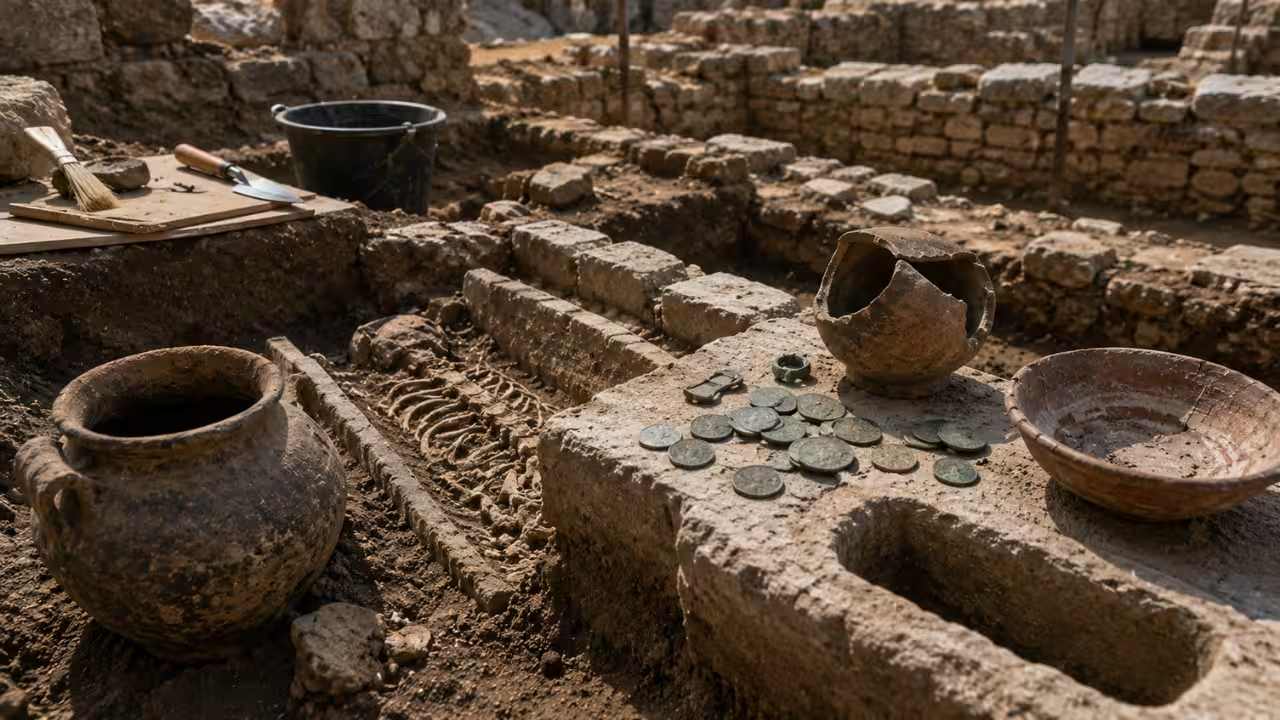
For most teenagers, summer means lazing by the pool or catching up with friends. For Cecilia Brine, a student at Santa Monica High School, it meant something rather more extraordinary: four weeks on her hands and knees at the ancient Roman city of Pollentia, unearthing artefacts that had lain buried on the Spanish island of Mallorca for close to two thousand years. Working alongside professional archaeologists and a small international team of fellow students, the 16-year-old helped bring to light human burials, Roman coins, the remains of old taverns and what may be the city's oldest known building. Organised through ArchaeoSpain, the field school is one of only a handful in the world designed specifically for high school students, blending hands-on excavation with lessons in Spanish history and culture. It was, by all accounts, an education far removed from anything a classroom could offer.What did Cecilia Brine uncover at the Roman excavationAccording to the Santa Monica Mirror, the team's work at Pollentia proved remarkably productive. Before they even reached the Roman layers of the site's old marketplace, the group encountered several human burials, offering an early indication of just how much history lay beneath the surface. Digging continued steadily until the crew struck Roman pavement, a clear marker of the ancient street level below.Along the way, the young archaeologists uncovered several Roman coins, with the remains of what are believed to have been Roman taverns. Perhaps most notably, the excavation revealed traces of what is thought to be the city's oldest surviving building, a discovery that was meaningful to the archaeological record of Pollentia.What did Cecilia Brine learn during the Pollentia field schoolBeyond the discovery, the Pollentia field school gave Cecilia and her fellow students a genuine grounding in archaeological technique. Participants were taught proper excavation and surveying methods, as well as how to treat and catalogue the artefacts they found, skills that form the backbone of professional fieldwork.The programme also extended beyond digging. Students attended talks on Spanish history and archaeology, learned how to draw artefacts accurately for record-keeping purposes, and took weekend excursions to nearby historical sites. According to ArchaeoSpain director Mike Elkin, the experience meant that students on the dig had "experienced Spain away from the tourist traps and bonded with a local community."How does ArchaeoSpain expand student archaeology opportunitiesCecilia's experience at Pollentia is just one thread in a broader pattern of work carried out by ArchaeoSpain across the region. The organisation runs a separate high school excavation at the Medieval Castle of Zorita, roughly 60 miles from Madrid, giving students the chance to explore a markedly different period of history within the same country.ArchaeoSpain's projects stretch further still, spanning sites in both Spain and Italy that cover thousands of years of human settlement, from Iron Age burial grounds to Byzantine communities and Roman trade routes. For a 16-year-old like Cecilia, the Pollentia dig offered a first-hand introduction to a much larger world of archaeological enquiry, one built on patient fieldwork and international cooperation.Catch the latest World News and Live updates. Download the TOI app.
Topics in this story
Gathered from external sources. Rights to this text belong to whoever originally published it.