In Nigeria’s oil-hit Niger Delta, women planted more than 3 million mangroves; 190 hectares of bare swamp forest came back green
Women who work with the Lokiaka Community Development Centre have planted more than 3 million mangrove saplings in Nigeria's Niger Delta since 2018 and
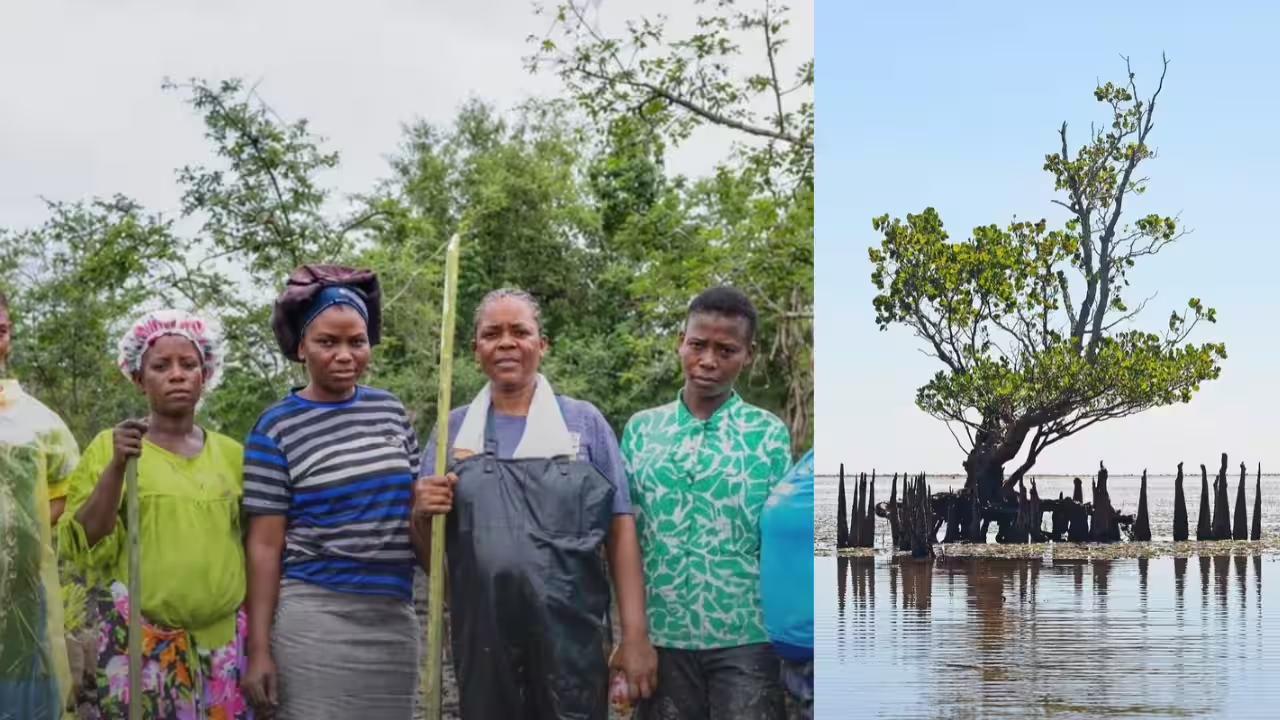
Women who work with the Lokiaka Community Development Centre have planted more than 3 million mangrove saplings in Nigeria's Niger Delta since 2018 and restored about 190 hectares of damaged swamp forest, according to a report published by The Guardian on October 2, 2026. The work is being led by environmental campaigner Martha Agbani in Ogoniland, which is an area of Rivers State that is heavily affected by decades of oil pollution. More than 400 women have been trained in mangrove planting and environmental care through the programme.The damage began long before the plantingOgoniland sits within the Niger Delta, which is one of the world's major mangrove regions, and the area has a long history of oil production; pollution from spills, infrastructure and other activities has damaged land, waterways and vegetation. A 2011 assessment by the United Nations Environment Programme found extensive contamination across Ogoniland, with UNEP examining more than 200 locations and reporting that oil pollution had affected soil, groundwater, creeks, vegetation and other parts of the ecosystem.The organisation specifically identified serious damage to mangroves, and its assessment said that oil-related contamination and physical disturbance had affected mangrove vegetation, fisheries and other components of the ecosystem. UNEP recommended large-scale restoration, but also noted that continued sources of contamination had to be addressed for rehabilitation work to succeed. The loss of mangroves was not only an environmental problem for communities that live around the creeks, as fishing, harvesting and other local livelihoods depend on healthy wetlands. Agbani grew up in Ogoniland and founded the Lokiaka Community Development Centre, which works with Indigenous women and communities. The organisation initially focused on women's rights and environmental advocacy before developing its mangrove restoration work.Women became the plantersThe restoration programme trains women to collect and raise mangrove propagules and plant them in degraded wetlands. The planting is not identical at every site, as some areas are suitable for direct planting, while others require seedlings to be raised in nurseries before being moved into the swamp. Invasive nipa palms also have to be removed from some restoration sites. A 2025 report by Mongabay found that Lokiaka had trained about 300 women across four Ogoni communities and had planted 2.6 million mangrove trees since restoration began in 2018. The organisation was working in Bodo Creek, Yaataa and Teenama, where pollution and other pressures had reduced mangrove cover.Planting sites can be difficult to reach, while fishing, mining, invasive plants and other activity can interfere with newly planted trees, and Lokiaka has adjusted its methods based on conditions at individual sites rather than using one planting system everywhere. The latest Guardian report puts the cumulative total at more than 3 million mangroves and about 190 hectares of restored swamp forest, and also says that more than 400 women have been trained through the work. The restoration has taken place gradually, and teams return to sites to maintain young trees and deal with competing vegetation rather than clearing a large area and planting it once. The work also depends on local knowledge of tides, mudflats and the conditions that different mangrove species can tolerate.The forest is returning in some areasThe Guardian reported that fish and crabs have returned to some locations where they had become less common. UNEP's assessment described Ogoniland's environmental damage as extensive, and its recommendations said that mangrove restoration could take decades. The organisation also stressed the fact that restoration cannot be separated from the need to stop ongoing contamination. The scale of the restoration by Lokiaka is nevertheless significant at the community level, since more than three million mangroves have been planted since 2018, and the restored area now covers roughly 190 hectares.The programme is also tied to livelihoods for the women involved, as pollution had damaged fishing and farming opportunities in communities where women traditionally depended on natural resources. Training in nursery management and restoration has created another form of environmental work and puts women directly into decisions about damaged land. The planting continues, and Lokiaka has set a larger target of restoring millions more mangroves across the Niger Delta, while its teams continue working in individual communities where oil pollution, invasive plants and other pressures have reduced mangrove cover.More than 3 million mangroves have been planted and about 190 hectares of swamp forest have been restored since the programme began in 2018. The wider environmental recovery of Ogoniland remains a much larger project, with UNEP's assessment showing why restoration there is expected to take years rather than a single planting season.You use AI every day. Now get your AI Quotient. Take the AIQ test.
Topics in this story
Gathered from external sources. Rights to this text belong to whoever originally published it.