In 2023, Australia placed a 13-tonne octopus sculpture eight metres underwater to create habitat; it joined a sculpture trail where marine life began settling by the January 2024 opening
Discover the innovative Underwater Sculpture Park in Busselton, Australia, featuring Ophelia the Octopus and 12 other sculptures designed to enhance marine habitats and attract diverse marine life.
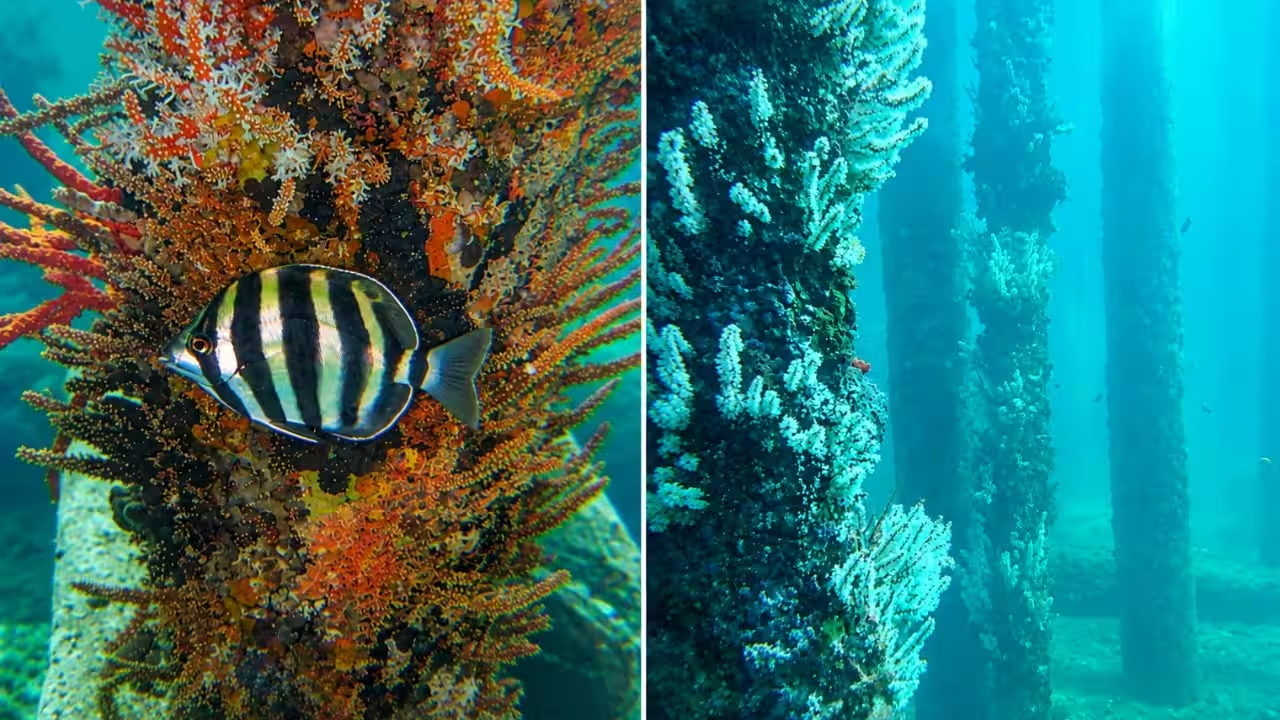
An artwork placed beneath the sea has a different audience from its counterparts in a gallery. Its surroundings change, its surface weathers, and its appearance can shift as marine life develops. At Busselton Jetty, the sculptures were designed with that process in mind. Busselton Jetty noted snorkellers at the late-January 2024 opening could already see organisms settling on the works. They were initially placed around the jetty’s submerged piles in the previous winter.Ophelia the octopusAccording to the Busselton Jetty, one of the largest additions was Ophelia the octopus, a 13-tonne concrete figure by South-West artist Brendan Booth. It was placed under the sea at the Busselton Jetty as part of a 13-sculpture series.Ophelia was made from a high-sulphate-resistant concrete and composite mix. It was then reinforced with glass-fibre concrete. To cope with its weight, the octopus was built in five different sections. More than 80 stones set into the sculpture are designed to absorb sunlight during the day and glow after dark.Booth had worked in Western Australia’s South-West for more than 25 years, the Busselton Jetty noted. He was responsible for creating the Margaret River Sculpture Park and Wood Be Good Woodcraft Gallery, a sculpture park that featured carvings in wood, stone and other materials. His other work included furniture and homewares from local Western Australian hardwoods.Art meets artificial reefOphelia was one of the 13 sculptures produced by 12 Western Australian artists for the Busselton Jetty Underwater Sculpture Park and Artificial Reef Project. The works varied in size, from 2 by 2 metres to 10 by 6 metres. Artists used materials such as steel, ceramics, bronze and marine-grade concrete. According to a Divernet report in 2024, the sculptures were installed in June and July 2023, during the period when the Leeuwin Current flowed south towards Busselton and Geographe Bay.The materials did not acquire growth at the same rate. The mild-steel works were fitted with zinc anodes to curb corrosion, Divernet reported. The installation sat among the submerged supports of Busselton Jetty, a timber-piled structure built in 1865. The jetty extends 1.84 kilometres out to sea and is described by Divernet as the longest timber-piled pier in the Southern Hemisphere. Its piles have developed into an artificial reef that supports 300 marine species, including marine invertebrates, the Busselton Jetty noted.The sculpture project added hard surfaces to part of Geographe Bay where this kind of habitat was uncommon. Busselton Jetty said each work was meant to function as an artificial reef and to create places for marine organisms to settle. The Busselton Jetty Environment Foundation took charge of monitoring colonisation at the park.Plunging in: visitor access and park rules According to Divernet, the jetty is operated by Busselton Jetty Inc., the non-profit organisation that directs 25% of the revenue into maintenance and repairs. Other revenue came from dive and snorkel passes for visitors who wanted to view the sculptures.Visitors reach the park from one of three ladders on the Universal Access Platform on the jetty’s western side. The jetty operator noted that under the right weather, seven of the 13 sculptures could be spotted from the jetty’s decking. However, the works escape view from inside the Underwater Observatory, where the tour focused on the natural marine environment.According to Busselton Jetty, the dive or snorkel pass costs $5, and before visitors entered the water, they must complete a waiver in person at the Interpretive Center. A waterproof map priced at $15 shows the locations of all 13 sculptures, while guided tours are given by Swan Dive Busselton.Another activity permitted to visitors was scuba diving, but fishing and collection are prohibited. A separate 20-metre exclusion zone surrounds the Underwater Observatory. Swimmers are instructed to remain on the ocean side of the western access, at least two rows of jetty piles from the underwater building.You use AI every day. Now get your AI Quotient. Take the AIQ test.
Topics in this story
Gathered from external sources. Rights to this text belong to whoever originally published it.