Back to work, not school: Yemen’s crisis forces children to drop out
Struggling families in Yemen are forced to choose between education and survival amid mounting economic challenges.
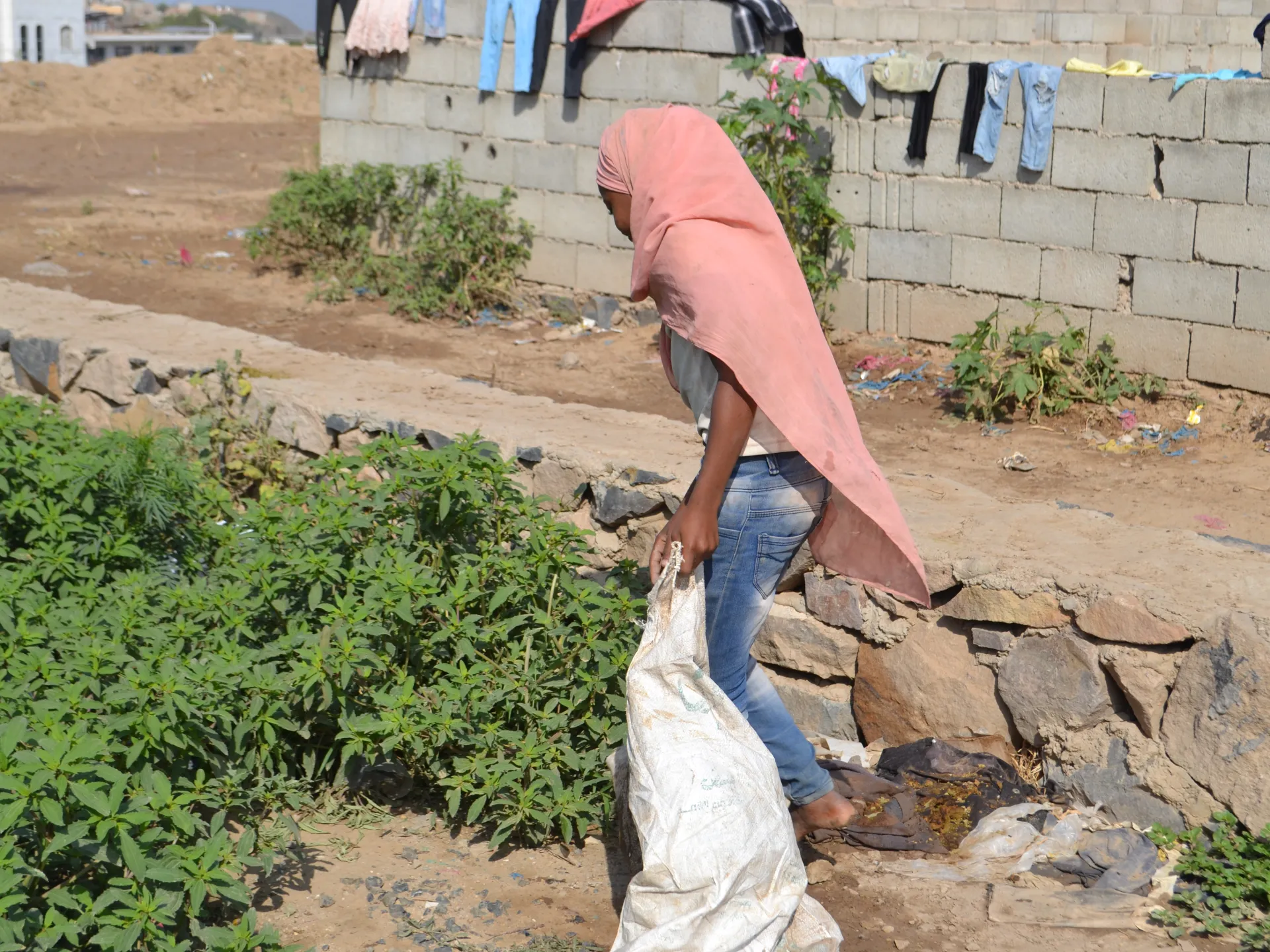
Taiz, Yemen – It was around the middle of the morning, and children at a nearby school were preparing for their break. But 11-year-old Hasnaa Jaber was walking through empty farmland on the outskirts of Taiz city, collecting discarded plastic bottles.
Hasnaa lives with her impoverished family in an informal settlement for people displaced by the country’s more than decade-long war . Instead of going to school , she works alongside her family to help make ends meet.
“My dream is to become a teacher. I studied up to the third grade, but then I dropped out of school along with my two older brothers to help my father,” Hasnaa told Al Jazeera.
The new academic year began in government-controlled areas of Yemen on August 30, but Hasnaa and other children from families in difficult financial situations like hers are not in the classroom.
She is one of 3.2 million children who are out of school in Yemen this year, according to an estimate by the United Nations Children’s Fund (UNICEF). That is an increase on the 1.8 million children UNICEF says were out of school in 2015, during the first year of the war.
Of Hasnaa’s four siblings, only one currently attends school, as she is too young to collect plastic bottles or wash cars – the kind of work the family does.
“My two brothers and I asked my father if we could resume our studies this year,” she said. “He was happy that we wanted to go back to school, but providing basic food for the family remains a major struggle. He promised us that we will go back next year.”
Hasnaa has friends who still attend school, but she feels closest to those who are also out of school, bound by their shared hardship.
“I don’t enjoy spending time with the children who go to school because they look down on us,” she explained. “But next year, I will return to my studies and fulfil my dream of becoming a teacher.”
Hasnaa is able to earn around 1,500 Yemeni rials (around $1) a day selling the plastic bottles she gathers to scrap traders.
That money is welcomed by her father, 35-year-old Jaber Ali, who is struggling to provide for his family. Fighting forced him to flee his hometown, near Taiz, eight years ago.
He doesn’t like the situation his family is in – he never received an education himself, but had hoped his children would.
“I used to work and keep my children in school, but the situation has worsened over the past two years. What I earn from washing cars is no longer enough to provide them with basic food, let alone cover other necessities,” Jaber told Al Jazeera.
Rising living costs and scarce work have squeezed the family. Jaber said school means paying for books, stationery, and other daily expenses he can’t afford.
“I was left with two choices: either send my children to school and watch them starve, or ask them to help me earn a living,” Jaber said. “I had to choose the latter because food is the top priority right now, not education.”
“We must encourage our children to study, and I do my best to keep their spirits up,” he added. “I don’t tell them they will never return to school – I tell them this is just a temporary phase, and I hope conditions will improve so they can resume their education soon.”
According to the Yemen Humanitarian Needs and Response Plan (HNRP), published by the United Nations Office for the Coordination of Humanitarian Affairs (OCHA), nearly 6.6 million Yemeni children are in need of education assistance in 2026. That figure includes children who are out of school, as well as those still enrolled but facing serious barriers to learning, including conflict, poverty, and the collapse of basic services.
Ammar al-Sharjabi, an education expert who has worked with the Ministries of Education in both Sanaa and Aden, explained that the crisis is one of the most severe consequences of the war – particularly when it comes to forcing children to drop out of school.
“Dropping out of school deprives children of their right to education and weakens their chances of securing stable employment in the future, potentially forcing them into hard labour at an early age,” he explained. “At the societal level, persistent dropout rates lead to increased illiteracy, poverty, and unemployment, adversely impacting development and the community’s overall future.”
A source at the Ministry of Education in Aden, who spoke to Al Jazeera on condition of anonymity because he was not authorised to speak to the media, said economic pressures driving children into work are difficult to fix in light of Yemen’s war – which has escalated dramatically in recent weeks after years of relative calm.
“The ministry is deeply concerned about students dropping out, but this is the direct result of dire economic conditions – not an educational issue that can be solved within the classroom alone,” the source said.
He added that the ministry coordinates with humanitarian organisations to support vulnerable children, but intervention is difficult when parents feel that they have to make their children work.
“This surge in dropouts is a byproduct of the ongoing war and its economic fallout,” he added. “As soon as parents secure a stable source of income, we will see children return to school immediately. No parent wants to see their child deprived of an education.”
A recent Save the Children assessment covering around 2,000 households in southern and southwestern Yemen found that 92 percent of those surveyed do not know where their next meal will come from, and 95 percent rely on precarious daily informal labour for their income.
As a result, 84 percent of families could not afford basic educational expenses, such as uniforms and textbooks.
The assessment also found that nearly one in five school dropout cases identified was linked to child labour.
Thirteen-year-old Ahmed Abdulelah is not displaced , but is one of those dropouts.
He left school after his father died of cancer two years ago. The family exhausted its savings on treatment, and Ahmed, the eldest of four siblings, began working at a grocery store.
“My father provided us with everything we needed,” Ahmed said. “But since he passed away, there has been no one else to help us, and I cannot bear to see my mother suffer.”
Unlike many of his peers, Ahmed does not dwell on the grief of dropping out of school. For him, the sacrifice is worth it as long as his younger siblings can stay in class.
And he has no plans to resume his education, believing his window of opportunity has passed. Instead, he has set his sights on becoming a shopkeeper one day.
“I work here so my siblings can finish their education,” he said. “They will make up for what I lost, and I am proud that our family doesn’t have to beg or rely on anyone else.”
Topics in this story
Gathered from external sources. Rights to this text belong to whoever originally published it.