An Australian artist asks people to give up racist Aboriginal souvenirs, receives over 2,000 objects, including plates, tea towels and ashtrays
An Australian Indigenous artist has received more than 2,000 objects depicting Aboriginal people and culture after asking the public to donate racist
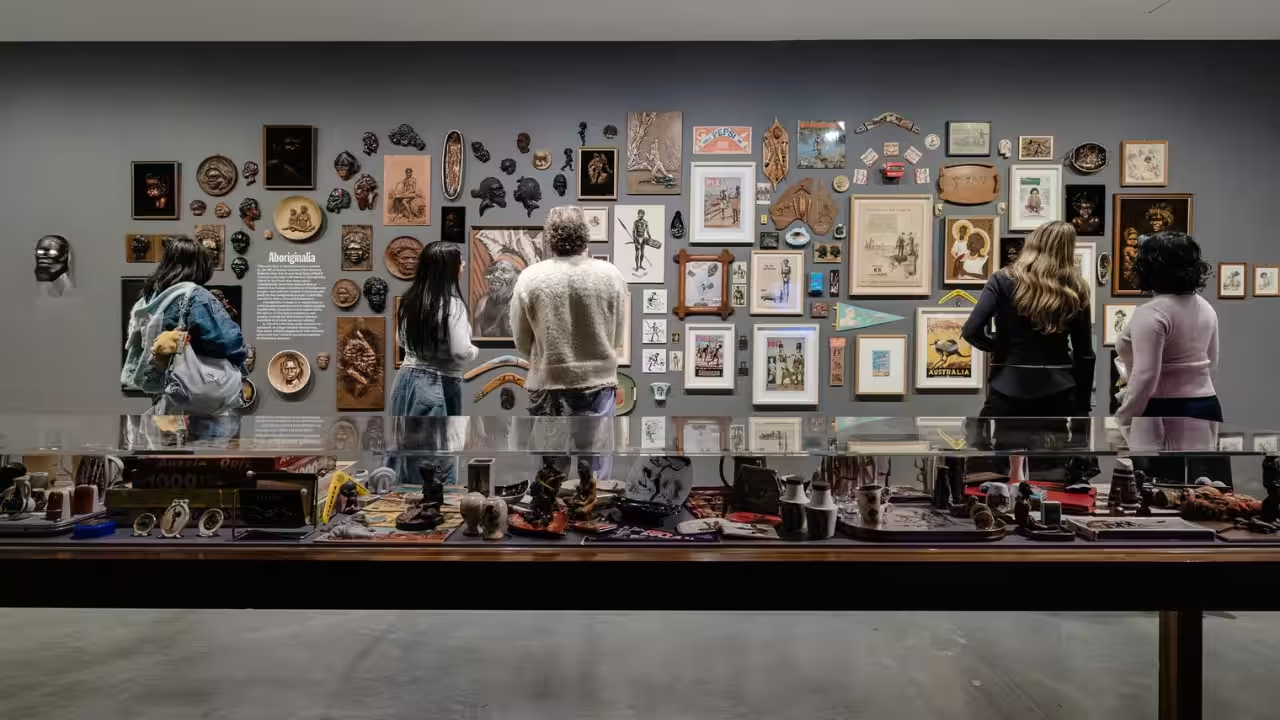
An Australian Indigenous artist has received more than 2,000 objects depicting Aboriginal people and culture after asking the public to donate racist souvenirs that have circulated in homes for decades. Tony Albert launched the appeal alongside his exhibition Not a Souvenir at the Museum of Contemporary Art Australia in Sydney, inviting people to hand over items ranging from decorative crockery and tea towels to ashtrays, beer coasters and figurines. The objects, often featuring stereotypical portrayals or caricatures of Indigenous Australians, were created and sold by non-Indigenous people. Albert wants to remove them from circulation and use his artistic practice to confront the history behind their production. The response has also prompted donors to reconsider the meaning of objects they inherited, collected or once regarded as ordinary souvenirs.An artist’s appeal draws more than 2,000 donationsAlbert’s public appeal accompanied Not a Souvenir, a career-spanning exhibition that opened on May 21, 2026, at the Museum of Contemporary Art Australia in Sydney. The exhibition featured approximately 4,400 objects from his personal collection, which he began assembling as a child in the 1980s.By October 2026, members of the public had donated more than 2,000 additional items. According to The Guardian, the museum was preparing to package and ship the donations to Albert’s studio in Brisbane as the exhibition approached its closing date of October 19.The objects arrived at the museum daily, either by post or through hand-delivery. Some donations comprised dozens or hundreds of items. One included 120 plates, cups and saucers featuring Aboriginalia, while another contained 200 beer coasters. The museum also received a nearly one-metre-tall figurine depicting an Aboriginal man holding a spear.The response exceeded the expectations of the museum’s team. Assistant curator Antares Wells told The Guardian that she had initially worried the appeal might expose Albert to hateful messages. Instead, she said she had not seen any hate mail during the campaign.What is Aboriginalia and why does it matter?Aboriginalia is a term used for mass-produced souvenirs, household goods and decorative objects that depict Aboriginal people and cultures, often through stereotypes, caricatures or imagery that misrepresents Indigenous identities.These objects include ashtrays, tea towels, plates, figurines, clothing, scarves and decorative boomerangs. They became part of Australian popular and domestic culture, presenting Aboriginal people and cultural designs as commercial products.The items are significant because they reflect how Indigenous identities were represented and commodified by non-Indigenous manufacturers and sellers. Some reduced diverse Aboriginal cultures to generic images, while others portrayed Indigenous people through demeaning caricatures.Albert has collected these objects since childhood and uses them to examine the relationship between representation, colonial history and contemporary Indigenous identity. His aim is to remove such items from circulation and recontextualise them through art, encouraging people to consider the attitudes and assumptions embedded in everyday objects.Donors reconsider objects they kept for decadesThe appeal has prompted people to reflect on the history of items they inherited, bought second-hand or kept for sentimental reasons.Carolyn Ienna, a Wiradjuri artist and activist from Sydney, donated a painted image of an Aboriginal man holding a spear. They had found it in a council pickup collection more than a decade earlier.Ienna told The Guardian that looking at the object had made them feel sad, although they had not previously known the term Aboriginalia. They said the experience raised questions about the trauma of colonisation and the propaganda conveyed through representations of Aboriginal people.Lesley Pepper, who travelled from Dunedin in New Zealand to visit the exhibition, donated four porcelain plates, serviettes and placemats she had owned for around 30 to 40 years. One plate depicted a young Aboriginal woman who reminded Pepper of herself.Pepper, who has Māori heritage, said she had initially regarded the objects as a sign of respect when she acquired them from second-hand shops. She later questioned whether the woman depicted on the plate had ever been asked for permission to use her image.Another donor, Canberra resident Kathryn Hopps, handed over two silky Australian souvenir scarves inherited from her grandmother. The scarves featured kangaroos, wattle, Uluru and depictions of Aboriginal people and designs. Hopps said she had kept them because she believed they belonged in a museum, where their history could be examined.The stories accompanying these donations have become an important part of the appeal, helping to document how the objects entered people's lives and how their meaning has changed over time.A 1930s shaving mug stands out to AlbertAmong the donated objects, one that particularly struck Albert was a ceramic shaving mug from the 1930s, shaped like a caricature of an Aboriginal man's face.He told The Guardian that he found it astonishing that someone would have wanted the object in their bathroom and used it as part of an everyday routine.Albert said such objects could be rare and valuable, but their historical significance lay in what they revealed about the representation of Aboriginal people and the casual presence of these images in Australian domestic life.How Albert uses art to challenge colonial representationsAlbert’s collection is central to his artistic practice. Through sculpture, photography, painting, installation and assemblage, he reuses and reinterprets objects that were originally produced to commercialise or stereotype Aboriginal identities.His work does not simply preserve the objects as historical curiosities. It places them in a new context, encouraging audiences to question their original purpose and consider their impact.The artist has described his ambition as taking these objects out of circulation and transforming them into works that celebrate the survival and cultural vitality of Aboriginal people. The approach shifts the focus from the stereotypes imposed by the objects to the continuing presence and agency of Indigenous communities.The Not a Souvenir exhibition brings together his collection and artworks to explore the commodification and misrepresentation of Aboriginal people and cultures, while also addressing survival, resilience and cultural pride.Museum continues accepting donations after exhibitionThe Museum of Contemporary Art Australia organised the Aboriginalia appeal in partnership with Albert as part of the exhibition. Donors were also encouraged to share the history of each object and explain their relationship to it, creating a record that could accompany the physical collection.Although the museum's dedicated donation boxes were due to be removed when Not a Souvenir closed on October 19, assistant curator Antares Wells told The Guardian that the institution would continue accepting Aboriginalia and passing the objects on to Albert.The initiative has created an opportunity for members of the public to contribute to a wider examination of Australia's colonial past. Through the objects and the stories attached to them, Albert's project seeks to turn uncomfortable reminders of historical prejudice into material for education, reflection and contemporary art.You use AI every day. Now get your AI Quotient. Take the AIQ test.
Topics in this story
Gathered from external sources. Rights to this text belong to whoever originally published it.