'AI is great but it can't deliver a lamb', say agriculture students
Agricultural colleges in East Yorkshire and Lincolnshire say they have seen a rise in applicants.
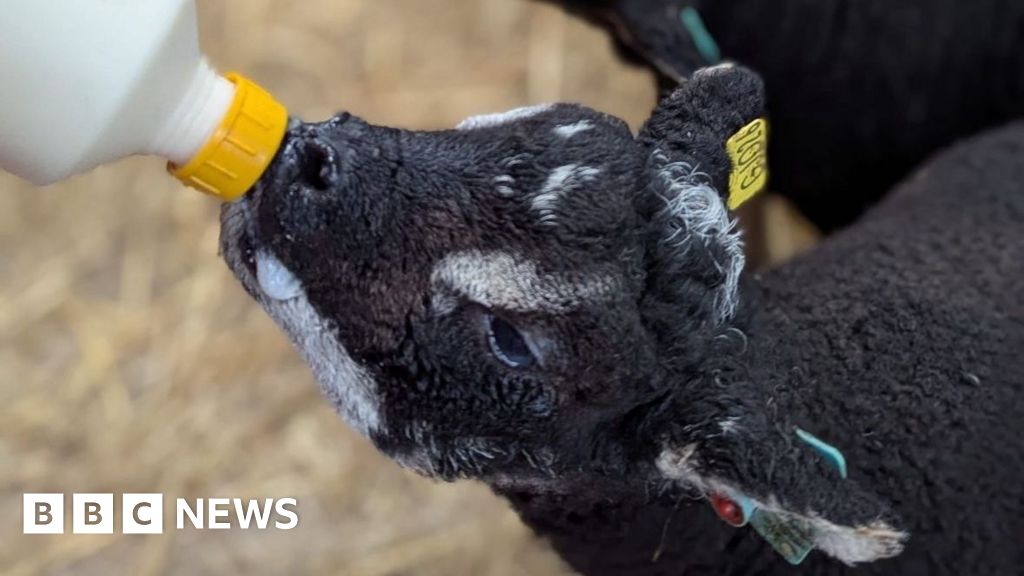
Students looking to forge careers in agriculture believe there is still a need for hands-on skills as they embrace artificial intelligence (AI).
Bishop Burton College, in East Yorkshire, and Riseholme College, in Lincolnshire, which specialise in land-based subjects, said they had seen a rise in the number of pupils enrolling on some of their courses.
Students have been learning how they can use AI in the industry while also understanding the value of traditional methods.
Katy Cranston, who studies agriculture, land management and livestock production at Bishop Burton, said: "I can see why people are worried about AI. I think it's a great tool, but AI can't deliver a lamb, can it?"
Cranston added: "I'm learning what is needed to succeed in my career choice and I can see how technology assists farming, but I also know where its limits are.
"AI won't be impacting farming as quickly as some other careers, so I can see why parents and people my age are reconsidering their career choices and perhaps looking at agriculture."
Sharon Kirby, programme leader for agriculture degree courses at Riseholme, said: "There are some roles that AI can't do yet, but my goodness, it can give them a lot of background data to allow us to make informed decisions thereafter.
"I think the future is quite exciting around AI and technology.
"It's just enhancing it and capturing how best it can work for us without having a detriment to the labour market."
AI has been useful for many farmers across England, with some using it to grow crops indoors without sun and soil , or to spot issues with cattle .
But Kirby said, while AI can assist farming and agriculture, vocational courses in the sector teach students things that AI cannot do, such as preparing a sheep for the Lincolnshire Show.
"AI can't wash a sheep, can't trim a sheep up, can't handle a sheep, can't encourage it to walk in the right manner, to stand up in the right manner," Kirby said.
"I think hands-on courses are still the way forward. AI is about enhancing what we're doing and helping us to work smarter."
Beth Curtis, vice principal at the two sites, said courses such as agriculture, animal management, equine studies and health and social care had all seen increasing numbers of students choosing them.
The East Yorkshire college said 46% of 2,000 secondary school children it surveyed said AI had made them consider pursuing a more hands-on career.
It also found 77% of 2,000 parents were concerned about the impact of AI on their child's future job prospects.
The findings come after Prime Minister Andy Burnham announced schools would offer technical subjects with courses linked to local industries and designed to give children a clearer pathway into work.
Curtis added: "We're not against AI. We embrace new technology and recognise how important it is to the world.
"However, there are certain skills that we teach here at the colleges that won't ever be able to be replaced by AI."
Louis Horstwood, who studies agriculture, land management and crop and plant production, thinks more people are drawn to the agricultural industry because it is more "reliable" and less impacted by AI.
"AI can't change the points on a plough," she said.
"It might let you know there is a problem with them, but if the subsoil breaks them and you're out in a field, it won't be AI fixing it, it will be me.
"I don't see farming being taken over by AI any time soon."
Listen to highlights from Hull and East Yorkshire or Lincolnshire on BBC Sounds, watch the latest episode of Look North .
App Store Google Play for Android devices
From agriculture to AI-griculture: How tech is changing farming
The crops being grown indoors without sun or soil
AI helping farmer with data about bees and crops
Topics in this story
Gathered from external sources. Rights to this text belong to whoever originally published it.