In 1807, sailors left pigs on a remote island as emergency food; 192 years later, rescuers found small, athletic animals valuable to medical research
Rest of World News: In a surprising twist of fate, the Auckland Island pigs, left as emergency food in 1807, are now valuable in medical research with unique genetic traits and reduced infection risks.
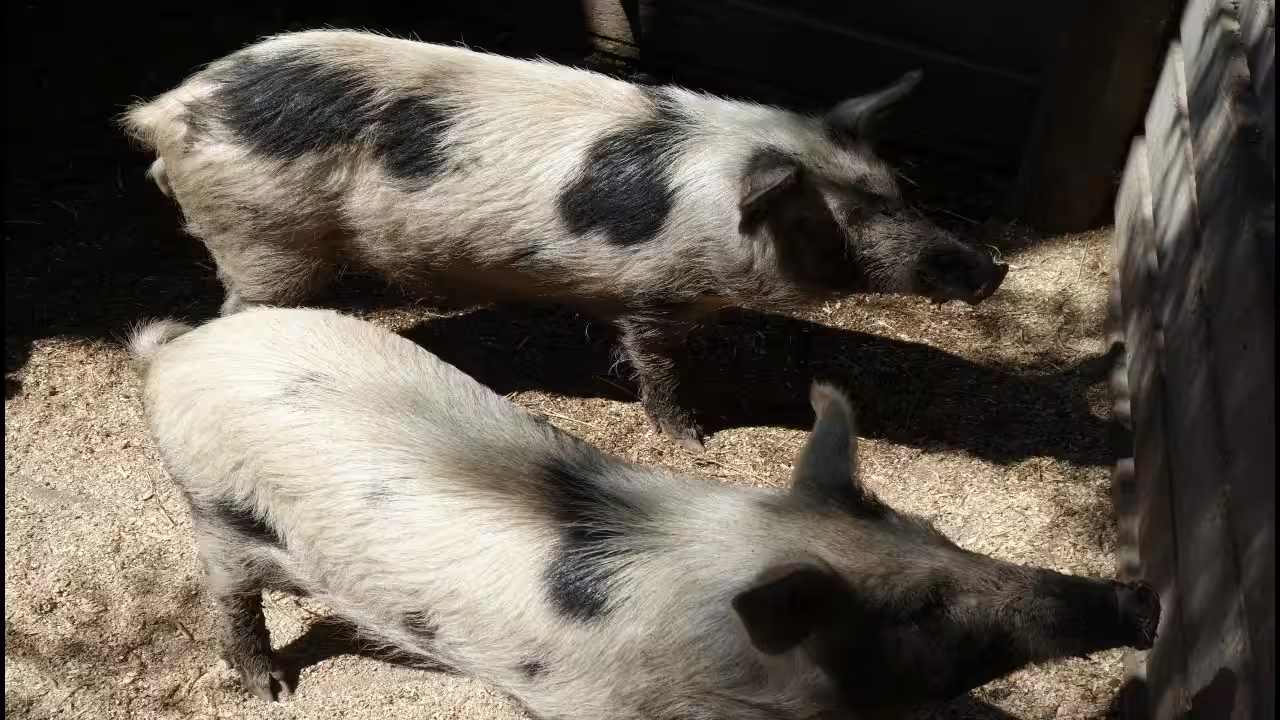
The Auckland Islands lie about 560 km south of the New Zealand mainland, a scattering of windswept subantarctic land buffeted by some of the roughest seas in the world. Sealers and whalers entering these waters in the early nineteenth century found the islands to be a place where ships could easily be wrecked and crews marooned for months with little to eat. This grim prospect led the captains of the age to leave behind an unusual insurance policy, one that would become something none of them could have foreseen.In 1807 Captain Abraham Bristow introduced a small number of pigs to Enderby Island and the northern tip of the main Auckland Island as an emergency food supply for any future castaways or visiting crews. According to research published in the Journal of the Royal Society of New Zealand, further releases followed in the decades after, supplementing the original population and helping it spread across the northern habitats of the island. With no natural predators and little shelter from the almost constant cold, wind, and rain, the pigs were left to fend for themselves and just continued to breed generation after generation, mostly going unnoticed by the outside world.Two centuries of isolationThe Auckland Island pigs received little attention for almost 200 years, other than for their existence and, subsequently, the harm they caused. By the 20th century, pigs were destroying native flora and plundering the nests of ground-breeding seabirds like petrels and albatrosses, which may be disastrous to delicate island ecosystems. New Zealand’s Department of Conservation later aimed to eradicate the population as part of a wider effort to restore the islands to something closer to their original ecological state.The prospect alarmed another group entirely. The Auckland Island pigs had been reproducing in almost absolute isolation since the early 1800s, shut off from every other pig population on earth, and had evolved into a genetically unique group found nowhere else. Members of the Rare Breeds Conservation Society of New Zealand argued that losing them would mean losing a living piece of agricultural history, so in 1999, one hundred and ninety-two years after Bristow's original release, a small team travelled to the island using dogs to try to capture some before the wider eradication went ahead.A tricky capture and a surprise findThe animals the researchers encountered in the rescue were slim, wiry and plainly built for survival, not comfort, in stark contrast to the chubby farmyard pigs most people are used to. Team member Peter Jackson described how difficult conditions shaped the pigs’ lives. Hunger was a constant problem, and nursing sows had only a few functioning teats between them, suggesting that relatively few piglets survived to adulthood. Nursing sows had only a few working teats between them, a sign of how few piglets made it to adulthood on the island. Despite the tough conditions, the team managed to grab seventeen pigs, several of them pregnant sows, and boat them to a quarantine facility in the southern city of Invercargill.Researchers didn't know how important the rescued animals were until they had adapted to life in captivity. The Auckland Island pigs had nearly none of the common infections found in regular commercial herds since they had spent decades isolated from any other pig population, either domestic or wild. A study documented by the U.S. National Library of Medicine’s NCBI database found the animals free of numerous infectious agents that usually complicate the use of pig tissue in human medicine, along with a manageable and traceable level of porcine endogenous retrovirus, a genetic element that has long worried scientists working on cross-species transplants.From castaway rations to clinical trialsThat mix of features made the small, athletic pigs especially well suited to a specialised area of medical study called xenotransplantation, which is the transfer of cells, tissues, or organs from one species into another. Companies developing treatments for illnesses such as type one diabetes have since used insulin-producing islet cells acquired from Auckland Island pigs in early-stage clinical trials, attracted by the reduced infection risk compared with standard pig breeds. The pigs that remained on Auckland Island were not evacuated; they remained part of the feral population that DOC now plans to eradicate as part of the Maukahuka restoration project, aimed at protecting native vegetation and wildlife. But the 17 animals brought back by ship in 1999 preserved the breed on the mainland, where their descendants have continued to be maintained for conservation and research.Catch the latest World News and Live updates. Download the TOI app.
Topics in this story
Gathered from external sources. Rights to this text belong to whoever originally published it.