London Museum is preparing to open inside historic Smithfield Market after an £437 million redevelopment that took 11 years to reach its launch date
For years, the future of Smithfield’s old market buildings has been tied to a larger question about how London preserves its past while finding new uses
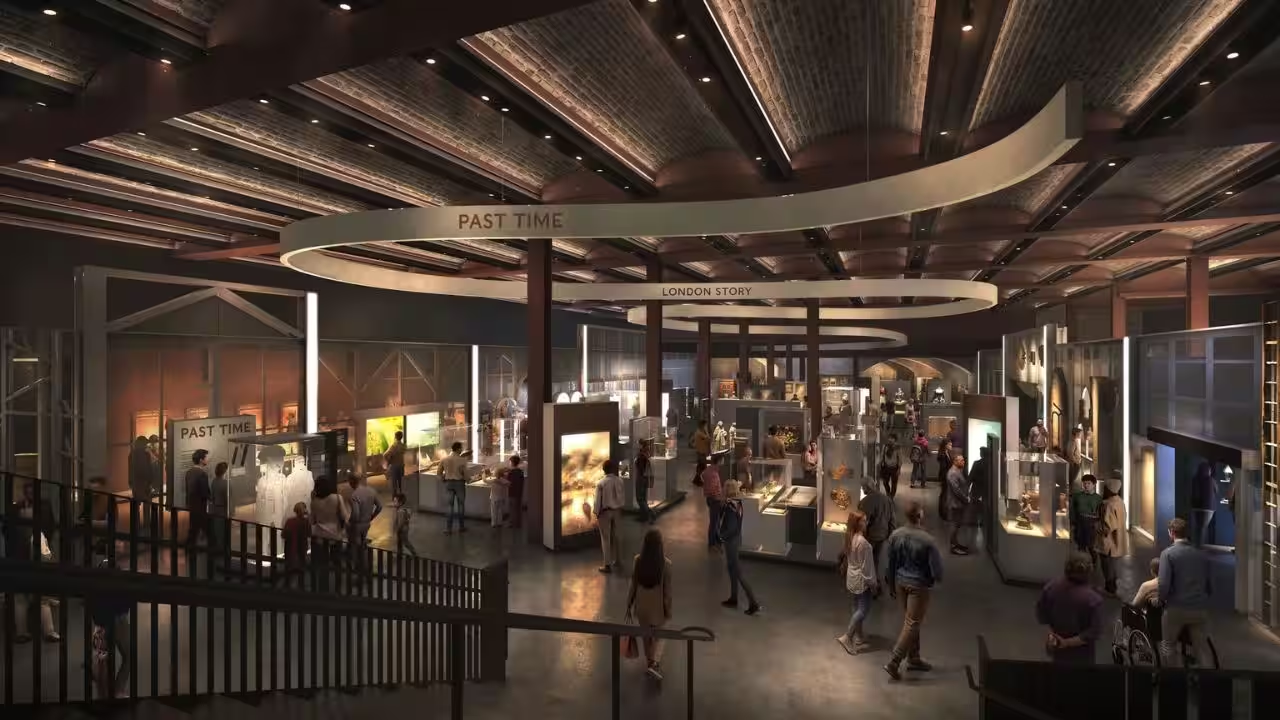
For years, the future of Smithfield’s old market buildings has been tied to a larger question about how London preserves its past while finding new uses for its historic spaces. Now, one of the City’s best-known Victorian market halls is being prepared for a different kind of public life. The London Museum is moving into the restored General Market in Farringdon, bringing its collections into a building once associated with the capital’s wholesale meat trade. As reported by London Evening Standard, the redevelopment has taken years of planning and construction, with the budget reaching £437 million. Its opening also marks a new chapter for a museum which is set to open on November 28, 2026, that has spent nearly five decades documenting the changing character of the city.London Museum prepares to expand across Smithfield’s historic market buildingsThe new museum occupies the former General Market building at Smithfield, a site whose working history stretches back far beyond the present redevelopment. The move follows the closure of the museum’s previous premises at London Wall in 2022. Its new home gives the institution an opportunity to present its collections within a different part of the capital, surrounded by buildings that have long been associated with London’s commercial life.The London Museum first opened in December 1976, bringing together objects and accounts that trace the city’s development across centuries. Its relocation comes as the institution approaches its 50th anniversary. The Smithfield site is intended to accommodate a broader presentation of London’s history, with exhibition spaces designed to connect historical objects with the experiences of people living in the city today.Reportedly, the neighbouring Poultry Market, a building dating from the 1960s, is scheduled to become part of the museum complex in 2028. Plans for that phase include further exhibition space, a learning centre and facilities for storing the museum’s collections.Inside the £437 million project to transform Smithfield MarketThe decision to move the museum to Smithfield was confirmed by the City of London Corporation in 2015, following earlier discussions about finding a new home. The original timetable envisaged an opening in 2021, but the work took longer than anticipated as the project dealt with the practical demands of adapting an existing historic structure.Renovating an old market hall presented challenges that would not arise in the same way with a purpose-built museum. The discovery of a freshwater spring beneath the site in August 2022 added another complication to the work. By the time the project approached its launch, the reported cost had risen to £437 million.Funding has come through a partnership involving the City of London Corporation, the Mayor of London and charitable organisations. Supporters include the National Lottery Heritage Fund, the Goldsmiths’ Foundation and the Linbury Trust. The scale of the investment reflects the ambition to preserve the historic building while adapting it for exhibitions, public programmes and other museum activities.What visitors will see inside the museumThe museum’s displays are arranged around three connected areas: Real Time, Our Time and Past Time. Together, they are intended to explore London’s history through objects, personal stories and events that have shaped the capital, rather than presenting its development as a single, uninterrupted timeline.Visitors can expect to encounter material from Roman London, alongside displays relating to events such as the Great Fire of London and the 2012 Olympic Games. Contemporary installations will bring more recent experiences into the galleries, including large animated screens featuring stories from Londoners. Works by modern artists, including Banksy, are also part of the planned offering.The Our Time galleries will focus on the city’s living memory through a series of installations. Among the objects expected to feature are the Lord Mayor’s Coach and Syd’s Coffee Stall, associated with the East End. These displays place familiar aspects of London life alongside items that have survived from earlier periods, giving visitors different ways to understand how neighbourhoods and traditions have changed.A dedicated gallery will house the Cheapside Hoard, a collection of Elizabethan and Jacobean jewellery considered significant for what it reveals about craftsmanship and the trade in precious objects during the period. The new building will also provide a view of the Thameslink railway through a six-metre window, bringing one of Farringdon’s busiest transport routes into the visitor experience.Free admission and events beyond the galleriesGeneral admission to the Smithfield museum is free, following the approach taken at its Docklands branch, which will continue operating as a long-term venue. Separate exhibitions and special experiences may carry additional charges, so visitors will need to check the arrangements for individual events. The museum is also planning activities that extend beyond conventional gallery visits. Proposed programmes include a weekly tea club, late-night DJ sets and monthly dinner clubs. Such events will give the building uses beyond its exhibition spaces, particularly during evenings when visitors might otherwise associate museums with closing time.Food will feature in the programme, too. The London Tastes exhibition is being developed with support from Sainsbury’s and curated by food writer Jonathan Nunn and former Great British Bake Off contestant Ruby Tandoh. Its focus is London’s varied food culture, reflecting the influence of the communities that have shaped the city’s eating habits. Opening hours were yet to be confirmed in the Evening Standard report, so visitors should check the museum’s official channels before making plans. Free general admission does not necessarily mean every event or exhibition will be available without a separate ticket.Smithfield’s long history continues around the museumSmithfield has served London for more than 800 years, with its history closely connected to markets and the movement of food through the capital. The wholesale meat market became a familiar part of the city’s commercial infrastructure, supplying butchers, restaurants and caterers. Its overnight trading schedule has long distinguished it from many other public markets.The museum’s arrival will not mean the wholesale market disappears immediately. Parts of the wider complex will continue to serve their existing purposes while redevelopment proceeds. However, traders have been told they must leave the premises by 2028, as plans move forward to transfer the wholesale meat market and Billingsgate fish market to new facilities in the Royal Docks.The change at Smithfield therefore extends beyond the museum itself. A building that once formed part of London’s working market infrastructure is being adapted to tell the story of the city, while the future of the surrounding market operations is being reshaped elsewhere.You use AI every day. Now get your AI Quotient. Take the AIQ test.
Topics in this story
Gathered from external sources. Rights to this text belong to whoever originally published it.